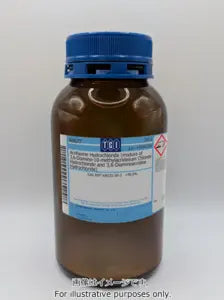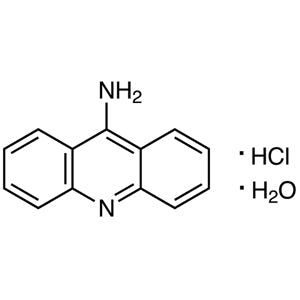
9-Aminoacridine Hydrochloride Monohydrate is a chemical compound widely used in laboratory settings for its unique structural and functional properties. As a heterocyclic building block, it serves as a key component in the synthesis of various organic compounds, particularly those with biological activity. This compound plays a crucial role in pharmaceutical and biochemical research, enabling the development of compounds with therapeutic potential. Its versatility makes it an essential tool for scientists working on drug discovery and molecular design.
The compound is valued for its chemical stability under controlled conditions and its solubility in organic solvents such as ethyl acetate and acetone. These properties make it ideal for use in reactions requiring high reactivity and precision. Additionally, its molecular structure, featuring both an amino group and a chloride ion, enhances its reactivity and compatibility with a wide range of chemical processes. These characteristics contribute to its popularity among researchers seeking reliable and effective chemical intermediates.
In Indonesian laboratories, 9-Aminoacridine Hydrochloride Monohydrate is commonly used in pharmacological and organic chemistry studies. It is frequently employed in the synthesis of bioactive compounds, including potential antitumor and antibacterial agents. Its availability in various packaging options makes it suitable for both small-scale and medium-scale research applications, supporting a wide range of experimental needs in academic and industrial settings.
Related TCI products
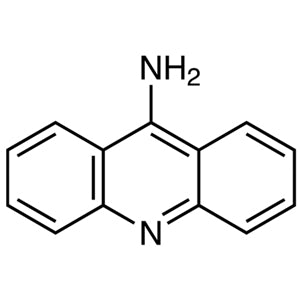
- TCI A2905 90-45-9 9-Aminoacridine
- TCI O0432 38609-97-1 9-Oxoacridine-10-acetic Acid
- TCI A3298 90-45-9 9-Aminoacridine (purified by sublimation)
- TCI A0677 69235-50-3 Acriflavine Hydrochloride (mixture of 3,6-Diamino-10-methylacridinium Chloride Hydrochloride and 3,6-Diaminoacridine Hydrochloride)
- TCI A0134 8048-52-0 Acriflavine (mixture of 3,6-Diamino-10-methylacridinium Chloride and 3,6-Diaminoacridine)
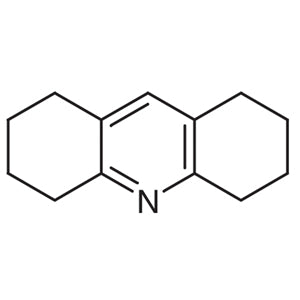
- TCI O0197 1658-08-8 1,2,3,4,5,6,7,8-Octahydroacridine
- Pharmaceutical research utilizes this compound for synthesizing bioactive molecules due to its reactivity and structural versatility.
- Organic chemistry experiments benefit from its solubility in organic solvents and its role as a heterocyclic building block.
- Drug discovery projects incorporate it to develop compounds with antitumor and antibacterial properties through chemical modifications.
- Biochemical studies rely on its stability and reactivity to investigate molecular interactions and biological activity.
- Academic research institutions use it for teaching and experimental purposes in advanced chemistry courses and laboratory practices.
| Brand | TCI |
|---|---|
| CAS number | 52417-22-8 |
| Molecular formula | — |
| Purity | — |
| Category | Chemistry > Building Blocks > Heterocyclic Building Blocks |
| Pack sizes | Available in various sizes to suit different research needs |
| Physical form | Crystalline solid |
| Storage | Store in a cool, dry place away from moisture and direct sunlight |
This compound should be stored in a cool, dry environment to prevent degradation due to moisture exposure. It is recommended to use airtight containers to minimize exposure to air and humidity. Due to its sensitivity to environmental conditions, it should be kept away from direct sunlight and high humidity areas. Proper labeling of containers is essential for safe handling and identification. Laboratory personnel should wear appropriate personal protective equipment when handling this material to ensure safety. Regular monitoring of storage conditions will help maintain the compound's integrity and effectiveness for research applications.
—
Produk Terkait
-
9-Aminoacridine TCI A2905
Regular price From Rp 1.510.950,00Regular price -
9-Oxoacridine-10-aceticAcid TCI O0432
Regular price From Rp 769.650,00Regular price -
9-Aminoacridine(purifiedbysublimation) TCI A3298
Regular price Rp 3.127.950,00Regular price -
AcriflavineHydrochloride(mixtureof3,6-Diamino-10-methylacridiniumChlorideHydrochlorideand3,6-DiaminoacridineHydrochloride) TCI A0677
Regular price From Rp 1.803.900,00Regular price -
Acriflavine(mixtureof3,6-Diamino-10-methylacridiniumChlorideand3,6-Diaminoacridine) TCI A0134
Regular price Rp 2.121.000,00Regular price -
1,2,3,4,5,6,7,8-Octahydroacridine TCI O0197
Regular price Rp 6.095.250,00Regular price -
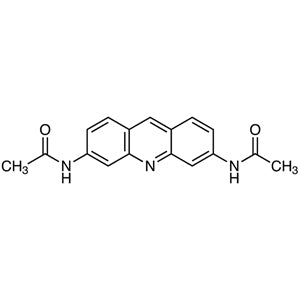
3,6-Diacetamidoacridine TCI D5595
Regular price From Rp 1.298.850,00Regular price -
9,10-Dihydroacridine TCI D5058
Regular price From Rp 1.776.600,00Regular price