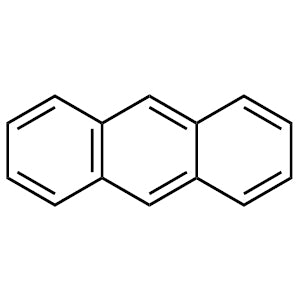
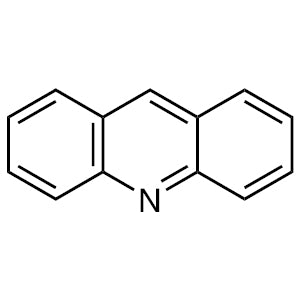
9-Aminoacridine is a high-purity chemical compound that plays a crucial role in various scientific research applications, particularly in organic chemistry and pharmacology. It is a key reagent used in the synthesis of complex molecules and is valued for its stability and reactivity under controlled laboratory conditions. As a compound purified by sublimation, it ensures minimal contamination and high purity, making it essential for experiments requiring precise chemical reactions and accurate results. This compound is widely used in both academic and industrial research settings due to its reliability and consistency in chemical processes.
The unique molecular structure of 9-Aminoacridine contributes to its reactivity and stability, which are critical for maintaining the integrity of chemical reactions. Its high purity, achieved through the sublimation process, ensures that it is free from impurities that could interfere with experimental outcomes. This makes it a preferred choice for researchers aiming to achieve reproducible and reliable results. Additionally, its chemical properties allow it to be used in a variety of applications, from drug development to material synthesis, where precision and purity are paramount.
In Indonesian laboratories, 9-Aminoacridine is commonly used in the synthesis of bioactive compounds and in pharmaceutical research. It is a valuable tool for scientists working on drug discovery and development, as well as for those studying the properties of organic molecules. Its availability and high purity make it a sought-after material for researchers in both academic and industrial settings across Indonesia.
TCI brochures (PDF)
- MALDI Matrix 2025-01-17 · p. 1
- Chemical Compounds Purified by Sublimation 2025-05-07 · p. 3
Related TCI products
- TCI A3299 723-62-6 9-Anthracenecarboxylic Acid (purified by sublimation)
- TCI F1257 537-98-4 trans-Ferulic Acid (purified by sublimation)
- TCI D5689 2243-62-1 1,5-Diaminonaphthalene (purified by sublimation)
- TCI D5724 121207-31-6 [[(3,5-Dimethyl-1H-pyrrol-2-yl)(3,5-dimethyl-2H-pyrrol-2-ylidene)methyl]methane](difluoroborane) (purified by sublimation)
- TCI C3640 53518-18-6 Coumarin 153 (purified by sublimation)
- TCI B3834 10380-28-6 Bis(8-quinolinolato)copper(II) (purified by sublimation)
- Organic synthesis applications benefit from 9-Aminoacridine due to its reactivity and stability, enabling the creation of complex molecular structures with high precision.
- Pharmaceutical research utilizes this compound for the development of new drugs, as it can serve as a building block in the synthesis of bioactive molecules.
- Material science experiments often incorporate 9-Aminoacridine to study the properties of organic compounds and their behavior under different conditions.
- Analytical chemistry laboratories use it as a reference standard for quality control and to ensure the accuracy of chemical analyses.
- Biochemical studies rely on this compound to investigate its interactions with biological systems, aiding in the understanding of molecular mechanisms in living organisms.
| Brand | TCI |
|---|---|
| CAS number | 90-45-9 |
| Molecular formula | — |
| Purity | — |
| Category | Materials Science > High Purity Compounds > Compounds Purified by Sublimation |
| Pack sizes | Available in various quantities as per supplier specifications |
| Physical form | Solid |
| Storage | Store in a cool, dry place away from light and moisture |
9-Aminoacridine should be stored in a cool, dry environment, away from direct light and moisture to maintain its chemical integrity. It is recommended to use airtight containers to prevent contamination and exposure to air. Due to its reactivity, it should be handled with care, using appropriate personal protective equipment such as gloves and safety goggles. Proper ventilation is essential when working with this compound to minimize inhalation risks. While it is generally stable under normal storage conditions, it should be kept away from incompatible substances to avoid any potential chemical interactions. Regular inspection of storage conditions ensures that the compound remains in optimal condition for use in laboratory applications.
—
Product Categories
Produk Terkait
-
9-AnthracenecarboxylicAcid(purifiedbysublimation) TCI A3299
Regular price Rp 2.359.350,00Regular priceRp 1.665.300,00Sale price Rp 2.359.350,00 -
trans-FerulicAcid(purifiedbysublimation) TCI F1257
Regular price Rp 2.464.350,00Regular priceRp 1.738.800,00Sale price Rp 2.464.350,00 -
1,5-Diaminonaphthalene(purifiedbysublimation) TCI D5689
Regular price Rp 1.881.600,00Regular priceRp 1.331.400,00Sale price Rp 1.881.600,00 -
[[(3,5-Dimethyl-1H-pyrrol-2-yl)(3,5-dimethyl-2H-pyrrol-2-ylidene)methyl]methane](difluoroborane)(purifiedbysublimation) TCI D5724
Regular price Rp 2.597.700,00Regular priceRp 1.832.250,00Sale price Rp 2.597.700,00 -
Coumarin153(purifiedbysublimation) TCI C3640
Regular price Rp 5.141.850,00Regular priceRp 3.610.950,00Sale price Rp 5.141.850,00 -
Bis(8-quinolinolato)copper(II)(purifiedbysublimation) TCI B3834
Regular price Rp 3.340.050,00Regular priceRp 2.350.950,00Sale price Rp 3.340.050,00 -
Anthracene(purifiedbysublimation) TCI A3437
Regular price Rp 1.405.950,00Regular priceRp 982.800,00Sale price Rp 1.405.950,00 -
Acridine(purifiedbysublimation) TCI A3436
Regular price Rp 1.510.950,00Regular priceRp 1.072.050,00Sale price Rp 1.510.950,00


![[[(3,5-Dimethyl-1H-pyrrol-2-yl)(3,5-dimethyl-2H-pyrrol-2-ylidene)methyl]methane](difluoroborane) (purified by sublimation) (CAS 121207-31-6) - TCI D5724 - AMI Scientific](http://amiscientific.com/cdn/shop/files/TCI2510D5724.jpg?v=1769180709&width=533)