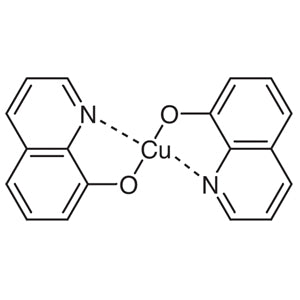
Bis(8-quinolinolato)copper(II), also known as Cu(II) (8-quinolinolato)₂, is a chemical compound widely used in organic chemistry laboratories. It functions as a transition metal catalyst, playing a crucial role in cross-coupling reactions that facilitate C-C bond formation. This compound is particularly valuable in reactions such as the Suzuki and Kumada couplings, where it enables the efficient synthesis of complex organic molecules. Its application extends to various research areas, making it an essential reagent for chemists working on synthetic pathways involving copper-based catalysis.
The compound’s unique molecular structure and chemical properties make it a preferred choice for laboratory use. Its high purity, achieved through sublimation, ensures consistent performance in chemical reactions. The ability of Bis(8-quinolinolato)copper(II) to interact selectively with organic substrates enhances the efficiency and specificity of catalytic processes. These characteristics contribute to its reliability and effectiveness in both academic and industrial research settings.
In Indonesian laboratories, Bis(8-quinolinolato)copper(II) is commonly used in organic synthesis experiments that require precise and controlled catalytic reactions. Its stability and high purity make it suitable for research involving complex chemical transformations. As a key reagent in modern chemical research, it supports the development of new compounds and materials, contributing to advancements in both academic and applied chemistry.
TCI brochures (PDF)
- Magnetic Metal Complexes 2024-12-16 · p. 2
- Chemical Compounds Purified by Sublimation 2025-05-07 · p. 5
- Transition Metal Catalysts 2026-04-10 · p. 16
Related TCI products
- TCI B1677 10380-28-6 Bis(8-quinolinolato)copper(II)
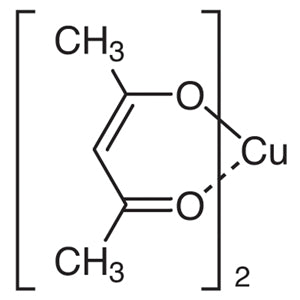
- TCI C0384 13395-16-9 Bis(2,4-pentanedionato)copper(II)
- TCI T3905 58452-28-1 Tetrakis(acetonitrile)copper(I) Trifluoromethanesulfonate
- TCI T1442 42152-46-5 Copper(I) Trifluoromethanesulfonate Benzene Complex
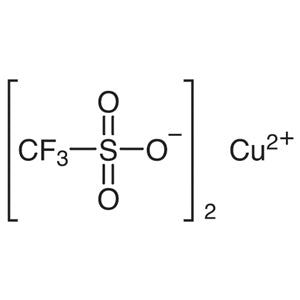
- TCI T1292 34946-82-2 Copper(II) Trifluoromethanesulfonate
- TCI B1513 32270-93-2 Bis(1,3-propanediamine) Copper(II) Dichloride
- Cross-coupling reactions such as Suzuki and Kumada require this compound for efficient C-C bond formation in organic synthesis.
- Organic synthesis experiments benefit from its catalytic properties, enabling selective and high-yield reactions with various substrates.
- Research on copper-based catalytic systems utilizes this compound to explore new synthetic methodologies and reaction mechanisms.
- Industrial chemical processes incorporate this material for the production of complex organic compounds with high purity.
- Analytical chemistry applications use it as a reference standard for evaluating catalytic activity and reaction efficiency.
| Brand | TCI |
|---|---|
| CAS number | 10380-28-6 |
| Molecular formula | — |
| Purity | — |
| Category | Chemistry > Catalysis and Inorganic Chemistry > Cross-coupling Reaction using Transition Metal Catalysts [C-C Bond Formation] |
| Pack sizes | — |
| Physical form | — |
| Storage | Store in a cool, dry place away from moisture and direct light |
This compound should be stored in a cool, dry environment to maintain its stability and purity. It is recommended to keep it in a sealed container to prevent exposure to moisture and air, which could degrade its catalytic properties. Laboratory personnel should handle the material with care, using appropriate personal protective equipment such as gloves and safety goggles. Due to its chemical nature, it should be stored away from incompatible substances to ensure safety. Regular monitoring of storage conditions is advised to maintain optimal performance in experimental applications. Proper labeling and storage practices help ensure the compound remains effective and safe for use in research settings.
—
Product Categories
- Catalysis and Inorganic ChemistryCross-coupling Reaction using Transition Metal Catalysts [C-C Bond Formation]Copper Catalysts [Cross-coupling Reaction using Transition Metal Catalysts]
- Synthetic ReagentsC-C Bond Formation [Synthetic Reagents]Cross-coupling Reaction using Transition Metal Catalysts [C-C Bond Formation]
Produk Terkait
-
Bis(8-quinolinolato)copper(II) TCI B1677
Regular price Rp 1.618.050,00Regular priceRp 1.146.600,00Sale price Rp 1.618.050,00 -
Bis(2,4-pentanedionato)copper(II) TCI C0384
Regular price From Rp 637.350,00Regular priceRp 445.200,00Sale price From Rp 637.350,00 -
Tetrakis(acetonitrile)copper(I)Trifluoromethanesulfonate TCI T3905
Regular price From Rp 2.252.250,00Regular priceRp 1.590.750,00Sale price From Rp 2.252.250,00 -
Copper(I)TrifluoromethanesulfonateBenzeneComplex TCI T1442
Regular price From Rp 2.041.200,00Regular priceRp 1.426.950,00Sale price From Rp 2.041.200,00 -
Copper(II)Trifluoromethanesulfonate TCI T1292
Regular price From Rp 1.510.950,00Regular priceRp 1.056.300,00Sale price From Rp 1.510.950,00 -
Bis(1,3-propanediamine)Copper(II)Dichloride TCI B1513
Regular price From Rp 1.326.150,00Regular priceRp 927.150,00Sale price From Rp 1.326.150,00 -
Copper(I)Acetate TCI A1540
Regular price From Rp 1.565.550,00Regular priceRp 1.094.100,00Sale price From Rp 1.565.550,00 -
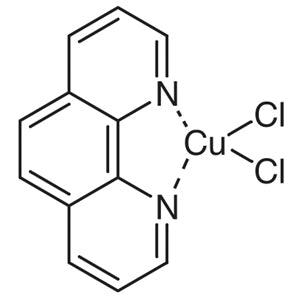
Dichloro(1,10-phenanthroline)copper(II) TCI D3891
Regular price From Rp 1.140.300,00Regular priceRp 812.700,00Sale price From Rp 1.140.300,00