Copper(I) Acetate (TCI A1540) is a chemical compound widely utilized in laboratory settings for its catalytic properties. It plays a crucial role in various chemical reactions, particularly in catalysis and inorganic chemistry. This compound is especially effective in C-H activation, a process essential for the synthesis of complex organic molecules. Its ability to facilitate chemical transformations makes it a valuable tool for researchers aiming to enhance reaction efficiency and reduce energy requirements.
The compound's reactivity and stability under controlled conditions make it a preferred choice in laboratory environments. Its molecular structure allows for strong interactions with substrates, enhancing catalytic performance. Copper(I) Acetate is also known for its effectiveness in oxidation and reduction reactions, contributing to its versatility in different synthetic pathways. Its reliability and consistent results make it a trusted material in both academic and industrial research.
In Indonesian laboratories, Copper(I) Acetate is commonly used in chemical research, particularly in higher education institutions and research centers. It is an essential component in experiments involving catalytic processes, organic synthesis, and analytical chemistry. Its widespread use highlights its importance in advancing scientific studies and developing new chemical methodologies.
TCI brochures (PDF)
- Copper (I) Complex Promoting Various Coupling Reactions 2018-07-13 · p. 1
- C-H Bond Activation Reaction 2025-06-20 · p. 7
- Metallic Salts 2025-11-06 · p. 11
- Click Chemistry 2026-09-08 · p. 7
- Transition Metal Catalysts 2026-04-10 · p. 15
- Lipids 2025-12-17 · p. 6
Related TCI products
- TCI T3905 58452-28-1 Tetrakis(acetonitrile)copper(I) Trifluoromethanesulfonate
- TCI T1442 42152-46-5 Copper(I) Trifluoromethanesulfonate Benzene Complex
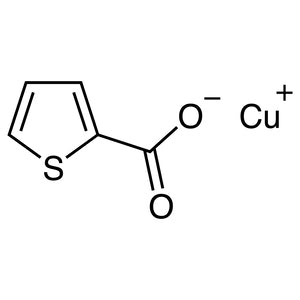
- TCI C2312 68986-76-5 Copper(I) 2-Thiophenecarboxylate
- TCI C2163 7681-65-4 Copper(I) Iodide
- TCI C2161 7787-70-4 Copper(I) Bromide
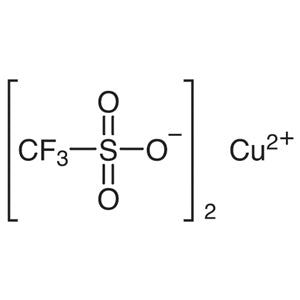
- TCI T1292 34946-82-2 Copper(II) Trifluoromethanesulfonate
- Catalytic C-H Activation: Copper(I) Acetate is ideal for activating carbon-hydrogen bonds, enabling the synthesis of complex organic compounds with high efficiency.
- Organic Synthesis Reactions: Its catalytic properties make it suitable for a variety of organic reactions, including coupling and functional group transformations.
- Oxidation and Reduction Processes: The compound is effective in redox reactions, aiding in the conversion of substrates under controlled conditions.
- Analytical Chemistry Applications: It is used in analytical procedures to facilitate the detection and quantification of specific compounds in samples.
- Inorganic Chemistry Research: Its role in inorganic reactions makes it a key reagent for studying chemical behavior and reaction mechanisms.
| Brand | TCI |
|---|---|
| CAS number | 598-54-9 |
| Molecular formula | — |
| Purity | — |
| Category | Chemistry > Catalysis and Inorganic Chemistry > C-H Activation [Catalysis] |
| Pack sizes | — |
| Physical form | — |
| Storage | Store in a dry, cool place away from moisture and air |
Copper(I) Acetate should be stored in a dry, cool environment to prevent degradation due to moisture and air exposure. It is recommended to use airtight containers to maintain its chemical stability. The compound is sensitive to humidity, so it should be kept in a controlled atmosphere to ensure optimal performance. Proper labeling and storage conditions are essential to maintain its effectiveness. In laboratory settings, it is important to handle the compound with care, using appropriate personal protective equipment. Regular monitoring of storage conditions helps to ensure the material remains viable for use in experiments.
—
Product Categories
- Catalysis and Inorganic ChemistryC-H Activation [Catalysis]Copper Compounds [C-H Activation]
- Catalysis and Inorganic ChemistryTransition Elements [Catalysis and Inorganic Chemistry]Copper [Catalysis and Inorganic Chemistry]
- Catalysis and Inorganic ChemistryCross-coupling Reaction using Transition Metal Catalysts [C-C Bond Formation]Copper Catalysts [Cross-coupling Reaction using Transition Metal Catalysts]
- Catalysis and Inorganic ChemistryMetallic Salts [Catalysis and Inorganic Chemistry]Acetate Salts [Metallic Salts]
- Chemical BiologyConjugation Chemistry/Click ChemistryCatalysts, Ligands, Reagents [Conjugation Chemistry/Click Chemistry]
- Synthetic ReagentsC-C Bond Formation [Synthetic Reagents]Cross-coupling Reaction using Transition Metal Catalysts [C-C Bond Formation]
Produk Terkait
-
Tetrakis(acetonitrile)copper(I)Trifluoromethanesulfonate TCI T3905
Regular price From Rp 2.252.250,00Regular priceRp 1.590.750,00Sale price From Rp 2.252.250,00 -
Copper(I)TrifluoromethanesulfonateBenzeneComplex TCI T1442
Regular price From Rp 2.041.200,00Regular priceRp 1.426.950,00Sale price From Rp 2.041.200,00 -
Copper(I)2-Thiophenecarboxylate TCI C2312
Regular price From Rp 1.008.000,00Regular priceRp 720.300,00Sale price From Rp 1.008.000,00 -
Copper(I)Iodide TCI C2163
Regular price From Rp 582.750,00Regular priceRp 423.150,00Sale price From Rp 582.750,00 -
Copper(I)Bromide TCI C2161
Regular price From Rp 477.750,00Regular priceRp 333.900,00Sale price From Rp 477.750,00 -
Copper(II)Trifluoromethanesulfonate TCI T1292
Regular price From Rp 1.510.950,00Regular priceRp 1.056.300,00Sale price From Rp 1.510.950,00 -
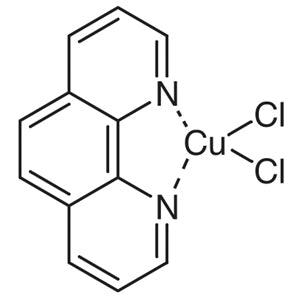
Dichloro(1,10-phenanthroline)copper(II) TCI D3891
Regular price From Rp 1.140.300,00Regular priceRp 812.700,00Sale price From Rp 1.140.300,00 -
Di-mu-hydroxo-bis[(N,N,N',N'-tetramethylethylenediamine)copper(II)]Chloride TCI D2542
Regular price From Rp 2.306.850,00Regular priceRp 1.612.800,00Sale price From Rp 2.306.850,00