TCI Copper(I) Iodide, catalog code C2163, is a monovalent copper salt that ranks among the most frequently used catalysts in synthetic organic chemistry. In the laboratory it is best known as the co-catalyst in Sonogashira coupling reactions alongside a palladium catalyst, as a standalone catalyst in Ullmann–Goldberg type coupling reactions, and as a reagent for generating organocopper species. Beyond these roles, copper(I) iodide is also employed in azide–alkyne cycloaddition reactions, the transformation that forms the backbone of click chemistry.
The property that sets this compound apart is its relatively better stability compared with other copper(I) salts. The soft iodide ion stabilizes the equally soft monovalent copper center, giving a reagent that is more forgiving to handle than many alternatives. Copper(I) iodide is practically insoluble in water, yet it can be brought into solution with the help of donor ligands such as amines, phosphines, or an excess iodide solution, which makes it straightforward to introduce into a wide range of reaction systems. Its ability to form copper acetylides in situ is the key step behind many alkyne coupling reactions.
In Indonesian laboratories, this reagent is a routine fixture in synthetic organic chemistry research groups at universities and in research institutes, particularly where cross-coupling methodology and click chemistry are part of the workflow. It is used in medicinal chemistry and materials-oriented synthesis, in method development work, and in graduate research projects that build carbon–carbon and carbon–heteroatom bonds. Its versatility across several reaction classes means a single reagent supports many different lines of investigation.
TCI brochures (PDF)
- Trifluoromethylating Reagents Used in Nucleophilic Reactions 2026-02-13 · p. 1
- Diamine Ligands for Ullmann-Type Cross-Coupling at Room Temperature 2024-12-23 · p. 2
- C-H Bond Activation Reaction 2025-06-20 · p. 7
- Metallic Salts 2025-11-06 · p. 5
- Transition Metal Catalysts 2026-04-10 · p. 15
- Biomaterials Research Reagents 2025-02-19 · p. 28
Related TCI products
- TCI C2161 7787-70-4 Copper(I) Bromide
- TCI A1540 598-54-9 Copper(I) Acetate
- TCI T3905 58452-28-1 Tetrakis(acetonitrile)copper(I) Trifluoromethanesulfonate
- TCI T1442 42152-46-5 Copper(I) Trifluoromethanesulfonate Benzene Complex
- TCI T1292 34946-82-2 Copper(II) Trifluoromethanesulfonate
- TCI D3891 14783-09-6 Dichloro(1,10-phenanthroline)copper(II)
- Sonogashira coupling: serves as the classic co-catalyst with palladium, forming copper acetylide in situ so the terminal alkyne transfers efficiently to the palladium center.
- Ullmann–Goldberg type coupling: acts as a standalone copper catalyst for carbon–heteroatom bond formation, avoiding the need for a separate palladium system in these transformations.
- Azide–alkyne cycloaddition (click chemistry): supplies the copper(I) source that drives the cycloaddition, the backbone reaction used to join molecular fragments reliably.
- Organocopper reagent preparation: functions as the copper source for generating organocopper species used in a variety of synthetic transformations requiring copper-mediated reactivity.
- General synthetic methodology development: its solubility control through amine, phosphine, or excess iodide donors lets researchers tune reaction systems during method optimization studies.
From the TCI brochure
- Catalyst (cat. CuI) in cross coupling of an aryl iodide with P2036 in DMSO at 60 °C
| Brand | TCI (Tokyo Chemical Industry) |
|---|---|
| CAS number | 7681-65-4 |
| Molecular formula | — |
| Purity | — |
| Category | Chemistry > Catalysis and Inorganic Chemistry > C-H Activation [Catalysis] |
| Pack sizes | — |
| Physical form | solid, white to brownish in color |
| Storage | protect from light, as the solid can change color on light exposure |
- Catalog code: C2163
Data from the TCI brochure
| Kemasan | 25g / 100g / 500g |
|---|
Source: TCI brochure RR084 (2026-02-13)
Store copper(I) iodide in a tightly closed, light-protected container such as an amber glass bottle or the original supplier packaging kept inside a closed cabinet, since the solid can discolor when exposed to light. Keep it in a cool, dry chemical storage area away from moisture and strong oxidizing agents. Handle the powder in a fume hood or a well-ventilated area to limit dust inhalation, and wear standard laboratory personal protective equipment including safety glasses, gloves, and a lab coat. Use clean, dry spatulas when weighing to avoid contaminating the stock, and close the container promptly after use. Always consult the manufacturer's safety data sheet before first use and dispose of residues through the laboratory's chemical waste channel.
References cited in the TCI brochure
- Thomas Knauber. Copper‐Catalyzed Trifluoromethylation of Aryl Iodides with Potassium (Trifluoromethyl)trimethoxyborate Chemistry – A European Journal, 2011. doi:10.1002/chem.201002749
Product Categories
- Catalysis and Inorganic ChemistryC-H Activation [Catalysis]Copper Compounds [C-H Activation]
- Catalysis and Inorganic ChemistryTransition Elements [Catalysis and Inorganic Chemistry]Copper [Catalysis and Inorganic Chemistry]
- Catalysis and Inorganic ChemistryCross-coupling Reaction using Transition Metal Catalysts [C-C Bond Formation]Copper Catalysts [Cross-coupling Reaction using Transition Metal Catalysts]
- Catalysis and Inorganic ChemistryMetallic Salts [Catalysis and Inorganic Chemistry]Iodide Salts [Metallic Salts]
- Synthetic ReagentsC-C Bond Formation [Synthetic Reagents]Cross-coupling Reaction using Transition Metal Catalysts [C-C Bond Formation]
- Polymer/Macromolecule ReagentsPolymerization ReagentsControlled Radical Polymerization Reagents
- Biomaterials/Biocompatible Materials Research ReagentsPolymerization Reagents (Initiators, Catalysts, Ligands) [Biomaterials/Biocompatible Materials Research Reagents]Atom Transfer Radical Polymerization (ATRP) Reagents
Produk Terkait
-
Copper(I)Bromide TCI C2161
Regular price From Rp 477.750,00Regular price -
Copper(I)Acetate TCI A1540
Regular price From Rp 1.565.550,00Regular price -
Tetrakis(acetonitrile)copper(I)Trifluoromethanesulfonate TCI T3905
Regular price From Rp 2.199.750,00Regular price -
Copper(I)TrifluoromethanesulfonateBenzeneComplex TCI T1442
Regular price From Rp 2.041.200,00Regular price -
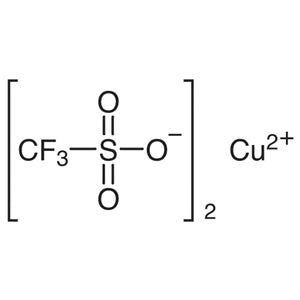
Copper(II)Trifluoromethanesulfonate TCI T1292
Regular price From Rp 1.510.950,00Regular price -
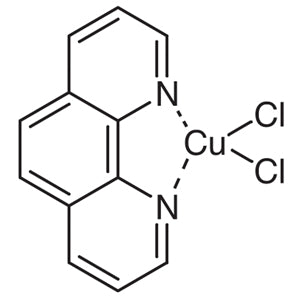
Dichloro(1,10-phenanthroline)copper(II) TCI D3891
Regular price From Rp 1.087.800,00Regular price -
Di-mu-hydroxo-bis[(N,N,N',N'-tetramethylethylenediamine)copper(II)]Chloride TCI D2542
Regular price From Rp 2.306.850,00Regular price -
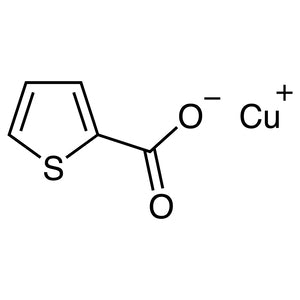
Copper(I)2-Thiophenecarboxylate TCI C2312
Regular price From Rp 955.500,00Regular price


![Di-mu-hydroxo-bis[(N,N,N',N'-tetramethylethylenediamine)copper(II)] Chloride (CAS 30698-64-7) - TCI D2542 - AMI Scientific](http://amiscientific.com/cdn/shop/files/TCI2510D2542.jpg?v=1767104988&width=533)