Dichloro(1,10-phenanthroline)copper(II) is a chemical compound widely used in catalytic reactions and C-H activation processes within laboratory settings. As a copper-based inorganic catalyst, it plays a crucial role in accelerating chemical reactions without being consumed in the process. This compound is particularly valuable in organic and inorganic chemistry research, where it contributes to the efficiency and selectivity of various reaction pathways. Its ability to form stable complexes with ligands like 1,10-phenanthroline makes it a versatile tool for synthetic chemists.
The compound's reactivity and stability under diverse reaction conditions make it a preferred choice for laboratory applications. Its capacity to act as a catalyst in substitution and oxidation reactions is enhanced by its coordination properties. The presence of the 1,10-phenanthroline ligand contributes to the formation of a highly active and stable complex, which is essential for maintaining catalytic efficiency. These characteristics ensure that the compound remains effective across a range of experimental setups, from solution-based to vacuum conditions.
In Indonesian laboratories, this compound is commonly used in research related to C-H activation, organic synthesis, and metal-based catalysis. Its reliability and performance in various chemical processes make it a staple in both academic and industrial research environments. Scientists and researchers rely on its consistent behavior to achieve reproducible results in complex chemical transformations.
TCI brochures (PDF)
- C-H Bond Activation Reaction 2025-06-20 · p. 7
- Transition Metal Catalysts 2026-04-10 · p. 16
Related TCI products
- TCI T1442 42152-46-5 Copper(I) Trifluoromethanesulfonate Benzene Complex
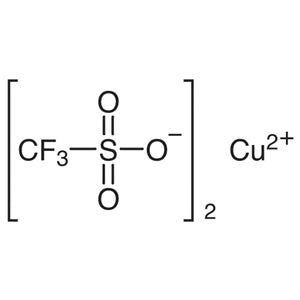
- TCI T1292 34946-82-2 Copper(II) Trifluoromethanesulfonate
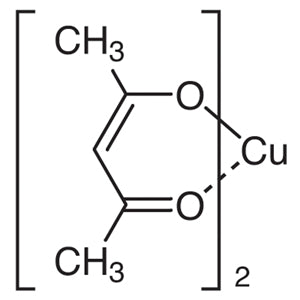
- TCI C0384 13395-16-9 Bis(2,4-pentanedionato)copper(II)
- TCI T3905 58452-28-1 Tetrakis(acetonitrile)copper(I) Trifluoromethanesulfonate
- TCI A1540 598-54-9 Copper(I) Acetate
- TCI D2542 30698-64-7 Di-mu-hydroxo-bis[(N,N,N',N'-tetramethylethylenediamine)copper(II)] Chloride
- C-H Activation Research - This compound is ideal for C-H activation studies due to its ability to facilitate selective bond-breaking in hydrocarbon molecules.
- Organic Synthesis - It serves as a key catalyst in the synthesis of complex organic compounds, enhancing reaction efficiency and yield.
- Metal-Based Catalysis - Its copper content makes it suitable for catalytic reactions involving metal coordination and complex formation.
- Oxidation Reactions - The compound is effective in promoting oxidation processes, particularly in the presence of appropriate ligands.
- Substitution Reactions - It is widely used in substitution reactions where it facilitates the replacement of functional groups with high selectivity.
| Brand | TCI |
|---|---|
| CAS number | 14783-09-6 |
| Molecular formula | — |
| Purity | — |
| Category | Chemistry > Catalysis and Inorganic Chemistry > C-H Activation [Catalysis] |
| Pack sizes | Available in various quantities as per standard laboratory supply |
| Physical form | Solid powder |
| Storage | Store in a cool, dry place away from moisture and direct sunlight |
This compound should be stored in a cool, dry environment to maintain its stability and catalytic activity. It is recommended to use airtight containers to prevent exposure to moisture and air, which can degrade its effectiveness. Due to its reactivity, it should be handled with care, using appropriate personal protective equipment such as gloves and safety goggles. It is important to keep it away from incompatible substances to avoid any potential chemical reactions. In laboratory settings, it should be stored in a designated chemical storage area that is well-ventilated and accessible only to authorized personnel. Regular inspection of storage conditions is advised to ensure the compound remains in optimal condition for use in research applications.
—
Product Categories
- Catalysis and Inorganic ChemistryC-H Activation [Catalysis]Copper Compounds [C-H Activation]
- Catalysis and Inorganic ChemistryTransition Elements [Catalysis and Inorganic Chemistry]Copper [Catalysis and Inorganic Chemistry]
- Catalysis and Inorganic ChemistryCross-coupling Reaction using Transition Metal Catalysts [C-C Bond Formation]Copper Catalysts [Cross-coupling Reaction using Transition Metal Catalysts]
- Synthetic ReagentsC-C Bond Formation [Synthetic Reagents]Cross-coupling Reaction using Transition Metal Catalysts [C-C Bond Formation]
- Synthetic ReagentsC-X(Non-Halogen) Bond Formation [Synthetic Reagents]C-H Bond Activation Reaction [Synthetic Reagents]
Produk Terkait
-
Copper(I)TrifluoromethanesulfonateBenzeneComplex TCI T1442
Regular price Rp 2.041.200,00Regular priceRp 1.426.950,00Sale price Rp 2.041.200,00 -
Copper(II)Trifluoromethanesulfonate TCI T1292
Regular price Rp 1.510.950,00Regular priceRp 1.056.300,00Sale price Rp 1.510.950,00 -
Bis(2,4-pentanedionato)copper(II) TCI C0384
Regular price From Rp 637.350,00Regular price -
Tetrakis(acetonitrile)copper(I)Trifluoromethanesulfonate TCI T3905
Regular price Rp 2.252.250,00Regular priceRp 1.590.750,00Sale price Rp 2.252.250,00 -
Copper(I)Acetate TCI A1540
Regular price From Rp 1.565.550,00Regular price -
Di-mu-hydroxo-bis[(N,N,N',N'-tetramethylethylenediamine)copper(II)]Chloride TCI D2542
Regular price From Rp 2.306.850,00Regular price -
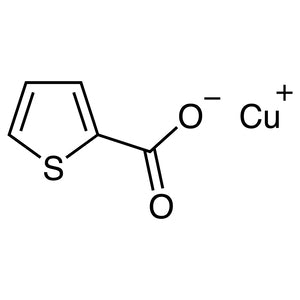
Copper(I)2-Thiophenecarboxylate TCI C2312
Regular price From Rp 955.500,00Regular price -
Copper(I)Iodide TCI C2163
Regular price From Rp 530.250,00Regular price



![Di-mu-hydroxo-bis[(N,N,N',N'-tetramethylethylenediamine)copper(II)] Chloride (CAS 30698-64-7) - TCI D2542 - AMI Scientific](http://amiscientific.com/cdn/shop/files/TCI2510D2542.jpg?v=1767104988&width=533)