Bis(8-quinolinolato)copper(II), with the CAS number 10380-28-6, is a chemical compound widely used in organic chemistry reactions, particularly in catalytic processes involving transition metals. This compound serves as an essential catalyst in cross-coupling reactions, where it facilitates the formation of carbon-carbon (C-C) bonds. Its role in the laboratory is critical for enabling efficient and selective chemical transformations, especially in synthetic routes that require metal-based catalytic systems. Due to its stability and reactivity, it is a preferred choice for researchers working on complex organic syntheses.
The compound’s unique chemical properties, including its stable structure and specific reactivity, make it a preferred choice in laboratory settings. It exhibits high catalytic efficiency and selectivity, allowing for controlled reactions under various conditions. Its ability to interact with a wide range of organic substrates enhances its versatility, making it suitable for diverse applications. Additionally, its chemical inertness under normal storage conditions ensures that it retains its catalytic activity when needed, reducing the risk of degradation or unwanted side reactions.
In Indonesian laboratories, Bis(8-quinolinolato)copper(II) is extensively used in organic chemistry research, particularly in cross-coupling reactions that require transition metal catalysts. Its reliability and effectiveness in promoting C-C bond formation make it a valuable tool for chemists working on synthetic pathways, drug development, and material science. Its widespread use highlights its importance in advancing chemical research in the region.
TCI brochures (PDF)
- Magnetic Metal Complexes 2024-12-16 · p. 2
- Agrochemical Ingredients for Research and Experimental Use 2026-01-08 · p. 5
- Plant Research Reagents 2026-02-24 · p. 11
- Transition Metal Catalysts 2026-04-10 · p. 16
- Reagents for Biological Research 2025-03-11 · p. 56
Related TCI products
- TCI B3834 10380-28-6 Bis(8-quinolinolato)copper(II) (purified by sublimation)
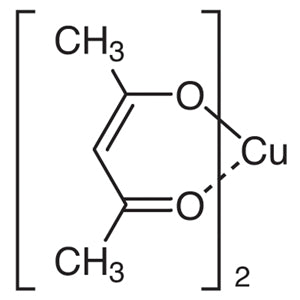
- TCI C0384 13395-16-9 Bis(2,4-pentanedionato)copper(II)
- TCI T3905 58452-28-1 Tetrakis(acetonitrile)copper(I) Trifluoromethanesulfonate
- TCI T1442 42152-46-5 Copper(I) Trifluoromethanesulfonate Benzene Complex
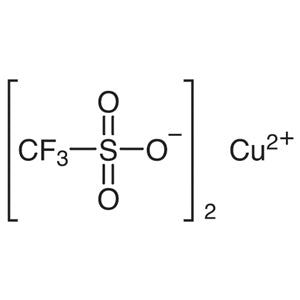
- TCI T1292 34946-82-2 Copper(II) Trifluoromethanesulfonate
- TCI B1513 32270-93-2 Bis(1,3-propanediamine) Copper(II) Dichloride
- Cross-coupling reactions benefit from Bis(8-quinolinolato)copper(II) due to its ability to activate carbon-carbon bonds and promote efficient coupling under mild conditions.
- Organic synthesis projects often utilize this compound as a transition metal catalyst to achieve high yields and selectivity in complex molecular transformations.
- Catalytic systems in polymer chemistry rely on this material to facilitate the formation of stable carbon-carbon linkages, enhancing the structural integrity of synthetic polymers.
- Medicinal chemistry research employs this compound to enable the synthesis of bioactive compounds that require precise C-C bond formation for functional group placement.
- Analytical chemistry applications use it as a reagent in catalytic assays to study reaction mechanisms and evaluate the performance of transition metal catalysts.
| Brand | TCI |
|---|---|
| CAS number | 10380-28-6 |
| Molecular formula | — |
| Purity | — |
| Category | Chemistry > Catalysis and Inorganic Chemistry > Cross-coupling Reaction using Transition Metal Catalysts [C-C Bond Formation] |
| Pack sizes | Available in various quantities as per supplier specifications |
| Physical form | Solid powder or crystalline form, depending on packaging |
| Storage | Store in a cool, dry place away from moisture and direct sunlight |
Bis(8-quinolinolato)copper(II) should be stored in a cool, dry environment to maintain its chemical stability and catalytic activity. It is recommended to keep the compound in a sealed container to prevent exposure to moisture and air, which could lead to degradation. Suitable storage containers include glass or high-density polyethylene (HDPE) bottles that are resistant to chemical interaction. In laboratory settings, it should be handled with appropriate personal protective equipment (PPE) such as gloves and safety goggles to ensure safe handling. Avoid direct contact with skin and inhalation of dust, especially during weighing or transfer. Proper labeling and storage in a designated chemical cabinet are essential to prevent accidental exposure and ensure compliance with safety protocols.
—
Product Categories
- Catalysis and Inorganic ChemistryCross-coupling Reaction using Transition Metal Catalysts [C-C Bond Formation]Copper Catalysts [Cross-coupling Reaction using Transition Metal Catalysts]
- Synthetic ReagentsC-C Bond Formation [Synthetic Reagents]Cross-coupling Reaction using Transition Metal Catalysts [C-C Bond Formation]
Produk Terkait
-
Bis(8-quinolinolato)copper(II)(purifiedbysublimation) TCI B3834
Regular price Rp 3.340.050,00Regular priceRp 2.350.950,00Sale price Rp 3.340.050,00 -
Bis(2,4-pentanedionato)copper(II) TCI C0384
Regular price From Rp 637.350,00Regular priceRp 445.200,00Sale price From Rp 637.350,00 -
Tetrakis(acetonitrile)copper(I)Trifluoromethanesulfonate TCI T3905
Regular price From Rp 2.252.250,00Regular priceRp 1.590.750,00Sale price From Rp 2.252.250,00 -
Copper(I)TrifluoromethanesulfonateBenzeneComplex TCI T1442
Regular price From Rp 2.041.200,00Regular priceRp 1.426.950,00Sale price From Rp 2.041.200,00 -
Copper(II)Trifluoromethanesulfonate TCI T1292
Regular price From Rp 1.510.950,00Regular priceRp 1.056.300,00Sale price From Rp 1.510.950,00 -
Bis(1,3-propanediamine)Copper(II)Dichloride TCI B1513
Regular price From Rp 1.326.150,00Regular priceRp 927.150,00Sale price From Rp 1.326.150,00 -
Copper(I)Acetate TCI A1540
Regular price From Rp 1.565.550,00Regular priceRp 1.094.100,00Sale price From Rp 1.565.550,00 -
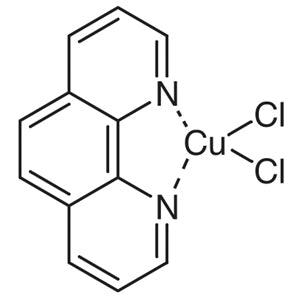
Dichloro(1,10-phenanthroline)copper(II) TCI D3891
Regular price From Rp 1.140.300,00Regular priceRp 812.700,00Sale price From Rp 1.140.300,00