Bis(1,3-propanediamine) Copper(II) Dichloride is a chemical compound widely used in catalytic reactions and organic synthesis within laboratory settings. It functions as a transition metal-based catalyst, playing a crucial role in accelerating chemical reactions without being consumed in the process. This compound is particularly valuable in laboratory environments where controlled and efficient chemical transformations are required. Its unique structure, involving copper(II) ions coordinated with chloride ions and 1,3-propanediamine ligands, makes it a versatile tool for various synthetic applications.
One of the key properties that make this compound a preferred choice is its stability under a range of reaction conditions. It exhibits high reactivity and the ability to form stable complexes with different ligands, which enhances its utility in both organic and inorganic chemistry. Additionally, its effectiveness as a catalyst in oxidation and reduction reactions contributes to its popularity among researchers. The compound’s ability to maintain its catalytic activity in diverse environments further supports its widespread use in chemical research.
In Indonesian laboratories, Bis(1,3-propanediamine) Copper(II) Dichloride is commonly utilized in both fundamental and applied chemical research. It is frequently employed in academic and industrial settings to facilitate complex chemical transformations. Its role in advancing chemical synthesis and catalytic processes makes it an essential component in the toolkit of chemists and researchers working in Indonesia.
TCI brochures (PDF)
- Transition Metal Catalysts 2026-04-10 · p. 16
Related TCI products
- TCI T3905 58452-28-1 Tetrakis(acetonitrile)copper(I) Trifluoromethanesulfonate
- TCI T1442 42152-46-5 Copper(I) Trifluoromethanesulfonate Benzene Complex
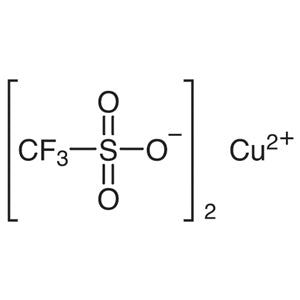
- TCI T1292 34946-82-2 Copper(II) Trifluoromethanesulfonate
- TCI A1540 598-54-9 Copper(I) Acetate
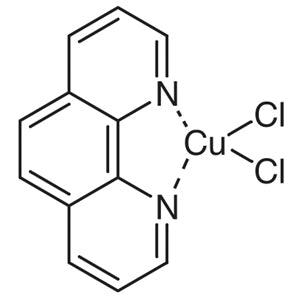
- TCI D3891 14783-09-6 Dichloro(1,10-phenanthroline)copper(II)
- TCI D2542 30698-64-7 Di-mu-hydroxo-bis[(N,N,N',N'-tetramethylethylenediamine)copper(II)] Chloride
- Organic synthesis reactions benefit from this compound’s ability to act as a catalyst in complex chemical transformations, enhancing reaction efficiency.
- Catalytic oxidation and reduction processes utilize its transition metal properties to facilitate electron transfer and reaction pathways.
- Inorganic chemistry experiments leverage its capacity to form stable complexes with various ligands, enabling the study of coordination chemistry.
- Research in catalysis and materials science employs it to develop new catalysts and understand reaction mechanisms under controlled conditions.
- Industrial chemical processes incorporate it to improve the efficiency of large-scale chemical production, reducing energy and resource consumption.
| Brand | TCI |
|---|---|
| CAS number | 32270-93-2 |
| Molecular formula | — |
| Purity | — |
| Category | Chemistry > Catalysis and Inorganic Chemistry > Transition Elements |
| Pack sizes | Available in various quantities as per supplier specifications |
| Physical form | Solid powder or crystalline structure |
| Storage | Store in a cool, dry place away from moisture and direct sunlight |
This compound should be stored in a cool, dry environment to prevent degradation and maintain its catalytic properties. It is recommended to use airtight containers to minimize exposure to moisture and air, which can affect its stability. As a transition metal compound, it may react with certain substances, so it is important to handle it with care and use appropriate personal protective equipment. Storage should be in a well-ventilated area to ensure safety. Avoid contact with strong acids or bases, as they may alter its chemical properties. Proper labeling and containment are essential to ensure safe handling and storage in laboratory settings.
—
Product Categories
- Catalysis and Inorganic ChemistryTransition Elements [Catalysis and Inorganic Chemistry]Copper [Catalysis and Inorganic Chemistry]
- Catalysis and Inorganic ChemistryCross-coupling Reaction using Transition Metal Catalysts [C-C Bond Formation]Copper Catalysts [Cross-coupling Reaction using Transition Metal Catalysts]
- Synthetic ReagentsC-C Bond Formation [Synthetic Reagents]Cross-coupling Reaction using Transition Metal Catalysts [C-C Bond Formation]
Produk Terkait
-
Tetrakis(acetonitrile)copper(I)Trifluoromethanesulfonate TCI T3905
Regular price From Rp 2.252.250,00Regular priceRp 1.590.750,00Sale price From Rp 2.252.250,00 -
Copper(I)TrifluoromethanesulfonateBenzeneComplex TCI T1442
Regular price From Rp 2.041.200,00Regular priceRp 1.426.950,00Sale price From Rp 2.041.200,00 -
Copper(II)Trifluoromethanesulfonate TCI T1292
Regular price From Rp 1.510.950,00Regular priceRp 1.056.300,00Sale price From Rp 1.510.950,00 -
Copper(I)Acetate TCI A1540
Regular price From Rp 1.565.550,00Regular priceRp 1.094.100,00Sale price From Rp 1.565.550,00 -
Dichloro(1,10-phenanthroline)copper(II) TCI D3891
Regular price From Rp 1.140.300,00Regular priceRp 812.700,00Sale price From Rp 1.140.300,00 -
Di-mu-hydroxo-bis[(N,N,N',N'-tetramethylethylenediamine)copper(II)]Chloride TCI D2542
Regular price From Rp 2.306.850,00Regular priceRp 1.612.800,00Sale price From Rp 2.306.850,00 -
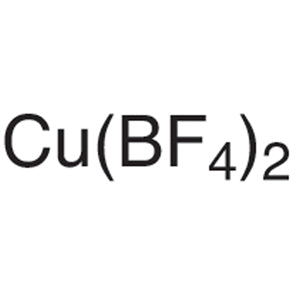
Copper(II)Tetrafluoroborate(ca.45%inWater) TCI C2410
Regular price Rp 1.565.550,00Regular priceRp 1.094.100,00Sale price Rp 1.565.550,00 -
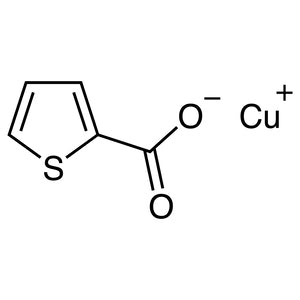
Copper(I)2-Thiophenecarboxylate TCI C2312
Regular price From Rp 1.008.000,00Regular priceRp 720.300,00Sale price From Rp 1.008.000,00