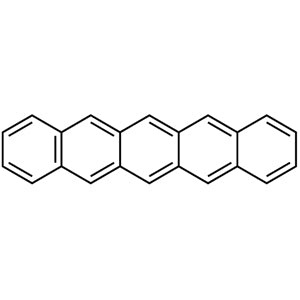
Anthracene (purified by sublimation), with CAS number 120-12-7, is an organic compound with an aromatic structure widely used in various fields of chemistry. This material is commonly found in laboratories for the synthesis of complex compounds, chemical analysis, and material research. As a polycyclic aromatic hydrocarbon, anthracene exhibits stable chemical properties and serves as a foundational component in the production of more complex compounds. Its high purity, achieved through sublimation, ensures it is free from contamination, making it ideal for scientific applications requiring precision.
The physical and chemical properties of anthracene are consistent, making it a preferred choice for experiments that demand high purity standards. Its ability to participate in various chemical reactions without undergoing significant degradation makes it a reliable reagent. The sublimation process further enhances its purity, ensuring that it meets the rigorous requirements of modern laboratory practices. This reliability is particularly important in research settings where accuracy and reproducibility are essential.
In Indonesian laboratories, anthracene is frequently used in chemical research, especially in organic synthesis and material characterization. It plays a vital role in educational settings, serving as a practical example for understanding aromatic reactions and compound behavior. Its availability in the local market supports both academic and industrial research, facilitating the advancement of scientific knowledge and innovation.
Advantages (TCI brochure)
- Colorless crystalline powder with impurities thoroughly removed by sublimation purification
- High purity chemical suitable as raw material for material synthesis and analytical reagent
TCI brochures (PDF)
- Highly Sublimation-Purified Acridine, Anthracene, Phenanthrene 2025-03-31 · p. 1
- High-Purity Polycyclic Aromatic Hydrocarbons (PAHs) 2025-07-17 · p. 1
- Chemical Compounds Purified by Sublimation 2025-05-07 · p. 2
- Nanocarbon Materials 2026-09-30 · p. 7
- Organic synthesis experiments benefit from anthracene's stable structure and high purity, enabling the creation of complex compounds with controlled reactivity.
- Material characterization studies utilize anthracene to analyze the properties of polycyclic aromatic hydrocarbons and their behavior under various conditions.
- Chemical analysis applications rely on anthracene's consistent physical and chemical properties for accurate and reproducible results in analytical procedures.
- Educational demonstrations use anthracene to teach students about aromatic compounds and their reactivity in laboratory settings.
- Research into photovoltaic materials incorporates anthracene due to its ability to absorb light and participate in energy transfer processes.
From the TCI brochure
- Raw material for material synthesis
- Analytical reagent
| Brand | TCI |
|---|---|
| CAS number | 120-12-7 |
| Molecular formula | — |
| Purity | — |
| Category | Chemistry > Building Blocks > Non-Heterocyclic Building Blocks |
| Pack sizes | — |
| Physical form | Solid |
| Storage | Store in a cool, dry place away from light and moisture |
Data from the TCI brochure
| Purity | >99.5% |
|---|
Source: TCI brochure FF114 (2025-03-31)
Anthracene should be stored in a cool, dry place, away from light and moisture to maintain its purity and stability. It is recommended to use airtight containers made of glass or polyethylene to prevent contamination and exposure to air. Due to its chemical stability, anthracene does not require refrigeration but should be protected from direct sunlight. In laboratory settings, it is important to handle anthracene with appropriate personal protective equipment to ensure safety. Proper labeling and storage conditions help prevent accidental exposure and maintain the integrity of the compound for repeated use in experiments.
—
Product Categories
Produk Terkait
-
Anthracene TCI A0495
Regular price From Rp 584.850,00Regular priceRp 408.450,00Sale price From Rp 584.850,00 -
p-Terphenyl(purifiedbysublimation) TCI T3263
Regular price From Rp 1.510.950,00Regular priceRp 1.056.300,00Sale price From Rp 1.510.950,00 -
Benz[a]anthracene TCI B0017
Regular price From Rp 1.458.450,00Regular priceRp 1.019.550,00Sale price From Rp 1.458.450,00 -
9,10-Di(1-naphthyl)anthracene TCI D3975
Regular price From Rp 1.538.250,00Regular priceRp 1.075.200,00Sale price From Rp 1.538.250,00 -
Triphenylene(purifiedbysublimation) TCI T3267
Regular price From Rp 3.367.350,00Regular priceRp 2.354.100,00Sale price From Rp 3.367.350,00 -
Pyrene(purifiedbysublimation) TCI P2072
Regular price Rp 1.220.100,00Regular priceRp 852.600,00Sale price Rp 1.220.100,00 -
Pentacene(purifiedbysublimation) TCI P0030
Regular price From Rp 1.087.800,00Regular priceRp 760.200,00Sale price From Rp 1.087.800,00 -
Naphthacene(purifiedbysublimation) TCI N0951
Regular price From Rp 2.439.150,00Regular priceRp 1.705.200,00Sale price From Rp 2.439.150,00