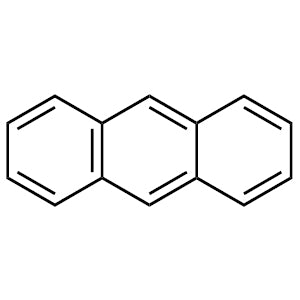
Benz[a]anthracene is a polycyclic aromatic hydrocarbon widely used in laboratory experiments across various chemical disciplines. As a key building block in organic chemistry, it plays a crucial role in the synthesis of complex molecules and the study of molecular structures. This compound is particularly valuable for researchers working on structural analysis and reaction mechanisms due to its unique chemical properties. Its presence in laboratory settings supports both fundamental and applied research, making it an essential component in many chemical processes.
The compound is known for its chemical stability and high reactivity, which make it a preferred choice for a wide range of chemical applications. Its non-volatile nature ensures it remains stable under normal laboratory conditions, reducing the risk of degradation during storage and use. Additionally, Benz[a]anthracene has a complex molecular structure composed of three interconnected aromatic rings, which contributes to its versatility in chemical reactions. These characteristics allow it to participate in various types of reactions, including substitution, oxidation, and reduction, making it a valuable reagent in synthetic chemistry.
In Indonesian laboratories, Benz[a]anthracene is commonly used in chemical research, especially in organic synthesis and the analysis of complex compounds. Its availability in different packaging sizes ensures that it can be used effectively in both small-scale and large-scale experiments. The compound's properties make it suitable for educational institutions and research facilities that require reliable and stable chemical materials for their work.
TCI brochures (PDF)
- High-Purity Polycyclic Aromatic Hydrocarbons (PAHs) 2025-07-17 · p. 1
- Nanocarbon Materials 2026-09-30 · p. 8
Related TCI products
- Organic synthesis experiments benefit from Benz[a]anthracene due to its structural complexity and reactivity, enabling the creation of novel compounds.
- Molecular structure analysis uses Benz[a]anthracene to study aromatic systems and intermolecular interactions in advanced research.
- Chemical reaction studies incorporate Benz[a]anthracene to explore substitution and oxidation processes in controlled environments.
- Educational institutions utilize Benz[a]anthracene for teaching fundamental chemical concepts and laboratory techniques.
- Environmental research employs Benz[a]anthracene to analyze pollutants and their behavior in complex chemical systems.
| Brand | TCI |
|---|---|
| CAS number | 56-55-3 |
| Molecular formula | — |
| Purity | — |
| Category | Chemistry > Building Blocks > Non-Heterocyclic Building Blocks |
| Pack sizes | Available in various packaging sizes for different experimental needs |
| Physical form | Solid |
| Storage | Store in a cool, dry place away from light and incompatible materials |
Benz[a]anthracene should be stored in a cool, dry environment, away from direct sunlight and sources of heat. It is recommended to use airtight containers to prevent contamination and maintain its chemical integrity. Due to its potential reactivity, it should be kept separate from strong oxidizing agents and incompatible substances. In laboratory settings, proper personal protective equipment should always be worn when handling this compound. Regular inspection of storage conditions ensures the material remains stable and safe for use. Laboratories should ensure that storage areas are well-ventilated and follow standard safety protocols to minimize risks associated with handling this compound.
—
Produk Terkait
-
Anthracene TCI A0495
Regular price From Rp 584.850,00Regular priceRp 408.450,00Sale price From Rp 584.850,00 -
Anthracene(purifiedbysublimation) TCI A3437
Regular price Rp 1.405.950,00Regular priceRp 982.800,00Sale price Rp 1.405.950,00 -
9,10-Di(1-naphthyl)anthracene TCI D3975
Regular price From Rp 1.538.250,00Regular priceRp 1.075.200,00Sale price From Rp 1.538.250,00 -
9-(1-Naphthyl)-10-(2-naphthyl)anthracene TCI N1135
Regular price From Rp 2.121.000,00Regular priceRp 1.482.600,00Sale price From Rp 2.121.000,00 -
9-(1-Naphthyl)anthracene TCI N0994
Regular price From Rp 743.400,00Regular priceRp 519.750,00Sale price From Rp 743.400,00 -
7-Methylbenz[a]anthracene TCI M0248
Regular price Rp 848.400,00Regular priceRp 593.250,00Sale price Rp 848.400,00 -
7,12-Dimethylbenz[a]anthracene TCI D0677
Regular price From Rp 4.001.550,00Regular priceRp 2.798.250,00Sale price From Rp 4.001.550,00 -
1,8-Bis(hydroxymethyl)anthracene TCI B1904
Regular price Rp 9.673.650,00Regular priceRp 6.764.100,00Sale price Rp 9.673.650,00