


TCI O0197 1,2,3,4,5,6,7,8-Octahydroacridine is a partially hydrogenated derivative of acridine. Its two outer benzene rings have been saturated into cyclohexane rings, while the central pyridine ring stays aromatic. The result is a tricyclic molecule with a pyridine core between two saturated carbocyclic rings. In the laboratory, it serves as a heterocyclic building block for making fused pyridine derivatives. It is also used as a moderately sterically hindered nitrogen base and as a model compound in studies of hydrogenation and denitrogenation of aromatic nitrogen compounds.
Chemists choose this material because its pyridine nitrogen stays basic. The nitrogen can coordinate to metals or form salts, so the compound works both as a reactive centre and as a ligand-like site. The two saturated rings around the core give the molecule a rigid, lipophilic framework, which is useful for building defined molecular shapes. The benzylic or allylic positions on the saturated rings next to the pyridine core can be functionalized further, for example by condensation with aldehydes. This gives synthetic chemists a practical way to build more elaborate structures from a single, well-defined starting scaffold.
In Indonesian laboratories, Octahydroacridine is relevant to university research groups, research institutes and industrial R&D units working in organic synthesis, heterocyclic chemistry and catalysis. It is a key intermediate in the hydrogenation pathway of acridine, so it suits studies of catalysts for hydrogen storage and of nitrogen-compound processing, such as denitrogenation work relevant to fuel and petrochemical research. Synthetic groups can also use it as a starting scaffold when preparing fused pyridine derivatives for method development or for exploratory projects in medicinal and materials chemistry.
Related TCI products
- TCI D5058 92-81-9 9,10-Dihydroacridine
- TCI O0432 38609-97-1 9-Oxoacridine-10-acetic Acid
- TCI C4082 5396-30-5 9-Chloro-1,2,3,4-tetrahydroacridine
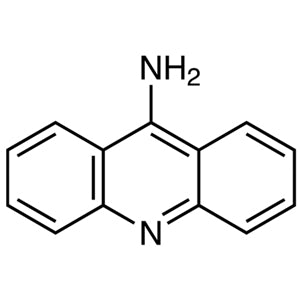
- TCI A2905 90-45-9 9-Aminoacridine
- TCI A0619 52417-22-8 9-Aminoacridine Hydrochloride Monohydrate
- TCI D5746 2250187-17-6 10-[4-[4,6-Di(adamantan-1-yl)-1,3,5-triazin-2-yl]phenyl]-9,9-diphenyl-9,10-dihydroacridine (purified by sublimation)
- Heterocyclic building block synthesis: the aromatic pyridine core between two saturated rings gives a rigid scaffold for building a range of fused pyridine derivatives.
- Side-chain functionalization: the benzylic or allylic positions next to the pyridine core can react further, for example by condensation with aldehydes, to extend the molecular framework.
- Hindered nitrogen base: the pyridine nitrogen stays basic, and the flanking saturated rings add moderate steric hindrance, which is useful where a controlled, less nucleophilic base is needed.
- Coordination and salt formation studies: the basic pyridine nitrogen can coordinate to metals or form salts, supporting work on ligands, metal complexes and the preparation of crystalline salts.
- Hydrogenation and denitrogenation model studies: as an intermediate in the acridine hydrogenation pathway, it is a suitable reference compound for catalysis research on hydrogen storage and nitrogen-compound processing.
| Brand | TCI (product code O0197) |
|---|---|
| CAS number | 1658-08-8 |
| Molecular formula | — |
| Purity | — |
| Category | Chemistry > Building Blocks > Heterocyclic Building Blocks |
| Pack sizes | see the options listed on the product page |
| Physical form | see the manufacturer's Certificate of Analysis and Safety Data Sheet |
| Storage | follow the storage conditions on the product label and the TCI Safety Data Sheet |
Store 1,2,3,4,5,6,7,8-Octahydroacridine in its original, tightly closed container in a cool, dry, well-ventilated place. Keep it away from direct sunlight, heat sources, strong oxidizing agents and strong acids. If you need to repackage it, use clean, dry, chemically compatible glass containers that are clearly labelled. Handle the material in a fume hood, and wear suitable protective equipment such as nitrile gloves, safety glasses and a laboratory coat. Avoid inhaling dust or vapour and avoid contact with skin and eyes. Always check the TCI Safety Data Sheet before use for specific hazard, storage and disposal instructions, and dispose of waste according to local regulations.
—
Produk Terkait
-
9,10-Dihydroacridine TCI D5058
Regular price From Rp 1.776.600,00Regular price -
9-Oxoacridine-10-aceticAcid TCI O0432
Regular price From Rp 769.650,00Regular price -
9-Chloro-1,2,3,4-tetrahydroacridine TCI C4082
Regular price From Rp 2.094.750,00Regular price -
9-Aminoacridine TCI A2905
Regular price From Rp 1.510.950,00Regular price -
9-AminoacridineHydrochlorideMonohydrate TCI A0619
Regular price From Rp 875.700,00Regular price -
10-[4-[4,6-Di(adamantan-1-yl)-1,3,5-triazin-2-yl]phenyl]-9,9-diphenyl-9,10-dihydroacridine(purifiedbysublimation) TCI D5746
Regular price Rp 5.300.400,00Regular price -
10-[4-[4,6-Di(adamantan-1-yl)-1,3,5-triazin-2-yl]phenyl]-9,9-dimethyl-9,10-dihydroacridine(purifiedbysublimation) TCI D5745
Regular price Rp 4.743.900,00Regular price -
9,9-Dimethyl-10-phenyl-9,10-dihydroacridine TCI D5354
Regular price From Rp 2.254.350,00Regular price



![10-[4-[4,6-Di(adamantan-1-yl)-1,3,5-triazin-2-yl]phenyl]-9,9-diphenyl-9,10-dihydroacridine (purified by sublimation) (CAS 2250187-17-6) - TCI D5746 - AMI Scientific](http://amiscientific.com/cdn/shop/files/TCI2510D5746.jpg?v=1768818506&width=533)
![10-[4-[4,6-Di(adamantan-1-yl)-1,3,5-triazin-2-yl]phenyl]-9,9-dimethyl-9,10-dihydroacridine (purified by sublimation) (CAS 2250187-15-4) - TCI D5745 - AMI Scientific](http://amiscientific.com/cdn/shop/files/TCI2510D5745.jpg?v=1771058203&width=533)
