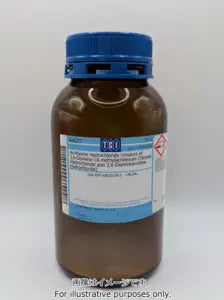
Acriflavine is a chemical compound widely used in laboratory settings, particularly in biochemistry and pharmacology. It is a mixture of 3,6-Diamino-10-methylacridinium Chloride and 3,6-Diaminoacridine, both of which exhibit antimicrobial properties. This compound is commonly employed for bacterial identification and as a reagent in biological testing processes. Its role is critical in microbiological and pharmacological research, where accurate and reliable results are essential. Acriflavine is valued for its stability and ease of measurement, making it a preferred choice for specialized reagent applications.
The chemical properties of Acriflavine allow it to interact with various biological substrates, including proteins and DNA. It is soluble in organic solvents and maintains stability under specific conditions, which contributes to its reliability in laboratory experiments. Its ability to bind to nucleic acids and proteins makes it useful in staining and analytical techniques. These characteristics make Acriflavine a versatile tool in both research and diagnostic applications.
In Indonesian laboratories, Acriflavine is utilized in a range of studies related to public health, pharmaceutical development, and biotechnology. It is commonly applied in antimicrobial activity testing and biological analysis. Its availability and effectiveness make it a standard reagent in many research institutions and academic settings. The compound's consistent performance supports its use in both basic and applied research projects.
TCI brochures (PDF)
- Efflux Pump Research Reagents 2024-12-24 · p. 1
- Antimicrobials and Antitumor Agents for Research and Experimental Use 2025-04-24 · p. 7
- Pharmaceutical Ingredients for Research and Experimental Use 2026-03-09 · p. 7
Related TCI products
- TCI A0677 69235-50-3 Acriflavine Hydrochloride (mixture of 3,6-Diamino-10-methylacridinium Chloride Hydrochloride and 3,6-Diaminoacridine Hydrochloride)
- TCI B3972 9041-93-4 Bleomycin Sulfate (mixture)
- TCI C2241 4800-94-6 Carbenicillin Disodium (mixture of isomers)
- TCI T2286 738-70-5 Trimethoprim
- TCI A0420 65-49-6 4-Aminosalicylic Acid
- TCI A0423 6018-19-5 Sodium 4-Aminosalicylate Dihydrate
- Antimicrobial Activity Testing – Acriflavine is used to evaluate the effectiveness of antimicrobial agents against various bacterial strains due to its inherent antimicrobial properties.
- Bacterial Identification – Its ability to bind to nucleic acids makes it useful in staining techniques for identifying bacterial species in microbiological studies.
- Biological Staining – Acriflavine is employed in cellular and tissue staining applications, aiding in the visualization of biological structures under a microscope.
- Pharmacological Research – It serves as a reagent in drug development studies, helping to assess the interaction of compounds with biological molecules.
- Diagnostic Testing – Acriflavine is used in diagnostic assays to detect microbial presence in samples, supporting clinical and research applications.
| Brand | TCI |
|---|---|
| CAS number | 8048-52-0 |
| Molecular formula | — |
| Purity | — |
| Category | Life Science > Biochemicals and Reagents > Antibiotics |
| Pack sizes | Available in standard laboratory quantities |
| Physical form | Solid powder |
| Storage | Store in a cool, dry place away from light |
Acriflavine should be stored in a cool, dry place, away from direct light to maintain its stability and effectiveness. It is recommended to use airtight containers to prevent moisture absorption and contamination. As a chemical compound, it should be handled with care, using appropriate personal protective equipment such as gloves and safety goggles. Due to its chemical nature, it should be stored separately from incompatible substances. In laboratory settings, proper ventilation is essential when handling this compound to ensure a safe working environment. Regular inspection of storage conditions is necessary to ensure the integrity of the material over time.
—
Product Categories
- Biochemicals and ReagentsAntibioticsAntibiotics (Chemical Structure Class)
- Biochemicals and ReagentsPharmaceutical Research Reagents (for Experimental Use)Antimicrobial Ingredients (for Research and Experimental Use)
- MicrobiologyAntibioticsAntibiotics (Chemical Structure Class)
- MicrobiologyEfflux Pump ResearchDyes for Efflux Pump Assay
- Pharmaceutical Development and Drug Discovery ResearchPharmaceutical Research Reagents (for Experimental Use)Antimicrobial Ingredients (for Research and Experimental Use)
- Pharmaceutical Development and Drug Discovery ResearchAntibioticsAntibiotics (Chemical Structure Class)
Produk Terkait
-
AcriflavineHydrochloride(mixtureof3,6-Diamino-10-methylacridiniumChlorideHydrochlorideand3,6-DiaminoacridineHydrochloride) TCI A0677
Regular price From Rp 1.856.400,00Regular priceRp 1.313.550,00Sale price From Rp 1.856.400,00 -
BleomycinSulfate(mixture) TCI B3972
Regular price From Rp 4.345.950,00Regular priceRp 3.054.450,00Sale price From Rp 4.345.950,00 -
CarbenicillinDisodium(mixtureofisomers) TCI C2241
Regular price Rp 4.636.800,00Regular priceRp 3.258.150,00Sale price Rp 4.636.800,00 -
Trimethoprim TCI T2286
Regular price From Rp 2.041.200,00Regular priceRp 1.442.700,00Sale price From Rp 2.041.200,00 -
4-AminosalicylicAcid TCI A0420
Regular price From Rp 822.150,00Regular priceRp 590.100,00Sale price From Rp 822.150,00 -
Sodium4-AminosalicylateDihydrate TCI A0423
Regular price From Rp 928.200,00Regular priceRp 664.650,00Sale price From Rp 928.200,00 -
Wortmannin TCI W0007
Regular price Rp 11.632.950,00Regular priceRp 8.150.100,00Sale price Rp 11.632.950,00 -
ValganciclovirHydrochloride TCI V0158
Regular price From Rp 1.618.050,00Regular priceRp 1.146.600,00Sale price From Rp 1.618.050,00