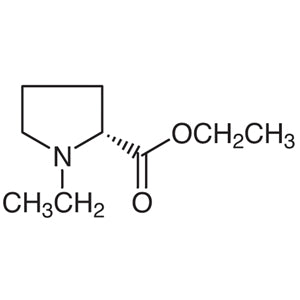
9-Julolidinecarboxaldehyde is a chemical compound widely used in laboratory settings for the synthesis of heterocyclic compounds. As a key building block in organic chemistry, it plays a crucial role in the development of complex molecular structures. This compound is commonly found in chemical laboratories, where it serves as a fundamental reagent for various synthetic processes. Its unique molecular structure, consisting of a heptagonal ring system and a carbonyl group, makes it highly versatile in chemical reactions.
The compound is valued for its high reactivity, which allows it to participate in nucleophilic reactions, condensation, and substitution processes. These properties make it an essential tool for researchers aiming to create new organic compounds. Its stability under controlled conditions further enhances its usability in laboratory environments. The compound's ability to undergo multiple reaction types makes it a preferred choice for chemists working on diverse synthetic projects.
In Indonesian laboratories, 9-Julolidinecarboxaldehyde is frequently utilized by chemists and researchers in the development of new compounds. It supports scientific innovation in educational and research institutions, contributing to advancements in organic chemistry. Its role in laboratory applications is critical for both academic and industrial research, making it an indispensable material for chemical synthesis.
Related TCI products
- TCI B3880 59378-75-5 1-(tert-Butoxycarbonyl)-3-pyrrolidinecarboxylic Acid
- TCI M2723 122684-33-7 Methyl 1-(tert-Butoxycarbonyl)-3-pyrrolidinecarboxylate
- TCI J0007 479-59-4 Julolidine
- TCI H1392 6299-87-2 6-Hydroxy-4-pyrimidinecarboxylic Acid
- TCI A1505 332927-03-4 9-Acridinecarboxylic Acid Hydrate
- TCI B3178 203866-13-1 (2S,4S)-1-(tert-Butoxycarbonyl)-4-fluoro-2-pyrrolidinecarboxylic Acid
- Organic synthesis of heterocyclic compounds due to its reactive functional groups and structural versatility.
- Development of pharmaceutical intermediates through nucleophilic and condensation reactions.
- Creation of complex molecular frameworks for material science and polymer chemistry applications.
- Investigation of reaction mechanisms in chemical kinetics and mechanistic studies.
- Support for academic research in universities and research institutes focused on chemical innovation.
| Brand | TCI |
|---|---|
| CAS number | 33985-71-6 |
| Molecular formula | — |
| Purity | — |
| Category | Chemistry > Building Blocks > Heterocyclic Building Blocks |
| Pack sizes | Available in standard laboratory quantities |
| Physical form | Liquid |
| Storage | Store in a cool, dry place away from light and incompatible materials |
9-Julolidinecarboxaldehyde should be stored in a cool, dry place, away from direct sunlight and sources of heat. It is recommended to keep the compound in a tightly sealed container to prevent exposure to air and moisture. Due to its reactivity, it should be stored separately from strong oxidizing agents and bases. In laboratory settings, it is important to use appropriate personal protective equipment, such as gloves and safety goggles, when handling the compound. Proper ventilation should be maintained to minimize inhalation risks. The compound is best stored in a fume hood or a designated chemical storage cabinet to ensure safety and compliance with laboratory protocols.
—
Produk Terkait
-
1-(tert-Butoxycarbonyl)-3-pyrrolidinecarboxylicAcid TCI B3880
Regular price Rp 1.670.550,00Regular price -
Methyl1-(tert-Butoxycarbonyl)-3-pyrrolidinecarboxylate TCI M2723
Regular price From Rp 1.644.300,00Regular price -
Julolidine TCI J0007
Regular price From Rp 1.961.400,00Regular price -
6-Hydroxy-4-pyrimidinecarboxylicAcid TCI H1392
Regular price From Rp 505.050,00Regular price -
9-AcridinecarboxylicAcidHydrate TCI A1505
Regular price Rp 1.298.850,00Regular price -
(2S,4S)-1-(tert-Butoxycarbonyl)-4-fluoro-2-pyrrolidinecarboxylicAcid TCI B3178
Regular price From Rp 477.750,00Regular price -
(2S,4R)-1-(tert-Butoxycarbonyl)-4-fluoro-2-pyrrolidinecarboxylicAcid TCI B3177
Regular price From Rp 557.550,00Regular price -
Ethyl(R)-(+)-1-Ethyl-2-pyrrolidinecarboxylate TCI E0469
Regular price From Rp 1.565.550,00Regular price