![N-[4-(2,4-Dimethylphenyl)-2-thiazolyl]-4-pyridinecarboxamide (CAS 560103-80-2) - TCI D5563 - AMI Scientific](http://amiscientific.com/cdn/shop/files/TCI2510D5563.jpg?v=1767108895&width=1946)
![N-[4-(2,4-Dimethylphenyl)-2-thiazolyl]-4-pyridinecarboxamide (CAS 560103-80-2) - TCI D5563 - AMI Scientific](http://amiscientific.com/cdn/shop/files/TCI2510D5563_c53340da-34c2-4e83-ae80-09723e289a21.jpg?v=1768818466&width=1946)
![N-[4-(2,4-Dimethylphenyl)-2-thiazolyl]-4-pyridinecarboxamide (CAS 560103-80-2) - TCI D5563 - AMI Scientific](http://amiscientific.com/cdn/shop/files/TCI2510D5563.jpg?v=1767108895&width=1445)
![N-[4-(2,4-Dimethylphenyl)-2-thiazolyl]-4-pyridinecarboxamide (CAS 560103-80-2) - TCI D5563 - AMI Scientific](http://amiscientific.com/cdn/shop/files/TCI2510D5563_c53340da-34c2-4e83-ae80-09723e289a21.jpg?v=1768818466&width=1445)
TCI D5563, also known as N-[4-(2,4-Dimethylphenyl)-2-thiazolyl]-4-pyridinecarboxamide, is a chemical compound widely used in life science research, particularly in the fields of cell biology and cancer research. This compound plays a crucial role in laboratory settings by serving as an active ingredient in experiments aimed at inhibiting cancer cell growth. It targets specific signaling pathways associated with cell proliferation and metastasis, making it a valuable tool for researchers exploring the molecular mechanisms of cancer. Its application extends to drug development and the study of therapeutic agents for oncology.
The compound is favored for its complex chemical structure, which provides reactivity and versatility in various experimental conditions. Its stability under controlled environments allows for reliable results in analytical techniques such as spectroscopy and chromatography. Additionally, its ability to participate in chemical reactions makes it suitable for a wide range of research applications. The compound’s chemical properties ensure that it remains a preferred choice for scientists conducting in-depth studies on cancer-related processes.
In Indonesian laboratories, TCI D5563 is commonly used by researchers focused on cancer and cell biology. It is an essential component in experiments related to drug efficacy testing and the development of new therapeutic compounds. Its availability in solid form and various packaging options makes it convenient for use in both small-scale and large-scale research projects. Researchers across multiple institutions in Indonesia rely on this compound to advance their studies and contribute to the broader field of oncology.
Related TCI products
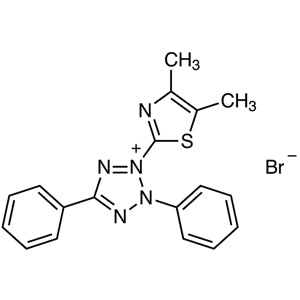
- TCI D0801 298-93-1 3-(4,5-Dimethyl-2-thiazolyl)-2,5-diphenyltetrazolium Bromide
- TCI T3498 251992-66-2 4-(p-Tolylthio)thieno[2,3-c]pyridine-2-carboxamide
- TCI T2402 3641-08-5 1,2,4-Triazole-3-carboxamide
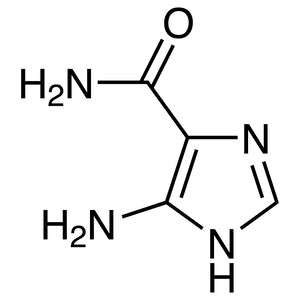
- TCI A3078 360-97-4 5-Amino-1H-imidazole-4-carboxamide
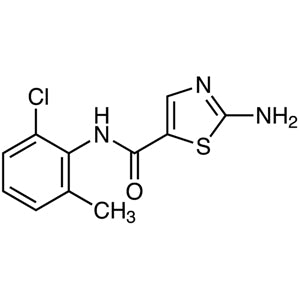
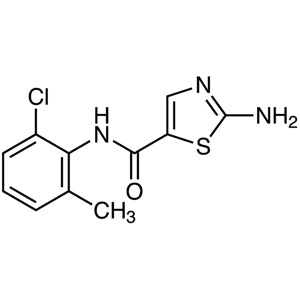
- TCI A2773 302964-24-5 2-Amino-N-(2-chloro-6-methylphenyl)thiazole-5-carboxamide
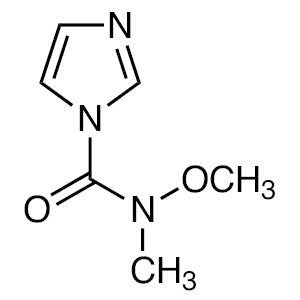
- TCI M2558 862873-06-1 N-Methoxy-N-methyl-1H-imidazole-1-carboxamide
- Cancer Research: This compound is used to study the molecular mechanisms of cancer progression, particularly in targeting signaling pathways involved in cell proliferation and metastasis.
- Drug Development: It is employed in the screening and development of new anticancer agents, helping researchers evaluate the efficacy of potential therapeutic compounds.
- Cell Biology Studies: The compound supports experiments that investigate the interactions between different cellular components and their roles in disease progression.
- Spectroscopic Analysis: Its chemical stability allows it to be used in spectroscopic techniques for identifying and analyzing molecular structures in complex biological samples.
- Chromatographic Applications: It is suitable for use in chromatographic methods, where its chemical properties aid in the separation and identification of compounds in various samples.
| Brand | TCI |
|---|---|
| CAS number | 560103-80-2 |
| Molecular formula | — |
| Purity | — |
| Category | Life Science > Cell Biology > Cancer Research |
| Pack sizes | Available in various packaging options suitable for different experimental scales |
| Physical form | Solid |
| Storage | Store in a cool, dry place away from direct sunlight |
This compound should be stored in a cool, dry environment, away from direct sunlight and sources of heat. It is recommended to use airtight containers to prevent moisture absorption and contamination. Due to its chemical reactivity, it should be handled with appropriate personal protective equipment, including gloves and safety goggles. In laboratory settings, it should be stored in a well-ventilated area to minimize exposure to vapors. Proper labeling of containers is essential to ensure safe handling and prevent accidental use. Regular monitoring of storage conditions ensures the compound remains stable and suitable for research applications.
—
Product Categories
Produk Terkait
-
3-(4,5-Dimethyl-2-thiazolyl)-2,5-diphenyltetrazoliumBromide TCI D0801
Regular price From Rp 2.147.250,00Regular price -
4-(p-Tolylthio)thieno[2,3-c]pyridine-2-carboxamide TCI T3498
Regular price From Rp 4.213.650,00Regular price -
1,2,4-Triazole-3-carboxamide TCI T2402
Regular price From Rp 2.094.750,00Regular price -
5-Amino-1H-imidazole-4-carboxamide TCI A3078
Regular price From Rp 1.618.050,00Regular price -
2-Amino-N-(2-chloro-6-methylphenyl)thiazole-5-carboxamide TCI A2773
Regular price From Rp 769.650,00Regular price -
N-Methoxy-N-methyl-1H-imidazole-1-carboxamide TCI M2558
Regular price Rp 1.273.650,00Regular price -
1H-Imidazole-4-carboxamide TCI I1101
Regular price Rp 2.227.050,00Regular price -
N-Ethyl-p-menthane-3-carboxamide TCI E0796
Regular price From Rp 717.150,00Regular price
![251992-66-2 4-(p-Tolylthio)thieno[2,3-c]pyridine-2-carboxamide - AMI Scientific](http://amiscientific.com/cdn/shop/files/TCI2510T3498.jpg?v=1767144174&width=533)
![251992-66-2 4-(p-Tolylthio)thieno[2,3-c]pyridine-2-carboxamide - AMI Scientific](http://amiscientific.com/cdn/shop/files/TCI2510T3498_ff83aa00-e77d-4427-92df-ae99a39bd777.jpg?v=1772425406&width=533)