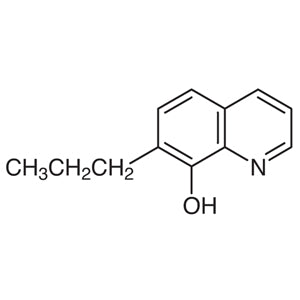
8-Hydroxy-7-propylquinoline is a chemical compound widely utilized in laboratory settings as a foundational building block for the synthesis of heterocyclic compounds. Its unique molecular structure enables participation in various chemical reactions, including substitution, reduction, and oxidation, making it a versatile reagent in organic chemistry. This compound is particularly valuable for researchers aiming to develop complex molecular structures with potential applications in pharmaceuticals, agrochemicals, and industrial chemistry. Its role in synthetic pathways is critical for the creation of bioactive molecules and functional materials.
The compound’s chemical properties make it a preferred choice for laboratory use. It exhibits good solubility in organic solvents such as ethyl acetate and chloroform, facilitating efficient processing and reaction conditions. The presence of hydroxyl and propyl groups enhances its reactivity and adaptability in different synthetic strategies. These functional groups provide flexibility in chemical modifications, allowing for the design of diverse molecular architectures. Additionally, its stability under controlled conditions ensures reliable performance in experimental protocols.
In Indonesian laboratories, 8-Hydroxy-7-propylquinoline is commonly used by chemists, pharmacologists, and environmental scientists for experiments requiring specialized chemical building blocks. Its application spans across research in drug development, pesticide formulation, and environmental analysis. The compound’s availability and chemical versatility make it an essential resource for academic and industrial research in Indonesia.
Related TCI products
- TCI I0529 135-79-5 6-Isopropylquinoline
- TCI A1470 732304-23-3 4-Amino-6-hydroxy-2-methylpyrimidine Hydrate
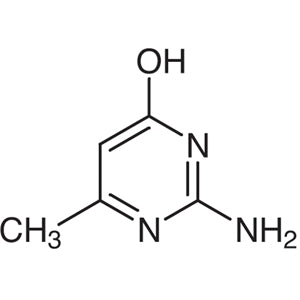
- TCI A1204 3977-29-5 2-Amino-4-hydroxy-6-methylpyrimidine
- TCI A0791 1004-40-6 4-Amino-6-hydroxy-2-mercaptopyrimidine
- TCI M2716 5118-06-9 Methyl 3-Hydroxy-2-thiophenecarboxylate
- TCI M1009 1677-46-9 4-Hydroxy-1-methyl-2-quinolone
- Organic synthesis of heterocyclic compounds due to its reactive quinoline core and functional side groups.
- Development of pharmaceuticals and agrochemicals through structural modification and chemical transformation.
- Environmental analysis for the study of complex organic pollutants and their degradation pathways.
- Industrial chemical production where stable and reactive intermediates are required for large-scale synthesis.
- Research in molecular biology and biochemistry for the creation of bioactive molecules and drug candidates.
| Brand | TCI |
|---|---|
| CAS number | 58327-60-9 |
| Molecular formula | — |
| Purity | — |
| Category | Chemistry > Building Blocks > Heterocyclic Building Blocks |
| Pack sizes | Available in various quantities as per standard laboratory supply |
| Physical form | Solid or crystalline, depending on purity and storage conditions |
| Storage | Requires storage in a cool, dry place away from light and moisture |
This compound should be stored in a cool, dry environment, away from direct light and moisture to maintain its chemical integrity. It is recommended to use airtight containers made of glass or high-density polyethylene to prevent exposure to humidity and contaminants. Due to its sensitivity to temperature and moisture, it should be kept in a controlled laboratory setting with stable environmental conditions. Proper labeling and storage in designated chemical cabinets are essential for safety. Always ensure that handling is done in a well-ventilated area and with appropriate personal protective equipment to minimize exposure risks.
—
Produk Terkait
-
6-Isopropylquinoline TCI I0529
Regular price Rp 1.353.450,00Regular price -
4-Amino-6-hydroxy-2-methylpyrimidineHydrate TCI A1470
Regular price From Rp 743.400,00Regular price -
2-Amino-4-hydroxy-6-methylpyrimidine TCI A1204
Regular price From Rp 928.200,00Regular price -
4-Amino-6-hydroxy-2-mercaptopyrimidine TCI A0791
Regular price Rp 1.140.300,00Regular price -
Methyl3-Hydroxy-2-thiophenecarboxylate TCI M2716
Regular price From Rp 1.035.300,00Regular price -
4-Hydroxy-1-methyl-2-quinolone TCI M1009
Regular price From Rp 2.411.850,00Regular price -
3-Hydroxy-2-methyl-4-pyrone TCI M0673
Regular price From Rp 928.200,00Regular price -
5-Hydroxy-1-methyl-1H-pyrazole TCI H1695
Regular price From Rp 955.500,00Regular price