


TCI H1952 3,3,4,4,5,5-Hexafluorotetrahydro-2H-pyran is a fluorinated cyclic ether classified as a specialty solvent. Six fluorine atoms replace hydrogen on three of the carbon atoms in the tetrahydropyran ring, producing a solvent whose electronic character differs markedly from that of conventional cyclic ethers such as tetrahydrofuran. In the laboratory, a solvent of this kind is selected when a reaction or a materials system requires a medium that is chemically stable and inert toward many reagents, yet still contains an ether oxygen capable of weak interaction with charged species or metal centres.
The properties that make it a preferred choice are rooted in the electronegativity of fluorine. The fluoroalkyl groups withdraw electron density, so the basicity of the ether oxygen falls sharply compared with ordinary tetrahydropyran; the result is a solvent that coordinates far more weakly, resists oxidation more effectively, and is not readily protonated under acidic conditions. The strong carbon-fluorine bonds confer good thermal stability and chemical resistance, while the low to moderate polarity makes it an attractive medium for systems that are incompatible with strongly donating solvents. The closed ring structure also contributes to this behaviour.
In Indonesian laboratories, materials of this class are typically handled in research groups and industrial development units working on electrochemistry, fluorine chemistry, and specialty materials, where the choice of solvent determines whether a system behaves reproducibly. Because it is a specialty rather than a bulk solvent, it is normally purchased in small quantities for defined experimental work, kept under controlled storage, and dispensed carefully so that a single container serves an entire project.
Related TCI products
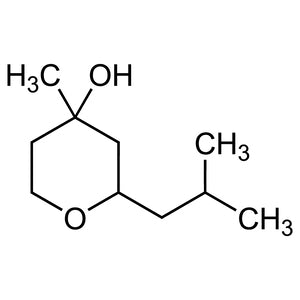
- TCI T4346 63500-71-0 2-Isobutyl-4-methyltetrahydro-2H-pyran-4-ol (mixture of isomers)
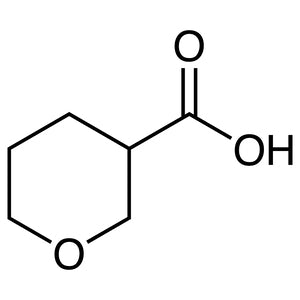
- TCI T4166 873397-34-3 Tetrahydro-2H-pyran-3-carboxylic Acid
- TCI T4112 51673-83-7 Tetrahydro-2H-pyran-2-carboxylic Acid
- TCI T4039 50675-18-8 Tetrahydro-2H-pyran-4-carboxaldehyde
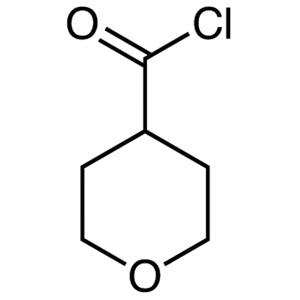
- TCI T3890 40191-32-0 Tetrahydro-2H-pyran-4-carbonyl Chloride
- TCI T3668 1040377-03-4 1-(Tetrahydro-2H-pyran-4-yl)-4-(4,4,5,5-tetramethyl-1,3,2-dioxaborolan-2-yl)-1H-pyrazole
- Electrolyte formulation research, where a weakly coordinating and oxidation-resistant ether is required so that the solvent itself does not participate in the electrochemical processes under study.
- Fluorine chemistry and organofluorine synthesis, where a fluorinated reaction medium avoids the unwanted solvent interactions that conventional hydrocarbon ethers introduce into sensitive fluorinated systems.
- Reactions under acidic conditions, since the reduced basicity of the ether oxygen means the solvent is not readily protonated and therefore remains inert throughout the transformation.
- Specialty materials development, where a chemically stable, thermally resistant medium of low to moderate polarity is needed for systems incompatible with strongly donating solvents such as tetrahydrofuran.
- Reference and comparative solvent studies, in which researchers evaluate how fluorination of a cyclic ether alters solvation behaviour, coordination strength, and overall reaction outcome.
| Brand | TCI (Tokyo Chemical Industry) |
|---|---|
| CAS number | 355-09-9 |
| Molecular formula | — |
| Purity | — |
| Category | Chemistry > Solvents > Fluorinated Ether Solvents and Glycol Ether Solvents |
| Pack sizes | available in laboratory research pack sizes; please confirm the currently listed packaging option before ordering |
| Physical form | — |
| Storage | store in a tightly closed container in a cool, well-ventilated area away from ignition sources |
- Product Code: H1952
Store the product in its original tightly closed container, in a cool and well-ventilated area, away from heat, open flames, and other ignition sources. Keep the container closed when not in use to limit evaporation and moisture ingress, and use glassware or other containers compatible with organic solvents when dispensing. All handling should take place in a fume hood, with safety glasses, chemically resistant gloves, and a laboratory coat worn at all times. Segregate the material from strong oxidising agents during storage, label any working aliquots clearly, and consult the manufacturer's safety data sheet before first use and before disposal of residues.
—
Product Categories
Produk Terkait
-
2-Isobutyl-4-methyltetrahydro-2H-pyran-4-ol(mixtureofisomers) TCI T4346
Regular price From Rp 1.378.650,00Regular price -
Tetrahydro-2H-pyran-3-carboxylicAcid TCI T4166
Regular price From Rp 1.405.950,00Regular price -
Tetrahydro-2H-pyran-2-carboxylicAcid TCI T4112
Regular price From Rp 1.565.550,00Regular price -
Tetrahydro-2H-pyran-4-carboxaldehyde TCI T4039
Regular price Rp 2.466.450,00Regular price -
Tetrahydro-2H-pyran-4-carbonylChloride TCI T3890
Regular price From Rp 1.378.650,00Regular price -
1-(Tetrahydro-2H-pyran-4-yl)-4-(4,4,5,5-tetramethyl-1,3,2-dioxaborolan-2-yl)-1H-pyrazole TCI T3668
Regular price From Rp 769.650,00Regular price -
4,4,5,5-Tetramethyl-2-[4-[(tetrahydro-2H-pyran-2-yl)oxy]phenyl]-1,3,2-dioxaborolane TCI T3468
Regular price From Rp 1.881.600,00Regular price -
1-(Tetrahydro-2H-pyran-2-yl)-1H-pyrazole TCI T3408
Regular price From Rp 743.400,00Regular price



![889865-38-7 4,4,5,5-Tetramethyl-2-[4-[(tetrahydro-2H-pyran-2-yl)oxy]phenyl]-1,3,2-dioxaborolane - AMI Scientific](http://amiscientific.com/cdn/shop/files/TCI2510T3468.jpg?v=1767144141&width=533)
