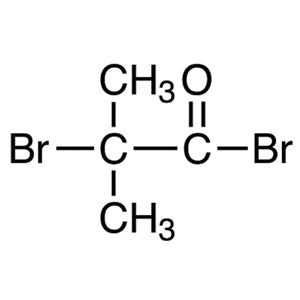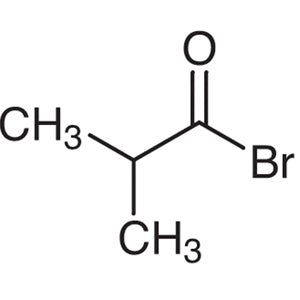
Isobutyryl Bromide (TCI I0114), with CAS number 2736-37-0, is a chemical compound widely used in organic laboratory reactions. As a fundamental building block in synthetic chemistry, it plays a crucial role in the creation of complex molecules. Its structure allows it to participate in various reaction mechanisms, making it a versatile reagent in the laboratory setting. This compound is particularly valuable for its ability to engage in nucleophilic substitution reactions and ester formation processes, which are essential in organic synthesis.
The chemical properties of Isobutyryl Bromide make it a preferred choice for researchers. It is chemically stable under certain conditions but highly reactive towards nucleophiles such as alcohols, amines, and strong bases. This reactivity is advantageous in reactions that require the activation of carbonyl groups. Its ability to form ester bonds also makes it a key reagent in the synthesis of ester compounds. These characteristics are widely appreciated by chemists and researchers working in both academic and industrial environments.
In Indonesian laboratories, Isobutyryl Bromide is commonly used in organic chemistry research, especially in higher education and industrial research programs. It is frequently found in chemical, pharmaceutical, and biochemical laboratories due to its broad applications and reliability in various chemical reactions. Its role in ester synthesis makes it an essential component in many laboratory protocols.
- Ester Synthesis: Isobutyryl Bromide is ideal for ester formation due to its reactivity with nucleophiles, enabling the synthesis of ester compounds in organic reactions.
- Nucleophilic Substitution Reactions: Its ability to react with nucleophilic reagents makes it suitable for substitution reactions, facilitating the creation of new molecular structures.
- Organic Chemistry Education: It is widely used in academic settings for teaching and research, providing students with hands-on experience in synthetic chemistry.
- Pharmaceutical Research: Its role in ester formation is valuable in drug development, where ester compounds are often used as intermediates or active ingredients.
- Biochemical Studies: It is employed in biochemical experiments to study molecular interactions and functional group transformations.
| Brand | TCI |
|---|---|
| CAS number | 2736-37-0 |
| Molecular formula | — |
| Purity | — |
| Category | Chemistry > Building Blocks > Non-Heterocyclic Building Blocks |
| Pack sizes | Available in various quantities as per supplier specifications |
| Physical form | Liquid |
| Storage | Store in a cool, dry place away from moisture and direct sunlight |
Isobutyryl Bromide should be stored in a cool, dry environment to maintain its chemical stability. It is recommended to keep it in a tightly sealed container to prevent exposure to moisture and air. Due to its reactivity, it should be handled in a well-ventilated area, and appropriate personal protective equipment should be worn. Avoid contact with strong bases, nucleophiles, and incompatible materials. The compound is flammable, so storage should be in a location away from heat sources and ignition risks. Regular monitoring of storage conditions is advised to ensure safety and product integrity.
—
Produk Terkait
-
IsobutyrylChloride TCI I0115
Regular price From Rp 769.650,00Regular price -
2-BromoisobutyrylBromide TCI B0607
Regular price From Rp 848.400,00Regular price -
2-AcetoxyisobutyrylChloride TCI A1120
Regular price From Rp 1.803.900,00Regular price -
2-Isobutyrylcyclohexan-1-one TCI I1131
Regular price From Rp 2.359.350,00Regular price -
MethylIsobutyrylacetate TCI I0592
Regular price Rp 1.298.850,00Regular price -
EthylIsobutyrylacetate TCI E0882
Regular price From Rp 1.298.850,00Regular price -
AcetylBromide TCI A0080
Regular price From Rp 689.850,00Regular price -
ValerylBromide TCI V0038
Regular price Rp 2.386.650,00Regular price