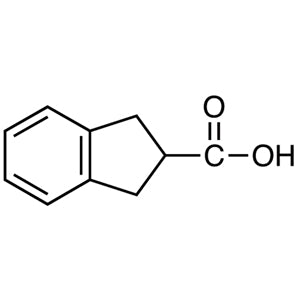
TCI I0532 2-Indancarboxylic Acid is a carboxylic acid mounted on an indane framework, a bicyclic system formed by fusing a benzene ring with a cyclopentane ring. The carboxyl group occupies the two position on the saturated portion of that skeleton. As a non-heterocyclic building block, this compound supplies a semi-rigid scaffold that is rarely easy to assemble from simpler starting materials, which makes it genuinely useful to molecular designers who need a defined three-dimensional shape. Its carboxylic acid group serves as a versatile connection point toward amides, esters, alcohols, aldehydes, and other derivatives through well-established reactions.
The property that drives its selection is the conformational rigidity conferred by the bicyclic indane framework. The five-membered ring fused to the aromatic ring restricts free rotation, so substituents are locked into a relatively fixed spatial orientation. In medicinal chemistry this characteristic is highly valued because it reduces the entropic penalty paid when a molecule binds a biological target, which in turn can improve binding affinity. The aromatic portion contributes lipophilic character and the capacity for pi-stacking interactions, while the carboxyl group provides a reactive handle for onward chemistry.
In Indonesian laboratories, this building block is typically used in university and institutional research groups working on synthetic organic chemistry and early-stage medicinal chemistry programmes. It suits bench-scale exploratory work where a defined scaffold shape matters more than bulk quantity, and it is normally handled in a standard fume hood with routine glassware. Research teams preparing derivative libraries or scaffold analogues will find it a practical starting point for multi-step sequences.
- Medicinal chemistry scaffold construction: the semi-rigid indane core locks substituents into defined orientations, reducing entropic loss on target binding and improving the prospects for affinity gains.
- Amide library synthesis: the carboxylic acid couples readily with a wide range of amines through established activation chemistry, letting researchers generate structurally related analogue series efficiently.
- Ester and prodrug derivative preparation: standard esterification routes convert the acid group into esters, supporting structure-activity work and the exploration of modified physicochemical profiles.
- Reduction to alcohols and aldehydes: the carboxyl handle can be carried down to hydroxymethyl or formyl derivatives, opening further functional group interconversion pathways on the same rigid framework.
- Three-dimensional fragment and scaffold exploration: the fused bicyclic geometry offers defined shape that flat aromatic fragments cannot provide, useful for teams probing new chemical space.
| Brand | TCI |
|---|---|
| CAS number | 25177-85-9 |
| Molecular formula | — |
| Purity | — |
| Category | Chemistry > Building Blocks > Non-Heterocyclic Building Blocks |
| Pack sizes | available in the catalogue pack configurations offered by TCI for this item |
| Physical form | — |
| Storage | store according to the manufacturer's stated conditions on the product label |
- Product code: I0532
Store the container tightly closed in a cool, dry, well-ventilated area away from direct sunlight, moisture, and incompatible materials, following the conditions stated on the manufacturer's label and safety data sheet. Keep the material in its original supplier container or in a chemically compatible sealed vessel, and return it promptly after weighing so that atmospheric moisture is not absorbed. Handle in a fume hood using appropriate personal protective equipment, including safety glasses, chemical-resistant gloves, and a laboratory coat. As with any carboxylic acid, avoid contact with skin and eyes, avoid generating or inhaling dust, and dispose of residues in accordance with institutional chemical waste procedures.
—
Produk Terkait
-
TCI B5774 5,10-Bis(4,4,5,5-tetramethyl-1,3,2-dioxaborolan-2-yl)naphtho[1,2-c:5,6-c']bis([1,2,5]oxadiazole)
Regular price Rp 10.307.850,00Regular priceRp 7.224.000,00Sale price Rp 10.307.850,00 -
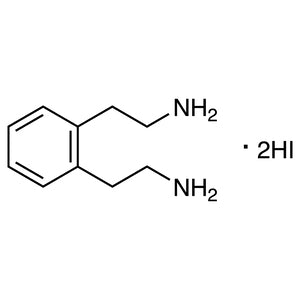
Dihydroiodide TCI B6569
Regular price Rp 1.988.700,00Regular priceRp 1.405.950,00Sale price Rp 1.988.700,00 -
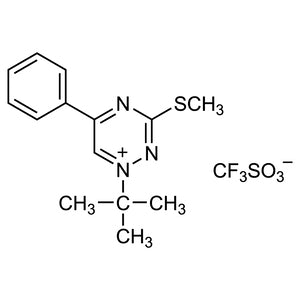
Trifluoromethanesulfonate TCI B7003
Regular price Rp 1.988.700,00Regular priceRp 1.405.950,00Sale price Rp 1.988.700,00
![5,10-Bis(4,4,5,5-tetramethyl-1,3,2-dioxaborolan-2-yl)naphtho[1,2-c:5,6-c']bis([1,2,5]oxadiazole) - TCI B5774 - AMI Scientific](http://amiscientific.com/cdn/shop/files/TCI2510B5774.jpg?v=1769180228&width=533)