


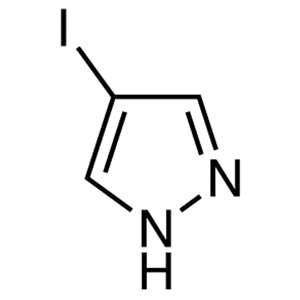
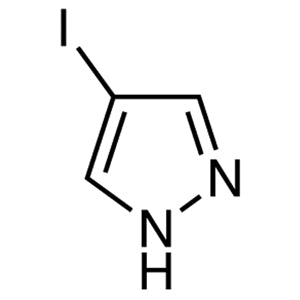
4-Iodopyrazole, identified by CAS number 3469-69-0, is a five-membered heterocyclic compound containing two adjacent nitrogen atoms and bearing an iodine atom at the fourth position of the ring. As a heterocyclic building block, this compound occupies an important place in modern synthetic chemistry because the pyrazole core is widely encountered in pharmaceutical active ingredients and agrochemicals. In the laboratory, this material is used to install the pyrazole core into larger molecules while simultaneously providing a reactive connection point that is ready for further elaboration through a variety of carbon–carbon bond-forming reactions.
The characteristic that makes this reagent a frequent choice is the reactivity of the carbon–iodine bond at the C4 position, which readily participates in palladium- and copper-catalysed cross-coupling reactions, allowing researchers to install aryl, heteroaryl, alkynyl, or alkenyl groups with controlled regioselectivity. The nitrogen atoms in the ring can be alkylated or arylated to tune the electronic properties and solubility of the final molecule. Pyrazole is also known to be stable towards many reaction conditions, so this core survives intact through long sequences of synthetic steps.
Consistent-quality reagents from TCI support the day-to-day needs of Indonesian laboratories, where 4-Iodopyrazole is typically handled in university research groups, pharmaceutical and agrochemical discovery units, and contract synthesis facilities. It is normally used on a small to moderate scale during route scouting and analogue preparation, where a dependable heterocyclic starting material allows chemists to reproduce published procedures and to build compound libraries around a common pyrazole scaffold.
- Palladium-catalysed cross-coupling: the reactive carbon–iodine bond at C4 undergoes oxidative addition readily, making this reagent a dependable partner for installing aryl and heteroaryl substituents.
- Copper-catalysed bond formation: the C4 iodine also engages copper-mediated coupling chemistry, giving laboratories a second catalytic pathway when palladium systems are unsuitable for a given substrate.
- Pharmaceutical discovery synthesis: because the pyrazole core appears widely in active pharmaceutical ingredients, this building block lets medicinal chemists introduce that core into larger candidate molecules efficiently.
- Agrochemical research: pyrazole-containing structures are common in agrochemical actives, so this compound serves as an entry point for preparing and modifying such target molecules.
- Analogue and library preparation: N-alkylation or N-arylation of the ring nitrogen atoms alongside C4 coupling allows systematic tuning of electronic properties and solubility across related compounds.
| Brand | TCI |
|---|---|
| CAS number | 3469-69-0 |
| Molecular formula | — |
| Purity | — |
| Category | Chemistry > Building Blocks > Heterocyclic Building Blocks |
| Pack sizes | available in standard TCI catalogue pack sizes; please confirm the option required when ordering |
| Physical form | — |
| Storage | store according to the conditions stated on the manufacturer's label and safety data sheet |
- Product code: I0692
Store 4-Iodopyrazole in its original tightly closed container in a cool, dry, well-ventilated area away from direct sunlight, moisture, and incompatible materials, following the storage conditions stated on the manufacturer's label and safety data sheet. Keep the container closed when not in use to limit exposure to air and humidity, and reseal it promptly after weighing. Handle the compound in a fume hood using appropriate personal protective equipment, including safety glasses, gloves, and a laboratory coat. Use clean, dry spatulas and glassware to avoid contamination, label all secondary containers clearly, and consult the safety data sheet before use and disposal.
—
Produk Terkait
-
3-Iodopyrazole TCI I1016
Regular price From Rp 1.193.850,00Regular price -
2-Iodopyrazine TCI I0837
Regular price From Rp 955.500,00Regular price -
3,4,5-Tribromopyrazole TCI T2777
Regular price From Rp 903.000,00Regular price -
5-Bromopyrazolo[3,4-b]pyridine TCI B4363
Regular price Rp 2.386.650,00Regular price -
4-Bromopyrazole TCI B3745
Regular price Rp 980.700,00Regular price -
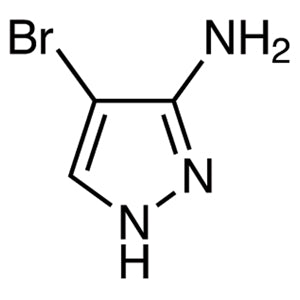
3-Amino-4-bromopyrazole TCI A2688
Regular price From Rp 955.500,00Regular price -
4-Chloropyrazole TCI C2888
Regular price From Rp 743.400,00Regular price -
6-Bromopyrazolo[1,5-a]pyrimidine TCI B6505
Regular price From Rp 1.220.100,00Regular price


![875781-17-2 5-Bromopyrazolo[3,4-b]pyridine - AMI Scientific](http://amiscientific.com/cdn/shop/files/TCI2510B4363.jpg?v=1767091148&width=533)



![6-Bromopyrazolo[1,5-a]pyrimidine (CAS 705263-10-1) - TCI B6505 - AMI Scientific](http://amiscientific.com/cdn/shop/files/TCI2510B6505_30485aae-fb0b-4cfe-88fb-7ed485d4963c.jpg?v=1767866056&width=533)