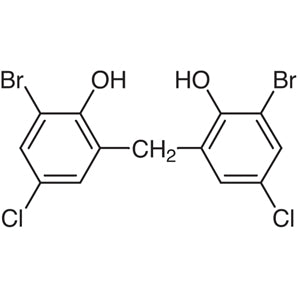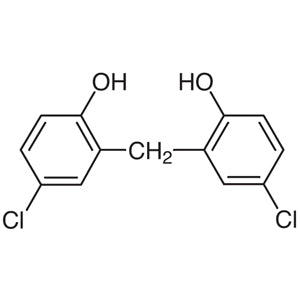
TCI M0213 2,2'-Methylenebis(4-chlorophenol) is a chlorinated bisphenol compound supplied as a solid. Its molecular architecture consists of two chlorinated phenol rings joined by a single methylene bridge. The compound is widely recognised as a classic antimicrobial agent and serves as an important reference substance in microbiological research and in the chemistry of biologically active materials. In the laboratory, its roles include supplying a comparison compound for inhibition-zone testing, acting as a study material for structure–activity relationship work, and functioning as an intermediate for the targeted synthesis of phenolic derivatives.
The characteristics that underpin its selection are the presence of two phenolic hydroxyl groups, which are weakly acidic, combined with chlorine atoms that increase the lipophilicity of the molecule. This combination allows the compound to penetrate microbial cell membranes readily while simultaneously disrupting membrane function and the enzymes contained within, so that its antimicrobial activity remains appreciable at low concentrations. The phenolic groups also enable the molecule to chelate metal ions and to act as a radical scavenger — a character that makes it attractive in antioxidant studies as well as in materials research requiring phenol-based stabilisers.
Microbiology and pharmaceutical laboratories in Indonesia draw on this material where a well-characterised chlorinated bisphenol is needed as a working standard or synthetic starting point. It is handled in the same way as other phenolic solids on the bench: weighed out for the preparation of stock solutions, dissolved in an appropriate solvent system before dilution, and applied in comparative inhibition testing or in derivative preparation within building-block chemistry workflows.
- Antimicrobial inhibition testing — serves as a classic reference antimicrobial against which the inhibitory performance of new candidate compounds can be measured under consistent conditions.
- Structure–activity relationship studies — the defined arrangement of two chlorinated phenol rings and a methylene bridge makes it a clear model for correlating molecular structure with biological activity.
- Synthetic intermediate work — the reactive phenolic hydroxyl groups provide accessible handles for directed synthesis of more elaborate phenolic derivatives in building-block chemistry.
- Antioxidant and radical-scavenging investigation — the phenolic groups allow the molecule to act as a radical scavenger, supporting comparative studies of antioxidant behaviour in solution.
- Metal-ion chelation and materials studies — its ability to chelate metal ions makes it relevant to materials research programmes that require phenol-based stabiliser systems.
| Brand | TCI |
|---|---|
| CAS number | 97-23-4 |
| Molecular formula | — |
| Purity | — |
| Category | Chemistry > Building Blocks > Non-Heterocyclic Building Blocks |
| Pack sizes | available in the standard TCI catalogue pack sizes; please confirm the required size when ordering |
| Physical form | solid |
| Storage | keep in a tightly closed container, protected from light and moisture |
- Chemical name: 2,2'-Methylenebis(4-chlorophenol)
Store the material in its original tightly closed container in a cool, dry and well-ventilated area, protected from direct light and moisture, and keep it separate from strong oxidising agents. Amber glass or the manufacturer's supplied packaging is suitable for storage, and any prepared solutions should be labelled clearly with the compound name, solvent and preparation date. As a phenolic solid with antimicrobial activity, it should be weighed and transferred inside a fume hood while wearing gloves, safety glasses and a laboratory coat, avoiding the generation of dust and any contact with skin or eyes. Wash hands thoroughly after handling, and dispose of residues and contaminated consumables in accordance with the institution's chemical waste procedures.
—
Produk Terkait
-
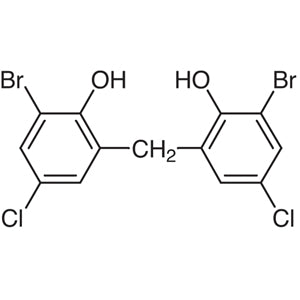
2,2'-Methylenebis(6-bromo-4-chlorophenol) TCI M1940
Regular price Rp 2.279.550,00Regular price -
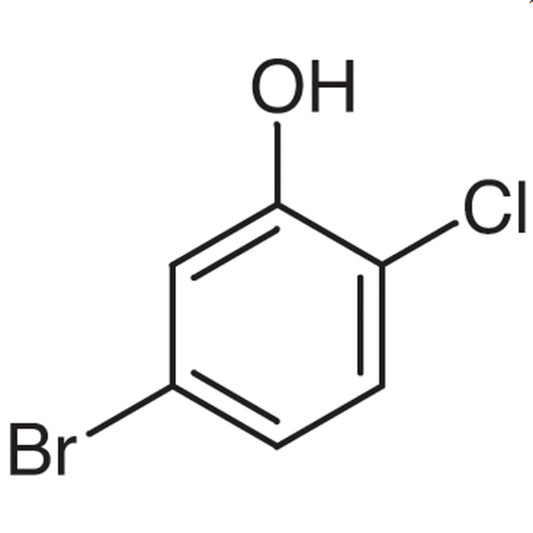
5-Bromo-2-chlorophenol TCI B2919
Regular price Rp 1.590.750,00Regular price -
4-Bromo-2-chlorophenol TCI B1819
Regular price From Rp 477.750,00Regular price -
2-Bromo-4-chlorophenol TCI B1522
Regular price Rp 1.298.850,00Regular price -
2-Benzyl-4-chlorophenol TCI B0812
Regular price Rp 980.700,00Regular price -
ChlorophenolRedSodiumSalt TCI C0247
Regular price From Rp 769.650,00Regular price -
4-Chlorophenol TCI C0243
Regular price From Rp 477.750,00Regular price -
3-Chlorophenol TCI C0242
Regular price From Rp 1.246.350,00Regular price