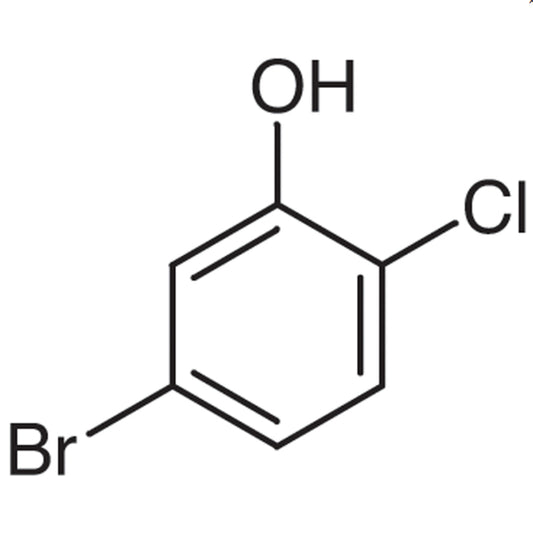
4-Bromo-2-chlorophenol is a chemical compound widely used in various laboratory applications, particularly in the synthesis of complex organic compounds. It serves as a fundamental building block in chemical reactions due to its reactive nature and versatile functional groups. This compound contains both bromo and chloro substituents on a phenol ring, making it a valuable intermediate in organic chemistry. Its ability to participate in multiple reaction types, such as substitution, reduction, and oxidation, makes it a key reagent in synthetic pathways.
The compound’s high reactivity and structural simplicity make it a preferred choice for researchers and chemists. Its molecular structure allows for easy modification through various chemical transformations, which is essential in the development of new pharmaceuticals and industrial materials. The presence of both halogen atoms enhances its reactivity in electrophilic and nucleophilic reactions, making it suitable for a wide range of synthetic strategies. Additionally, its availability in solid form simplifies handling and processing in laboratory settings.
In Indonesian laboratories, 4-Bromo-2-chlorophenol is commonly used in organic chemistry research, drug development, and chemical industry applications. Its role as a foundational reagent supports the creation of new compounds and materials. Due to its reactivity and versatility, it is a frequently sought-after chemical among local researchers and industrial chemists. Its use is essential in both academic and applied research contexts.
Related TCI products
- Organic synthesis applications benefit from 4-Bromo-2-chlorophenol’s reactivity and versatility, enabling the creation of complex organic molecules.
- Pharmaceutical research utilizes this compound as a building block for the development of new drugs and therapeutic agents.
- Industrial chemical production relies on its ability to participate in various reactions, supporting the manufacture of specialty chemicals.
- Material science research employs it for the synthesis of novel materials with specific chemical properties.
- Analytical chemistry uses it as a standard or reagent in the identification and quantification of organic compounds.
| Brand | TCI |
|---|---|
| CAS number | 3964-56-5 |
| Molecular formula | — |
| Purity | — |
| Category | Chemistry > Building Blocks > Non-Heterocyclic Building Blocks |
| Pack sizes | Available in standard laboratory quantities |
| Physical form | Solid |
| Storage | Store in a cool, dry place away from light and moisture |
4-Bromo-2-chlorophenol should be stored in a cool, dry environment, away from direct light and moisture. It is recommended to use sealed containers to prevent exposure to air and humidity. Due to its chemical nature, it should be handled in a well-ventilated area, and appropriate personal protective equipment should be worn. Avoid contact with skin and eyes, and ensure proper disposal according to local regulations. The compound is stable under normal storage conditions but should be kept away from incompatible substances such as strong bases or oxidizing agents. Always follow standard laboratory safety protocols when working with reactive chemicals.
—
Produk Terkait
-
5-Bromo-2-chlorophenol TCI B2919
Regular price Rp 1.590.750,00Regular priceRp 1.111.950,00Sale price Rp 1.590.750,00 -
2-Bromo-4-chlorophenol TCI B1522
Regular price Rp 1.298.850,00Regular priceRp 908.250,00Sale price Rp 1.298.850,00 -
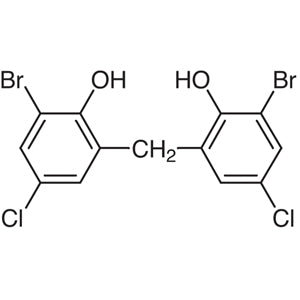
2,2'-Methylenebis(6-bromo-4-chlorophenol) TCI M1940
Regular price Rp 2.279.550,00Regular priceRp 1.593.900,00Sale price Rp 2.279.550,00 -
4-Bromo-3-chlorophenol TCI B5816
Regular price From Rp 1.565.550,00Regular priceRp 1.094.100,00Sale price From Rp 1.565.550,00 -
2-Benzyl-4-chlorophenol TCI B0812
Regular price Rp 980.700,00Regular priceRp 685.650,00Sale price Rp 980.700,00 -
2,2'-Methylenebis(4-chlorophenol) TCI M0213
Regular price From Rp 769.650,00Regular priceRp 537.600,00Sale price From Rp 769.650,00 -
ChlorophenolRedSodiumSalt TCI C0247
Regular price From Rp 822.150,00Regular priceRp 590.100,00Sale price From Rp 822.150,00 -
4-Chlorophenol TCI C0243
Regular price From Rp 477.750,00Regular priceRp 333.900,00Sale price From Rp 477.750,00