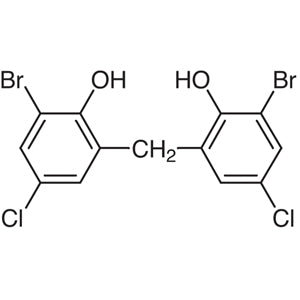
5-Bromo-2-chlorophenol is a chemical compound widely used in laboratory settings for its versatility in organic synthesis. This aromatic compound features bromo and chloro substituents, making it a valuable building block for creating complex organic molecules. Its unique structure allows it to participate in various chemical reactions, including substitution and oxidation processes. Due to its stability and controlled reactivity, it is a favored reagent in synthetic chemistry. The compound is commonly used in research to develop new materials, pharmaceuticals, and chemical intermediates.
The compound’s solubility in organic solvents enhances its usability in a wide range of experimental procedures. Its chemical stability ensures consistent performance in laboratory conditions, while its reactivity allows for precise control in synthetic pathways. These properties make it a preferred choice for chemists working on complex molecular structures. The ability to manipulate its functional groups opens up numerous synthetic possibilities, making it a key component in advanced chemical research.
In Indonesian laboratories, 5-Bromo-2-chlorophenol is frequently utilized in scientific research across multiple disciplines. It is commonly found in experiments related to the synthesis of bioactive compounds, pharmaceuticals, and specialty chemicals. Its role in organic chemistry research supports the development of new drugs and materials, contributing to both academic and industrial advancements. The compound’s reliability and effectiveness make it an essential tool in the Indonesian scientific community.
Related TCI products
- Organic synthesis is a key application where this compound serves as a versatile building block for creating complex molecules.
- Pharmaceutical research benefits from its use in the development of bioactive compounds and drug intermediates.
- Material science applications involve its role in the synthesis of specialty chemicals and functional materials.
- Analytical chemistry experiments often utilize it as a reference standard for spectroscopic and chromatographic analyses.
- Environmental studies may incorporate it to investigate the behavior of halogenated aromatic compounds in various matrices.
| Brand | TCI |
|---|---|
| CAS number | 183802-98-4 |
| Molecular formula | — |
| Purity | — |
| Category | Chemistry > Building Blocks > Non-Heterocyclic Building Blocks |
| Pack sizes | Available in various quantities as per supplier specifications |
| Physical form | Solid or liquid, depending on the specific product variant |
| Storage | Store in a cool, dry place away from direct sunlight and incompatible materials |
This compound should be stored in a cool, dry environment to maintain its chemical integrity. It is recommended to use airtight containers to prevent exposure to moisture and air, which could affect its stability. Due to its halogenated nature, it should be kept away from incompatible substances such as strong bases or oxidizing agents. Proper labeling and storage in a designated chemical cabinet are essential for safety. Laboratory personnel should handle it with appropriate personal protective equipment, including gloves and safety goggles, to minimize exposure risks. Regular inspection of storage conditions ensures the compound remains suitable for use in research applications.
—
Produk Terkait
-
4-Bromo-2-chlorophenol TCI B1819
Regular price From Rp 477.750,00Regular priceRp 333.900,00Sale price From Rp 477.750,00 -
2-Bromo-4-chlorophenol TCI B1522
Regular price Rp 1.298.850,00Regular priceRp 908.250,00Sale price Rp 1.298.850,00 -
2,2'-Methylenebis(6-bromo-4-chlorophenol) TCI M1940
Regular price Rp 2.279.550,00Regular priceRp 1.593.900,00Sale price Rp 2.279.550,00 -
4-Bromo-3-chlorophenol TCI B5816
Regular price From Rp 1.565.550,00Regular priceRp 1.094.100,00Sale price From Rp 1.565.550,00 -
2-Benzyl-4-chlorophenol TCI B0812
Regular price Rp 980.700,00Regular priceRp 685.650,00Sale price Rp 980.700,00 -
2,2'-Methylenebis(4-chlorophenol) TCI M0213
Regular price From Rp 769.650,00Regular priceRp 537.600,00Sale price From Rp 769.650,00 -
ChlorophenolRedSodiumSalt TCI C0247
Regular price From Rp 822.150,00Regular priceRp 590.100,00Sale price From Rp 822.150,00 -
4-Chlorophenol TCI C0243
Regular price From Rp 477.750,00Regular priceRp 333.900,00Sale price From Rp 477.750,00