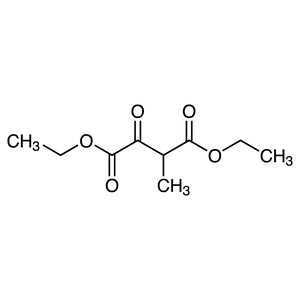
TCI M0381 Diethyl Methyloxalacetate is a double ester belonging to the beta-ketoester family, supplied as a non-heterocyclic building block for organic synthesis. Its molecule carries a keto group flanked by two ethyl ester groups together with a single methyl substituent, presenting several reactive centres at once within a compact carbon framework. In the laboratory, this material is commonly used as a source of functionalised four-carbon units that are ready to be condensed into heterocyclic rings, branched chains, or longer carbonyl skeletons. It plays an important role in assembling target molecules step by step with good control over the positioning of functional groups.
The property that makes this compound a frequent choice is the acidity of the alpha proton situated between the carbonyl groups. That proton is readily removed by base, forming a stable enolate that is prepared to react with electrophiles and offering predictable alkylation and condensation pathways. The two ester groups also open the door to further transformations such as selective hydrolysis, decarboxylation, or amide formation. The liquid form makes volume measurement straightforward and allows homogeneous mixing with common organic solvents, so reaction stoichiometry can be set up without additional dissolution steps.
In Indonesian laboratories, this building block is typically used in organic synthesis work at universities, research institutes, and industrial development units. It supports multi-step preparation routes where an intermediate with several reactive centres is needed, and it is generally handled in small batches within a fume hood using standard glassware. Researchers select it when a reliable, well-characterised starting material is required for constructing more elaborate molecular targets.
Related TCI products
- TCI O0074 40876-98-0 Diethyl Oxalacetate Sodium Salt
- TCI A0231 2049-80-1 Diethyl Allylmalonate
- TCI A0089 762-21-0 Diethyl Acetylenedicarboxylate
- TCI A0055 105-50-0 Diethyl 1,3-Acetonedicarboxylate
- TCI T1401 81172-89-6 Terephthalaldehyde Mono(diethyl Acetal)
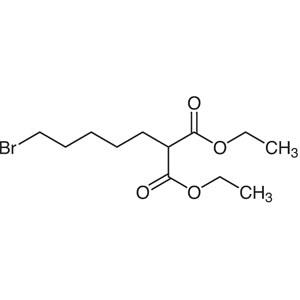
- TCI B2083 1906-95-2 Diethyl (5-Bromopentyl)malonate
- Heterocyclic ring construction: the keto group and the two flanking esters give several reactive centres that can be condensed with suitable partners to close rings in a controlled sequence.
- Alkylation at the alpha position: the acidic alpha proton between the carbonyl groups is easily deprotonated to a stable enolate that reacts predictably with electrophiles.
- Condensation reactions: the beta-ketoester framework provides the nucleophilic carbon required for classic carbon-carbon bond forming condensations toward longer carbonyl skeletons.
- Selective ester transformations: the presence of two ethyl ester groups allows selective hydrolysis, decarboxylation, or conversion into amides during later steps of a synthetic route.
- Branched-chain intermediate preparation: the methyl substituent on the compact carbon framework supplies branching that can be carried forward into more elaborate target molecules.
| Brand | TCI |
|---|---|
| CAS number | 759-65-9 |
| Molecular formula | — |
| Purity | — |
| Category | Chemistry > Building Blocks > Non-Heterocyclic Building Blocks |
| Pack sizes | available in the standard research-scale pack sizes listed for this catalogue item |
| Physical form | liquid |
| Storage | keep in a cool place in a tightly closed original container |
- Product code: M0381
Store the container tightly closed in a cool, dry, and well ventilated place, away from heat sources, direct sunlight, and incompatible chemicals. The original supplier container is the most suitable vessel; if transfer is required, use clean, dry glassware that is chemically compatible with esters and label it clearly. Because the material is a liquid, dispense it by volume inside a fume hood to limit vapour exposure, and use a pipette or syringe rather than pouring. Wear safety goggles, gloves, and a laboratory coat during handling, keep the container closed when not in use, and consult the manufacturer's safety data sheet before first use and before disposal of residues.
—
Produk Terkait
-
DiethylOxalacetateSodiumSalt TCI O0074
Regular price Rp 980.700,00Regular price -
DiethylAllylmalonate TCI A0231
Regular price From Rp 2.068.500,00Regular price -
DiethylAcetylenedicarboxylate TCI A0089
Regular price From Rp 2.837.100,00Regular price -
Diethyl1,3-Acetonedicarboxylate TCI A0055
Regular price From Rp 1.140.300,00Regular price -
TerephthalaldehydeMono(diethylAcetal) TCI T1401
Regular price Rp 3.578.400,00Regular price -
Diethyl(5-Bromopentyl)malonate TCI B2083
Regular price From Rp 2.254.350,00Regular price -
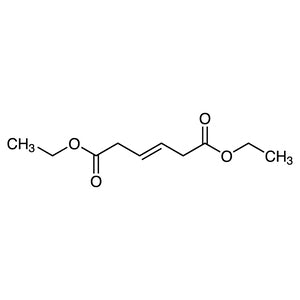
Diethyltrans-3-Hexenedioate TCI B1592
Regular price Rp 5.062.050,00Regular price -
Diethyl2,2-Bis(hydroxymethyl)malonate TCI B1492
Regular price From Rp 3.021.900,00Regular price