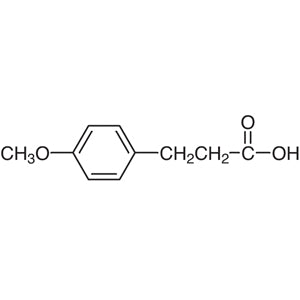
TCI M1032 3-(4-Methoxyphenyl)propionic Acid, bearing CAS number 1929-29-9, is an aromatic carboxylic acid built from a benzene ring carrying a methoxy substituent at the para position, connected to a propionic acid group through two saturated carbon atoms. This structural motif is very commonly encountered as the core skeleton of bioactive molecules and phenylpropanoid derivatives, so in the laboratory it serves as a non-heterocyclic building block that bridges aromatic chemistry with carboxylic acid group chemistry. The presence of a flexible connecting chain means the compound is frequently used to install an aryl ring onto target molecules without introducing excessive steric hindrance.
The properties that make it a frequent choice are the reactivity of the carboxyl group, which is readily converted into esters, amides, acyl chlorides, or alcohols, combined with an electron-rich aromatic ring resulting from the methoxy group that activates the positions ortho to it. This combination opens the way to intramolecular cyclization reactions such as Friedel-Crafts acylation for the construction of indanone and tetralone skeletons. As a crystalline solid at room temperature, the material is easy to weigh accurately and straightforward to repurify by recrystallization, which supports reproducible results across repeated preparations.
In Indonesian laboratories, this building block is typically used in university and institutional synthetic organic chemistry work, in medicinal chemistry research groups preparing analogue series, and in method development where a well-defined aromatic acid is needed as a starting point. Its solid form suits routine handling conditions in tropical laboratories, where materials that can be weighed on an analytical balance and recrystallized in-house reduce dependence on specialized storage and simplify day-to-day bench planning.
Related TCI products
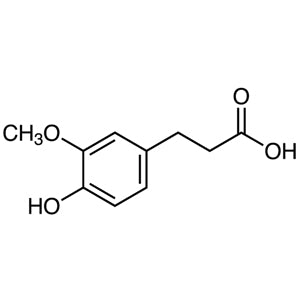
- TCI H1180 1135-23-5 3-(4-Hydroxy-3-methoxyphenyl)propionic Acid
- TCI T2797 1505-50-6 3-(p-Tolyl)propionic Acid
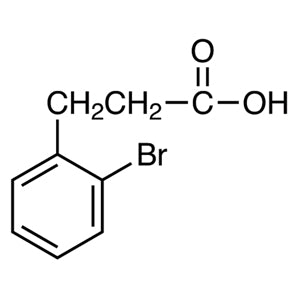
- TCI B4409 15115-58-9 3-(2-Bromophenyl)propionic Acid
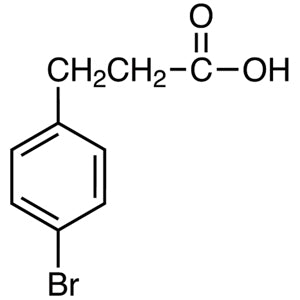
- TCI B3753 1643-30-7 3-(4-Bromophenyl)propionic Acid
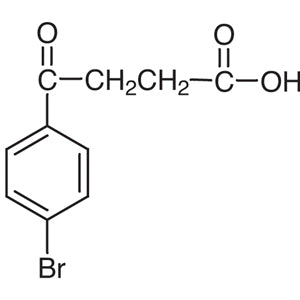
- TCI B3129 6340-79-0 3-(4-Bromobenzoyl)propionic Acid
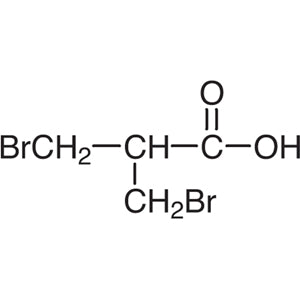
- TCI B3081 41459-42-1 3-Bromo-2-(bromomethyl)propionic Acid
- Non-heterocyclic building block synthesis: the para-methoxy aryl ring and flexible two-carbon linker allow chemists to attach an aromatic unit to target molecules without adding excessive steric bulk.
- Friedel-Crafts intramolecular cyclization: the electron-rich aromatic ring activated by the methoxy group reacts readily with the carboxyl function to construct indanone and tetralone ring systems.
- Ester and amide derivative preparation: the carboxyl group is straightforwardly converted into esters, amides, or acyl chlorides, making it a convenient handle for rapid derivative library work.
- Phenylpropanoid-related research: because this skeleton recurs in phenylpropanoid derivatives and bioactive molecules, it serves as a practical reference framework for structure-oriented synthetic studies.
- Reduction and functional group interconversion studies: the carboxyl group can be carried through to the corresponding alcohol, giving a reliable substrate for teaching and developing reduction methodology.
| Brand | TCI |
|---|---|
| CAS number | 1929-29-9 |
| Molecular formula | — |
| Purity | — |
| Category | Chemistry > Building Blocks > Non-Heterocyclic Building Blocks |
| Pack sizes | available in the standard TCI catalogue pack sizes for this item; please confirm the size required when ordering |
| Physical form | crystalline solid at room temperature |
| Storage | keep in a tightly closed container in a cool, dry place away from moisture |
Store the container tightly closed in a cool, dry, well-ventilated area away from moisture, direct sunlight, and sources of ignition. Original manufacturer bottles or chemically compatible glass containers with secure caps are suitable; keep the label intact and legible. Handle the solid inside a fume hood when weighing or transferring to limit dust exposure, and wear safety goggles, a laboratory coat, and chemically resistant gloves. Avoid contact with skin and eyes and avoid inhaling dust. Separate the material from strong bases and strong oxidizing agents during storage. Close the container promptly after each use to preserve the free-flowing crystalline form, and consult the manufacturer's safety data sheet before first use and for disposal guidance.
—
Produk Terkait
-
3-(4-Hydroxy-3-methoxyphenyl)propionicAcid TCI H1180
Regular price From Rp 2.068.500,00Regular price -
3-(p-Tolyl)propionicAcid TCI T2797
Regular price From Rp 2.359.350,00Regular price -
3-(2-Bromophenyl)propionicAcid TCI B4409
Regular price From Rp 1.087.800,00Regular price -
3-(4-Bromophenyl)propionicAcid TCI B3753
Regular price From Rp 477.750,00Regular price -
3-(4-Bromobenzoyl)propionicAcid TCI B3129
Regular price Rp 1.829.100,00Regular price -
3-Bromo-2-(bromomethyl)propionicAcid TCI B3081
Regular price From Rp 1.510.950,00Regular price -
2-[4-(Bromomethyl)phenyl]propionicAcid TCI B2101
Regular price From Rp 505.050,00Regular price -
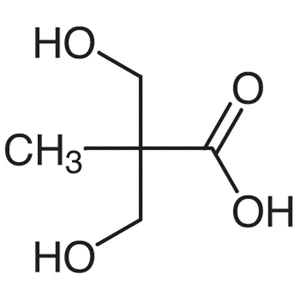
2,2-Bis(hydroxymethyl)propionicAcid TCI B1192
Regular price From Rp 530.250,00Regular price

![111128-12-2 2-[4-(Bromomethyl)phenyl]propionic Acid - AMI Scientific](http://amiscientific.com/cdn/shop/files/TCI2510B2101_3164fa18-db8c-41f7-9c31-4bf45a41bebb.jpg?v=1767335146&width=533)