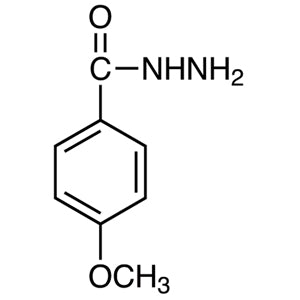
4-Methoxybenzohydrazide (TCI M1770), also known as p-anisohydrazide, is an organic building block that combines a methoxy-substituted benzene ring with a highly reactive hydrazide group. In laboratory practice, this compound serves as an entry point toward a wide range of molecular frameworks: it reacts with aldehydes and ketones to form hydrazones, and it can be cyclized into five-membered heterocyclic rings such as oxadiazoles and triazoles. Its characteristic role is that of a linking reagent — a simple material that attaches an electron-rich aromatic fragment onto the target molecule being designed.
The characteristic that makes it a frequent choice is the terminal hydrazide group, which is nucleophilic and readily activated under relatively mild reaction conditions, so that hydrazone formation often proceeds with nothing more than heating in an alcohol together with a small amount of acid catalyst. The methoxy group at the para position donates electrons into the aromatic ring, influencing the electron density and the chelating behaviour of the derived products, while at the same time providing clean, easily recognizable signals in nuclear magnetic resonance spectra. As a solid, the material is convenient to weigh out and to store without special handling.
In Indonesian laboratories, this building block fits naturally into synthetic organic chemistry work at university research groups, graduate student projects, and institutional research units where hydrazone and heterocycle chemistry is routine. Because it requires no special handling and is dispensed as a solid, it suits benchtop use in general-purpose synthesis laboratories. AMI Scientific supplies it as part of the TCI range for research and development use, supporting teaching laboratories and research programmes that build derivative libraries from simple aromatic precursors.
- Hydrazone synthesis — the terminal hydrazide condenses directly with aldehydes and ketones, frequently needing only alcoholic solvent, gentle heating, and a trace of acid catalyst.
- Oxadiazole ring construction — the hydrazide functionality can be cyclized into five-membered 1,3,4-oxadiazole frameworks, making this a convenient starting point for heterocyclic scaffold work.
- Triazole preparation — the same reactive hydrazide group supports cyclization toward triazole rings, giving synthetic chemists a second heterocyclic route from one common precursor.
- Introduction of electron-rich aromatic fragments — as a linking reagent, it attaches a para-methoxyphenyl unit onto target molecules where donating character is deliberately required.
- Ligand and chelate precursor studies — the methoxy group modulates electron density in the derived products, allowing researchers to tune the chelating properties of hydrazone-based ligands.
| Brand | TCI (Tokyo Chemical Industry) |
|---|---|
| CAS number | 3290-99-1 |
| Molecular formula | — |
| Purity | — |
| Category | Chemistry > Building Blocks > Non-Heterocyclic Building Blocks |
| Pack sizes | available in standard TCI research-scale packaging; please contact AMI Scientific for currently offered sizes |
| Physical form | solid, convenient to weigh and dispense |
| Storage | store in a closed container under ordinary laboratory conditions; no special handling required |
Keep the material in its original tightly closed container, stored in a cool, dry place away from direct sunlight and from sources of moisture. Amber glass or the supplier's original bottle is suitable, and containers should be resealed promptly after each weighing to limit exposure to humid air. As with any laboratory chemical, handle it in a well-ventilated area or fume hood, wear safety glasses, gloves, and a laboratory coat, and avoid generating dust during transfer. Use clean, dry spatulas to prevent cross-contamination, keep the substance away from strong oxidizing agents, and consult the manufacturer's safety data sheet before first use. This product is intended for research and laboratory use only, not for household, food, drug, or therapeutic application.
—
Produk Terkait
-
3-Methoxybenzohydrazide TCI A1446
Regular price From Rp 769.650,00Regular price -
2-Methoxybenzohydrazide TCI M3840
Regular price From Rp 903.000,00Regular price -
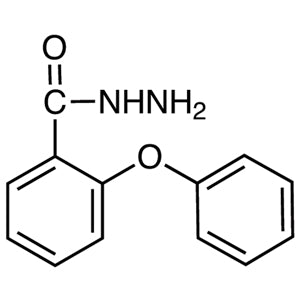
2-Phenoxybenzohydrazide TCI P2357
Regular price From Rp 1.458.450,00Regular price -
3-Hydroxybenzohydrazide TCI H1520
Regular price Rp 2.411.850,00Regular price -
4-Hydroxybenzohydrazide TCI H1275
Regular price From Rp 2.359.350,00Regular price -
2,4-Dihydroxybenzohydrazide TCI D4784
Regular price Rp 1.565.550,00Regular price -
3-Bromobenzohydrazide TCI B4148
Regular price Rp 505.050,00Regular price -
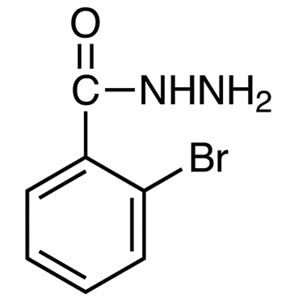
2-Bromobenzohydrazide TCI B4147
Regular price Rp 3.021.900,00Regular price