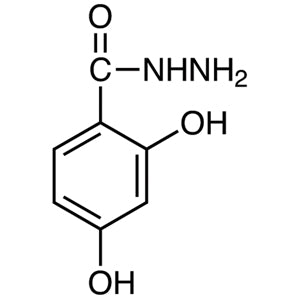
2,4-Dihydroxybenzohydrazide is a chemical compound widely used in laboratory settings for its versatility in chemical reactions. As a key building block in organic chemistry, it plays a crucial role in the synthesis of heterocyclic compounds and hydrazide derivatives. Its presence in chemical laboratories makes it an essential reagent for the development of complex molecules with applications in pharmaceuticals, materials science, and analytical chemistry. This compound is particularly valued for its ability to participate in various reaction mechanisms, including substitution and condensation reactions, which are fundamental in the creation of new chemical entities.
The compound’s hydrazide group enables it to react with a wide range of reagents, including acids, bases, and organic compounds, making it a preferred choice for synthetic chemists. Its chemical stability under controlled conditions ensures reliable performance in laboratory experiments, while its reactivity allows for the formation of diverse functional groups. These characteristics make it a valuable tool for researchers seeking to explore new chemical pathways and develop novel compounds. The compound’s simplicity in structure does not diminish its importance, as it serves as a foundation for more complex molecular architectures.
In Indonesian laboratories, 2,4-Dihydroxybenzohydrazide is commonly used in scientific research, especially in the fields of organic chemistry and pharmacology. It is frequently employed in studies aimed at synthesizing new drugs and materials. Many research institutions and universities in Indonesia rely on this compound for its reliability and effectiveness in various experimental setups. Its widespread use underscores its importance in both academic and industrial research environments.
- Organic synthesis applications benefit from this compound due to its reactivity and ability to form hydrazide derivatives.
- Pharmaceutical research utilizes it for the development of new drug molecules through structural modifications.
- Material science experiments use it to create functionalized compounds with specific chemical properties.
- Analytical chemistry relies on it as a reagent for the detection and quantification of certain compounds.
- Academic research in Indonesia employs it for teaching and experimental purposes in chemical education.
| Brand | TCI |
|---|---|
| CAS number | 13221-86-8 |
| Molecular formula | — |
| Purity | — |
| Category | Chemistry > Building Blocks > Non-Heterocyclic Building Blocks |
| Pack sizes | Available in various quantities as per supplier specifications |
| Physical form | Solid |
| Storage | Store in a cool, dry place away from moisture and direct sunlight |
This compound should be stored in a cool, dry environment to maintain its chemical stability. It is recommended to keep it in a sealed container to prevent exposure to moisture and air. Due to its reactivity, it should be handled with care, using appropriate personal protective equipment such as gloves and safety goggles. Avoid contact with strong acids or bases to prevent unwanted reactions. It is advisable to store it in a well-ventilated area to minimize any potential hazards. Proper labeling and storage conditions ensure safe handling and long-term usability in laboratory settings.
—
Produk Terkait
-
3-Hydroxybenzohydrazide TCI H1520
Regular price Rp 2.411.850,00Regular price -
3-Methoxybenzohydrazide TCI A1446
Regular price From Rp 769.650,00Regular price -
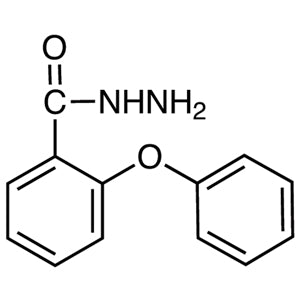
2-Phenoxybenzohydrazide TCI P2357
Regular price From Rp 1.458.450,00Regular price -
2-Methoxybenzohydrazide TCI M3840
Regular price From Rp 903.000,00Regular price -
4-Methoxybenzohydrazide TCI M1770
Regular price From Rp 1.510.950,00Regular price -
4-Hydroxybenzohydrazide TCI H1275
Regular price From Rp 2.359.350,00Regular price -
3-Bromobenzohydrazide TCI B4148
Regular price Rp 505.050,00Regular price -
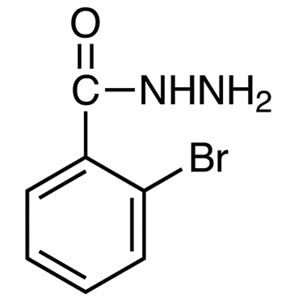
2-Bromobenzohydrazide TCI B4147
Regular price Rp 3.021.900,00Regular price