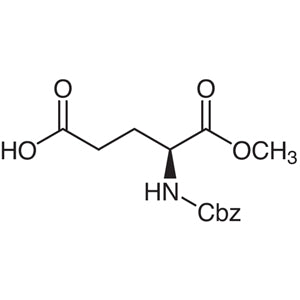
TCI M1961 1-Methyl N-Carbobenzoxy-L-glutamate is a doubly protected derivative of the amino acid L-glutamic acid, in which the amino group is protected as a carbobenzoxy (Cbz/Z) carbamate and one of the two carboxyl groups is converted into a methyl ester. The material serves as a protected building block in peptide synthesis, where chemists must precisely control which functional group is permitted to react at each coupling step. With the L-configuration preserved, this compound is a common entry point whenever a glutamate residue needs to be introduced into a peptide chain or a small-molecule conjugate in a research laboratory.
The characteristic that makes this compound a frequent choice is its orthogonal protection pattern. The Cbz group on the nitrogen is stable toward a wide range of reaction conditions yet can be removed cleanly by hydrogenolysis, while the methyl ester masks one carboxyl terminus and leaves a single free carboxyl group available for activation and amide bond formation. This combination gives the chemist freedom to order the reaction sequence as needed without the risk of unwanted cross-reactions between the two carboxyl functions. As a TCI product, the compound is supplied with per-batch analytical documentation, so identity and quality can be traced back to the manufacturing lot.
In Indonesian laboratories, this reagent is typically used in university research groups, institutional chemistry laboratories, and pharmaceutical or biotechnology R&D units engaged in peptide and peptidomimetic work. It is generally ordered in small research quantities for method development, student thesis projects, and exploratory synthesis rather than for production-scale use. Laboratories that already run standard solution-phase or solid-phase peptide coupling procedures can adopt it directly, since the Cbz and methyl ester strategies are covered by widely available literature protocols.
Related TCI products
- TCI B4912 5891-45-2 1-tert-Butyl N-Carbobenzoxy-L-glutamate
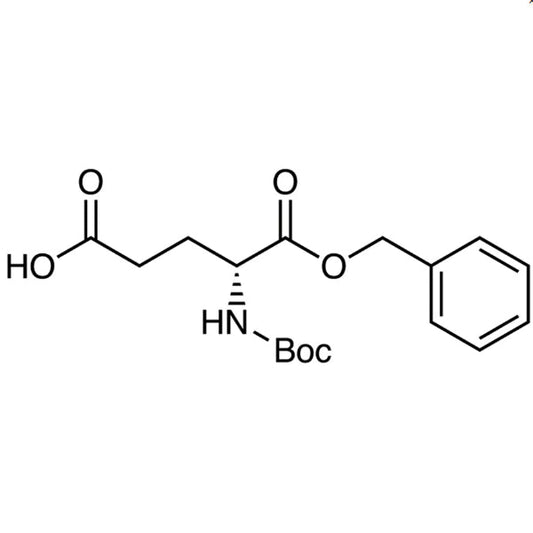
- TCI B4303 34404-30-3 1-Benzyl N-(tert-Butoxycarbonyl)-D-glutamate
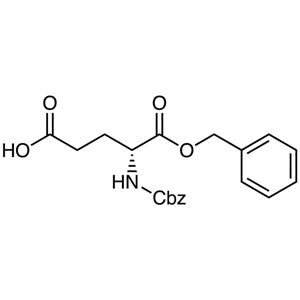
- TCI B4281 65706-99-2 1-Benzyl N-Benzyloxycarbonyl-D-glutamate
- TCI B3989 3705-42-8 1-Benzyl N-Benzyloxycarbonyl-L-glutamate
- TCI A2909 144120-54-7 1-Allyl N-[(9H-Fluoren-9-ylmethoxy)carbonyl]-L-glutamate
- TCI M2269 4652-65-7 5-Methyl N-Carbobenzoxy-L-glutamate
- Solution-phase peptide synthesis: the free carboxyl group can be activated with standard coupling reagents while the Cbz carbamate and methyl ester keep the remaining functional groups inert throughout the amide bond forming step.
- Introduction of glutamate residues into peptide chains: the preserved L-configuration lets researchers incorporate a stereochemically defined glutamate unit without an additional resolution or chiral purification stage in the sequence.
- Preparation of side-chain modified glutamate derivatives: the differentiated carboxyl groups allow chemists to selectively elaborate one terminus while the methyl ester holds the other protected until a later deprotection stage.
- Small-molecule conjugate synthesis: the protected amino acid acts as a defined linker or spacer unit that can be coupled to a payload and then unmasked in a controlled, stepwise manner.
- Methodology and protecting-group strategy studies: the orthogonal Cbz/methyl ester pairing makes this compound a convenient model substrate when evaluating new coupling reagents, hydrogenolysis conditions, or ester hydrolysis procedures.
| Brand | TCI (Tokyo Chemical Industry) |
|---|---|
| CAS number | 5672-83-3 |
| Molecular formula | — |
| Purity | — |
| Category | Chemistry > Chemical Biology > Peptide Chemistry |
| Pack sizes | supplied in TCI research-scale catalogue pack sizes; please confirm the currently available packaging when ordering |
| Physical form | — |
| Storage | — |
- Product code: M1961
- Documentation: supplied with per-batch analytical documentation from the manufacturer
Store the container in a cool, dry place away from direct sunlight, heat sources, and moisture, and follow the storage temperature stated on the manufacturer's label and safety data sheet for this lot. Keep the material in its original tightly closed container, or transfer it to a clean, chemically compatible, well-sealed vessel that is clearly labelled with the product name, CAS number, and date opened. Handle the compound in a fume hood using gloves, safety glasses, and a laboratory coat, avoid generating or inhaling dust, and weigh out portions promptly to limit exposure of the bulk material to atmospheric moisture. Dispose of residues and contaminated consumables according to institutional chemical waste procedures, and consult the safety data sheet before first use.
—
Product Categories
Produk Terkait
-
1-tert-ButylN-Carbobenzoxy-L-glutamate TCI B4912
Regular price From Rp 689.850,00Regular price -
1-BenzylN-(tert-Butoxycarbonyl)-D-glutamate TCI B4303
Regular price From Rp 1.193.850,00Regular price -
1-BenzylN-Benzyloxycarbonyl-D-glutamate TCI B4281
Regular price Rp 2.411.850,00Regular price -
1-BenzylN-Benzyloxycarbonyl-L-glutamate TCI B3989
Regular price From Rp 1.510.950,00Regular price -
1-AllylN-[(9H-Fluoren-9-ylmethoxy)carbonyl]-L-glutamate TCI A2909
Regular price From Rp 1.431.150,00Regular price -
5-MethylN-Carbobenzoxy-L-glutamate TCI M2269
Regular price Rp 2.121.000,00Regular price -
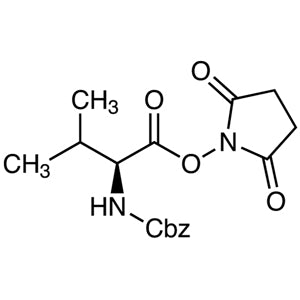
N-Carbobenzoxy-L-valineSuccinimidylEster TCI C2334
Regular price Rp 1.273.650,00Regular price -
5-BenzylN-Benzyloxycarbonyl-L-glutamate TCI B3902
Regular price Rp 1.458.450,00Regular price



![144120-54-7 1-Allyl N-[(9H-Fluoren-9-ylmethoxy)carbonyl]-L-glutamate - AMI Scientific](http://amiscientific.com/cdn/shop/files/TCI2510A2909.jpg?v=1769141464&width=533)