


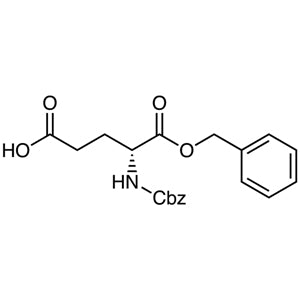
TCI B4281, also known as 1-Benzyl N-Benzyloxycarbonyl-D-glutamate, is a specialized chemical compound used in the field of chemical biology, particularly in peptide chemistry. This compound is a protected derivative of D-glutamic acid, with both the amino and carboxyl groups protected by benzyloxycarbonyl (Cbz) and benzyl groups, respectively. Its unique structure makes it an essential reagent in the synthesis of peptides, where controlled protection and deprotection of functional groups are critical. In laboratory settings, this compound plays a vital role in the development of synthetic peptides for research in biomedicine and pharmacology.
The compound is valued for its chemical stability under specific conditions and its ability to participate in selective peptide reactions. Its non-reactive nature under normal conditions ensures safe handling and storage, making it a reliable choice for researchers. The well-documented chemical structure of TCI B4281 allows for precise synthesis and application, which is crucial in high-precision research environments. These properties make it a preferred material for laboratories requiring consistent and reproducible results in peptide synthesis.
In Indonesian laboratories, TCI B4281 is widely used in peptide synthesis, drug development, and molecular interaction studies. Its stability and controlled reactivity make it a sought-after reagent for researchers working on complex chemical processes. The compound’s role in advancing biochemical research is significant, particularly in the development of new therapeutic agents and understanding molecular mechanisms.
TCI brochures (PDF)
- Amino Acids and Peptide Synthesis Reagents 2025-08-14 · p. 17
Related TCI products
- TCI B4303 34404-30-3 1-Benzyl N-(tert-Butoxycarbonyl)-D-glutamate
- TCI B3989 3705-42-8 1-Benzyl N-Benzyloxycarbonyl-L-glutamate
- TCI C2873 21209-51-8 N-Benzyloxycarbonyl-L-serine Benzyl Ester
- TCI M2707 4668-42-2 1-Methyl N-Benzyloxycarbonyl-L-aspartate
- TCI C0333 1738-86-9 N-Benzyloxycarbonylglycine 4-Nitrophenyl Ester
- TCI B4912 5891-45-2 1-tert-Butyl N-Carbobenzoxy-L-glutamate
- Peptide Synthesis: TCI B4281 is ideal for peptide synthesis due to its protected functional groups, allowing for precise control over reaction steps and product purity.
- Drug Development: The compound is used in the synthesis of bioactive peptides, supporting research into new therapeutic agents and pharmaceutical compounds.
- Molecular Interaction Studies: Its well-defined structure enables detailed analysis of molecular interactions, aiding in the study of protein-peptide binding and receptor interactions.
- Biochemical Research: TCI B4281 supports research in chemical biology by providing a stable and reactive building block for complex molecular constructs.
- Analytical Chemistry: The compound is used as a standard in analytical procedures to ensure accurate and reproducible results in peptide-related studies.
| Brand | TCI |
|---|---|
| CAS number | 65706-99-2 |
| Molecular formula | — |
| Purity | — |
| Category | Chemistry > Chemical Biology > Peptide Chemistry |
| Pack sizes | — |
| Physical form | — |
| Storage | Store in a cool, dry place away from light and moisture |
TCI B4281 should be stored in a cool, dry environment, away from direct light and moisture to maintain its chemical stability. It is recommended to use airtight containers to prevent exposure to air and humidity, which could affect its integrity. Since the compound is non-reactive under normal conditions, it can be handled with standard laboratory precautions. However, it is advisable to use appropriate personal protective equipment when handling to ensure safety. The compound should be stored in a secure location to prevent contamination and ensure its usability for research purposes. Proper storage conditions are essential to preserve its chemical properties and ensure consistent performance in laboratory applications.
—
Product Categories
Produk Terkait
-
1-BenzylN-(tert-Butoxycarbonyl)-D-glutamate TCI B4303
Regular price From Rp 1.246.350,00Regular priceRp 887.250,00Sale price From Rp 1.246.350,00 -
1-BenzylN-Benzyloxycarbonyl-L-glutamate TCI B3989
Regular price From Rp 1.563.450,00Regular priceRp 1.108.800,00Sale price From Rp 1.563.450,00 -
N-Benzyloxycarbonyl-L-serineBenzylEster TCI C2873
Regular price From Rp 1.934.100,00Regular priceRp 1.368.150,00Sale price From Rp 1.934.100,00 -
1-MethylN-Benzyloxycarbonyl-L-aspartate TCI M2707
Regular price Rp 1.696.800,00Regular priceRp 1.202.250,00Sale price Rp 1.696.800,00 -
N-Benzyloxycarbonylglycine4-NitrophenylEster TCI C0333
Regular price Rp 822.150,00Regular priceRp 590.100,00Sale price Rp 822.150,00 -
1-tert-ButylN-Carbobenzoxy-L-glutamate TCI B4912
Regular price From Rp 742.350,00Regular priceRp 534.450,00Sale price From Rp 742.350,00 -
1-AllylN-[(9H-Fluoren-9-ylmethoxy)carbonyl]-L-glutamate TCI A2909
Regular price From Rp 1.483.650,00Regular priceRp 1.053.150,00Sale price From Rp 1.483.650,00 -
1-MethylN-Carbobenzoxy-L-glutamate TCI M1961
Regular price From Rp 689.850,00Regular priceRp 497.700,00Sale price From Rp 689.850,00


