Methyl 5-Bromo-2-methyl-3-nitrobenzoate is a chemical compound widely used as a building block in the synthesis of complex organic molecules. This compound plays a crucial role in laboratory settings where researchers are engaged in the development of new chemical structures and functional groups. Its aromatic structure, combined with bromo and nitro substituents, makes it a versatile reagent for various synthetic pathways. Due to its stability and reactivity, it is often employed in organic chemistry experiments to facilitate substitution reactions and functional group transformations.
The compound’s chemical properties, including moderate polarity and compatibility with a wide range of reagents, make it a preferred choice for chemists. Its ability to participate in electrophilic substitution and nitration reactions enhances its utility in synthetic chemistry. Additionally, its stability under controlled conditions allows for reliable use in both academic and industrial research environments. These characteristics contribute to its popularity among laboratory professionals seeking reliable and effective reagents.
In Indonesian laboratories, Methyl 5-Bromo-2-methyl-3-nitrobenzoate is commonly used in organic chemistry research, especially in academic institutions and research centers. It is a key component in the development of new compounds and is frequently utilized in experiments involving Friedel-Crafts reactions and heterocyclic synthesis. Its availability and performance make it a staple in the chemical supply chain supporting scientific innovation in Indonesia.
Related TCI products
- TCI M3649 99-42-3 Methyl 4-Hydroxy-3-nitrobenzoate
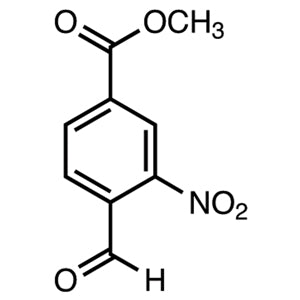
- TCI M3198 153813-69-5 Methyl 4-Formyl-3-nitrobenzoate
- TCI M2873 40757-20-8 Methyl 4-Methoxy-3-nitrobenzoate
- TCI M2864 22621-41-6 Methyl 2-Hydroxy-3-nitrobenzoate
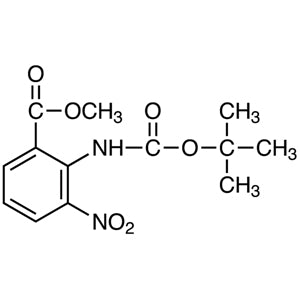
- TCI M2797 57113-90-3 Methyl 2-(tert-Butoxycarbonylamino)-3-nitrobenzoate
- TCI M2422 98475-07-1 Methyl 2-(Bromomethyl)-3-nitrobenzoate
- Organic synthesis applications benefit from this compound's reactivity in electrophilic substitution reactions, making it ideal for creating complex molecular structures.
- Nitration processes are enhanced by its nitro group, which facilitates the formation of nitro derivatives in controlled reaction conditions.
- It is well-suited for Friedel-Crafts acylations due to its aromatic nature and compatibility with catalysts like AlCl3.
- Its moderate polarity allows it to be used in reactions requiring solubility in both polar and non-polar solvents.
- It supports the synthesis of heterocyclic compounds, contributing to the development of pharmaceutical and agrochemical products.
| Brand | TCI |
|---|---|
| CAS number | 220514-28-3 |
| Molecular formula | — |
| Purity | — |
| Category | Chemistry > Building Blocks > Non-Heterocyclic Building Blocks |
| Pack sizes | Available in standard laboratory quantities |
| Physical form | Solid |
| Storage | Store in a cool, dry place away from light and moisture |
This compound should be stored in a cool, dry environment, away from direct sunlight and moisture to maintain its stability and reactivity. It is recommended to use airtight containers to prevent exposure to air and humidity, which could affect its chemical integrity. In laboratory settings, it should be handled with appropriate personal protective equipment, including gloves and safety goggles, to ensure safe handling. Due to its reactivity, it should be stored separately from incompatible substances such as strong bases or reducing agents. Regular inspection of storage conditions is advised to ensure long-term usability and safety in research environments.
—
Produk Terkait
-
Methyl4-Hydroxy-3-nitrobenzoate TCI M3649
Regular price From Rp 848.400,00Regular price -
Methyl4-Formyl-3-nitrobenzoate TCI M3198
Regular price From Rp 1.326.150,00Regular price -
Methyl4-Methoxy-3-nitrobenzoate TCI M2873
Regular price From Rp 610.050,00Regular price -
Methyl2-Hydroxy-3-nitrobenzoate TCI M2864
Regular price From Rp 769.650,00Regular price -
Methyl2-(tert-Butoxycarbonylamino)-3-nitrobenzoate TCI M2797
Regular price From Rp 2.491.650,00Regular price -
Methyl2-(Bromomethyl)-3-nitrobenzoate TCI M2422
Regular price From Rp 980.700,00Regular price -
Methyl2-Chloro-5-nitrobenzoate TCI C1732
Regular price From Rp 717.150,00Regular price -
Methyl2-Bromo-5-nitrobenzoate TCI B1916
Regular price From Rp 610.050,00Regular price