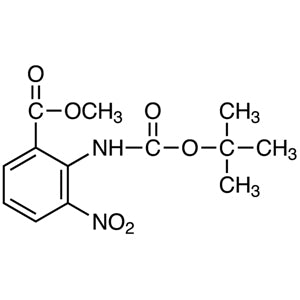
Methyl 2-(tert-Butoxycarbonylamino)-3-nitrobenzoate is a chemical compound widely used in organic synthesis reactions. As a building block, it serves as a key intermediate in the development of complex molecules, particularly in pharmaceutical and organic chemistry research. This compound plays a critical role in various synthetic pathways, enabling the formation of more intricate molecular structures through substitution, reduction, or other chemical transformations. Its presence in laboratory settings ensures the reproducibility and accuracy of chemical processes, making it an essential tool for researchers.
The compound's unique molecular structure, featuring both a nitro group and a tert-butoxycarbonyl group, contributes to its reactivity and versatility. These functional groups allow for controlled chemical modifications, making it suitable for a wide range of synthetic applications. Its stability under certain reaction conditions further enhances its utility, as it can be manipulated without significant degradation. These properties make it a preferred choice for scientists aiming to achieve precise and consistent results in their experiments.
In Indonesian laboratories, this compound is commonly used in scientific research, especially in the fields of organic chemistry and pharmacology. It supports the development of new therapeutic compounds and is frequently employed in academic and research institutions. Its availability in the local market ensures that researchers can access it easily, facilitating ongoing studies and innovation in chemical sciences.
Related TCI products
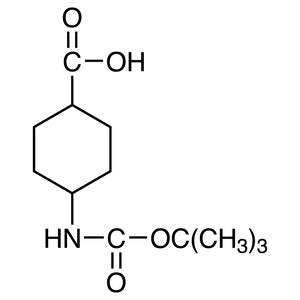
- TCI B3248 130309-46-5 4-(tert-Butoxycarbonylamino)cyclohexanecarboxylic Acid (cis- and trans- mixture)
- TCI M3649 99-42-3 Methyl 4-Hydroxy-3-nitrobenzoate
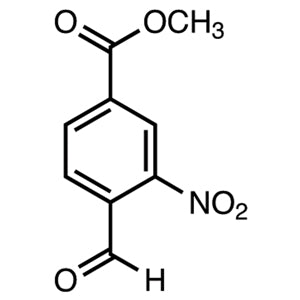
- TCI M3198 153813-69-5 Methyl 4-Formyl-3-nitrobenzoate
- TCI M2873 40757-20-8 Methyl 4-Methoxy-3-nitrobenzoate
- TCI M2864 22621-41-6 Methyl 2-Hydroxy-3-nitrobenzoate
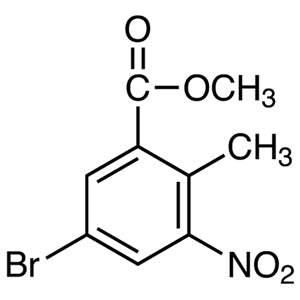
- TCI M2845 220514-28-3 Methyl 5-Bromo-2-methyl-3-nitrobenzoate
- Organic synthesis reactions benefit from this compound’s ability to act as a versatile building block, enabling the creation of complex molecular structures with controlled reactivity.
- Pharmaceutical research utilizes its functional groups to develop new drug candidates, as its structural features support targeted chemical modifications.
- Academic laboratories use it in teaching and research to demonstrate synthetic pathways and the role of functional groups in organic chemistry.
- Drug discovery projects incorporate it to explore the potential of nitrogen-containing compounds in therapeutic applications.
- Analytical chemistry applications leverage its stability and reactivity for the development of new analytical methods and standards.
| Brand | TCI |
|---|---|
| CAS number | 57113-90-3 |
| Molecular formula | — |
| Purity | — |
| Category | Chemistry > Building Blocks > Non-Heterocyclic Building Blocks |
| Pack sizes | Available in various quantities as per supplier specifications |
| Physical form | Solid powder |
| Storage | Store in a cool, dry place away from light and moisture |
This compound should be stored in a cool, dry environment, away from direct light and moisture to maintain its stability and reactivity. It is recommended to use airtight containers to prevent exposure to air and humidity, which could affect its chemical integrity. In laboratory settings, it should be handled with appropriate personal protective equipment, such as gloves and safety goggles, to ensure safe handling. Due to its chemical nature, it should be stored separately from incompatible substances to avoid any potential reactions. Proper labeling and storage conditions are essential to ensure the compound remains suitable for use in research applications.
—
Product Categories
- Building BlocksNon-Heterocyclic Building BlocksCarbonyl Compounds [Non-Heterocyclic Building Blocks]
- Building BlocksNon-Heterocyclic Building BlocksNitrogen Compounds [Non-Heterocyclic Building Blocks]
- Chemical BiologyPeptide ChemistryUnnatural Amino Acid Derivatives
- Pharmaceutical Development and Drug Discovery Research ReagentsPeptide ChemistryUnnatural Amino Acid Derivatives
- Pharmaceutical Development and Drug Discovery Research ReagentsBuilding Blocks for Pharmaceutical Ingredients (for Research and Experimental Use)
Produk Terkait
-
4-(tert-Butoxycarbonylamino)cyclohexanecarboxylicAcid(cis-andtrans-mixture) TCI B3248
Regular price From Rp 2.625.000,00Regular price -
Methyl4-Hydroxy-3-nitrobenzoate TCI M3649
Regular price From Rp 848.400,00Regular price -
Methyl4-Formyl-3-nitrobenzoate TCI M3198
Regular price From Rp 1.326.150,00Regular price -
Methyl4-Methoxy-3-nitrobenzoate TCI M2873
Regular price From Rp 610.050,00Regular price -
Methyl2-Hydroxy-3-nitrobenzoate TCI M2864
Regular price From Rp 769.650,00Regular price -
Methyl5-Bromo-2-methyl-3-nitrobenzoate TCI M2845
Regular price From Rp 637.350,00Regular price -
Methyl2-Chloro-5-nitrobenzoate TCI C1732
Regular price From Rp 717.150,00Regular price -
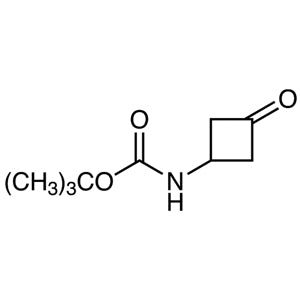
3-(tert-Butoxycarbonylamino)-1-cyclobutanone TCI B4043
Regular price Rp 1.087.800,00Regular price