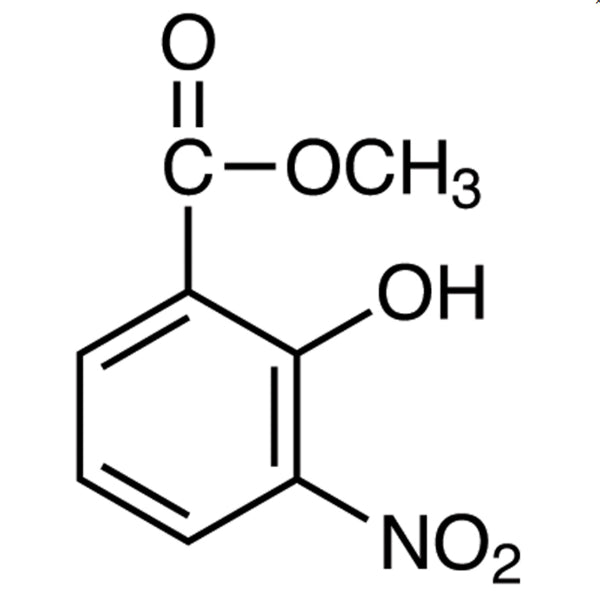
Methyl 2-Hydroxy-3-nitrobenzoate is a chemical compound widely used in laboratory settings for the synthesis of complex molecules. As a building block in organic chemistry, it plays a crucial role in various synthetic pathways, particularly in the development of heterocyclic and aromatic compounds. Its versatility makes it a valuable reagent for chemists engaged in research and development, especially in the fields of pharmaceuticals and material science. This compound is often utilized in substitution reactions, esterification processes, and oxidation steps, where its functional groups contribute to the formation of more complex structures.
The chemical properties of Methyl 2-Hydroxy-3-nitrobenzoate make it a preferred choice in laboratory applications. Its high polarity, due to the presence of both nitro and hydroxyl groups, allows it to dissolve easily in polar solvents such as ethyl acetate and acetone. This solubility is essential for reactions requiring high reactivity and compatibility with various solvent systems. Additionally, its stability under controlled conditions ensures consistent performance in experimental setups. However, it is important to note that the compound is sensitive to high temperatures and light exposure, which must be managed during storage and use.
In Indonesian laboratories, Methyl 2-Hydroxy-3-nitrobenzoate is commonly used in organic chemistry research, particularly in pharmaceutical and material science applications. It is a key component in the synthesis of new compounds and the modification of existing ones. Many research institutions and universities in Indonesia rely on this compound for experimental processes aimed at developing novel drugs and advanced materials. Its availability and reliability make it an essential reagent in the chemical supply chain of Indonesian laboratories.
Related TCI products
- TCI M3649 99-42-3 Methyl 4-Hydroxy-3-nitrobenzoate
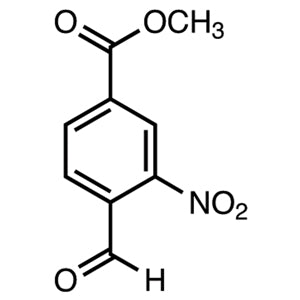
- TCI M3198 153813-69-5 Methyl 4-Formyl-3-nitrobenzoate
- TCI M2873 40757-20-8 Methyl 4-Methoxy-3-nitrobenzoate
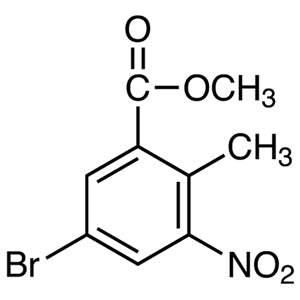
- TCI M2845 220514-28-3 Methyl 5-Bromo-2-methyl-3-nitrobenzoate
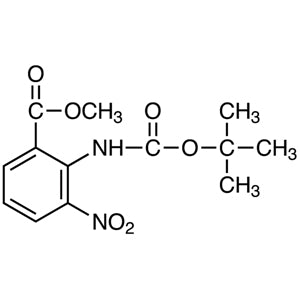
- TCI M2797 57113-90-3 Methyl 2-(tert-Butoxycarbonylamino)-3-nitrobenzoate
- TCI M2422 98475-07-1 Methyl 2-(Bromomethyl)-3-nitrobenzoate
- Synthesis of heterocyclic compounds for drug development due to its functional groups enabling complex molecular structures.
- Esterification reactions where its hydroxyl group serves as a reactive site for forming ester linkages.
- Oxidation processes where its nitro group can be reduced or modified to create diverse chemical derivatives.
- Substitution reactions in aromatic rings for the introduction of new functional groups into organic molecules.
- Organic synthesis of aromatic compounds for material science applications requiring specific chemical functionalities.
| Brand | TCI |
|---|---|
| CAS number | 22621-41-6 |
| Molecular formula | — |
| Purity | — |
| Category | Chemistry > Building Blocks > Non-Heterocyclic Building Blocks |
| Pack sizes | Available in various quantities as per standard chemical supply practices |
| Physical form | Solid, crystalline appearance |
| Storage | Store in a cool, dark place away from heat and light sources |
Methyl 2-Hydroxy-3-nitrobenzoate should be stored in a cool, dark place to prevent degradation due to light exposure. It is recommended to use airtight containers made of glass or polyethylene to minimize contamination and maintain chemical integrity. Avoid exposure to high temperatures, as this can affect the stability of the compound. In laboratory settings, it is important to handle the compound with care, using appropriate personal protective equipment such as gloves and safety goggles. Proper labeling and storage conditions are essential to ensure safe handling and long-term usability. Always follow standard safety protocols when working with reactive or sensitive chemical compounds.
—
Produk Terkait
-
Methyl4-Hydroxy-3-nitrobenzoate TCI M3649
Regular price From Rp 848.400,00Regular price -
Methyl4-Formyl-3-nitrobenzoate TCI M3198
Regular price From Rp 1.326.150,00Regular price -
Methyl4-Methoxy-3-nitrobenzoate TCI M2873
Regular price From Rp 610.050,00Regular price -
Methyl5-Bromo-2-methyl-3-nitrobenzoate TCI M2845
Regular price From Rp 637.350,00Regular price -
Methyl2-(tert-Butoxycarbonylamino)-3-nitrobenzoate TCI M2797
Regular price From Rp 2.491.650,00Regular price -
Methyl2-(Bromomethyl)-3-nitrobenzoate TCI M2422
Regular price From Rp 980.700,00Regular price -
Methyl2-Chloro-5-nitrobenzoate TCI C1732
Regular price From Rp 717.150,00Regular price -
Methyl3-Hydroxy-4-nitrobenzoate TCI M2250
Regular price From Rp 743.400,00Regular price