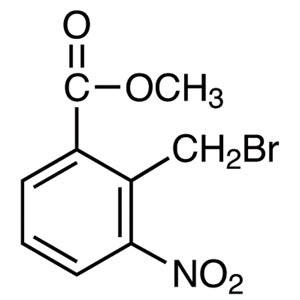
Methyl 2-(Bromomethyl)-3-nitrobenzoate is a chemical compound widely used in organic synthesis reactions within laboratory settings. It serves as a versatile building block in the development of complex molecules, particularly in the field of medicinal chemistry and industrial chemical production. This compound is valued for its ability to participate in various chemical transformations, making it an essential tool for researchers aiming to synthesize functionalized derivatives. Its structural characteristics allow for substitution reactions and other synthetic pathways, contributing to the creation of compounds with specific biological or chemical properties.
The compound's chemical stability and reactivity with nucleophilic reagents such as alkali metals and strong bases make it a preferred choice for synthetic chemists. It exhibits good solubility in organic solvents like ethyl acetate and chloroform, which simplifies its handling and incorporation into reaction mixtures. These properties enable efficient and reproducible synthesis processes, enhancing the reliability of laboratory results. Its participation in nucleophilic substitution reactions further solidifies its role in the development of complex organic molecules.
In Indonesian laboratories, this compound is commonly used in organic chemistry research, particularly in projects related to drug synthesis and industrial chemical production. It is also frequently found in academic and industrial chemical laboratories where the synthesis of functionalized compounds is required. Its utility spans across various research domains, making it a valuable resource for both academic and applied chemical research.
Related TCI products
- TCI M3649 99-42-3 Methyl 4-Hydroxy-3-nitrobenzoate
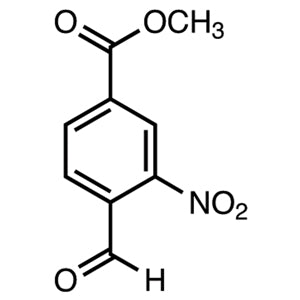
- TCI M3198 153813-69-5 Methyl 4-Formyl-3-nitrobenzoate
- TCI M2873 40757-20-8 Methyl 4-Methoxy-3-nitrobenzoate
- TCI M2864 22621-41-6 Methyl 2-Hydroxy-3-nitrobenzoate
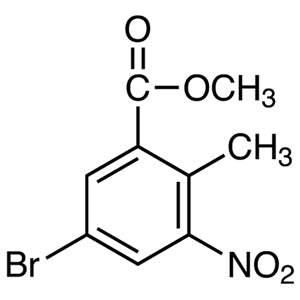
- TCI M2845 220514-28-3 Methyl 5-Bromo-2-methyl-3-nitrobenzoate
- TCI C1732 6307-82-0 Methyl 2-Chloro-5-nitrobenzoate
- Organic synthesis of functionalized compounds due to its reactivity and structural versatility.
- Drug development projects as a building block for creating heterocyclic and medicinal compounds.
- Industrial chemical production where complex molecule synthesis is required.
- Academic research in chemical synthesis and reaction mechanisms.
- Development of new materials through chemical modification and functional group introduction.
| Brand | TCI |
|---|---|
| CAS number | 98475-07-1 |
| Molecular formula | — |
| Purity | — |
| Category | Chemistry > Building Blocks > Non-Heterocyclic Building Blocks |
| Pack sizes | Available in standard laboratory quantities as per supplier specifications |
| Physical form | Solid or crystalline, depending on manufacturer |
| Storage | Store in a cool, dry place away from light and moisture |
This compound should be stored in a cool, dry environment, away from direct sunlight and moisture. It is recommended to use airtight containers made of glass or polyethylene to prevent exposure to air and moisture. Due to its reactivity with strong bases and alkali metals, it should be handled with care, using appropriate personal protective equipment such as gloves and safety goggles. It is important to ensure that the storage area is well-ventilated to minimize any potential risks associated with its chemical properties. Proper labeling and storage practices help maintain the integrity and safety of the compound in a laboratory setting.
—
Produk Terkait
-
Methyl4-Hydroxy-3-nitrobenzoate TCI M3649
Regular price From Rp 848.400,00Regular price -
Methyl4-Formyl-3-nitrobenzoate TCI M3198
Regular price From Rp 1.326.150,00Regular price -
Methyl4-Methoxy-3-nitrobenzoate TCI M2873
Regular price From Rp 610.050,00Regular price -
Methyl2-Hydroxy-3-nitrobenzoate TCI M2864
Regular price From Rp 769.650,00Regular price -
Methyl5-Bromo-2-methyl-3-nitrobenzoate TCI M2845
Regular price From Rp 637.350,00Regular price -
Methyl2-Chloro-5-nitrobenzoate TCI C1732
Regular price From Rp 717.150,00Regular price -
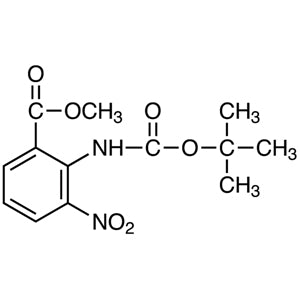
Methyl2-(tert-Butoxycarbonylamino)-3-nitrobenzoate TCI M2797
Regular price From Rp 2.491.650,00Regular price -
2-(Bromomethyl)acrylicAcid TCI B4048
Regular price From Rp 3.817.800,00Regular price