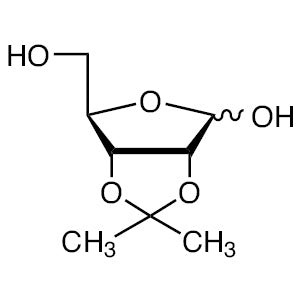
2,3-O-Isopropylidene-D-ribose is a chemical compound widely used in laboratory research related to glycoscience and chemical biology. As a derivative of D-ribose, it plays a crucial role in the synthesis of glycosidic compounds, which are essential in various biological and pharmaceutical applications. This compound is particularly valuable for its structural stability and reactivity, making it a key reagent in biochemical and organic chemistry experiments. Its ability to participate in specific chemical reactions, such as reduction and oxidation, further enhances its utility in advanced research settings.
The compound’s controlled reactivity and molecular stability make it a preferred choice for researchers requiring precision in their experiments. Its chemical properties allow it to be used in a variety of synthetic pathways, contributing to the development of new drugs, diagnostic tools, and biochemical studies. The compound’s reliability and consistency ensure reproducibility in laboratory settings, which is essential for scientific accuracy. These characteristics position it as a versatile and dependable reagent in both academic and industrial research environments.
In Indonesian laboratories, 2,3-O-Isopropylidene-D-ribose is commonly used in biochemical, pharmacological, and organic chemistry research. It is a fundamental component in the synthesis of glycosidic analogs and is frequently employed in studies related to nucleic acid structures and their derivatives. Its presence in research institutions and universities underscores its importance in advancing scientific knowledge and innovation in the region.
Related TCI products
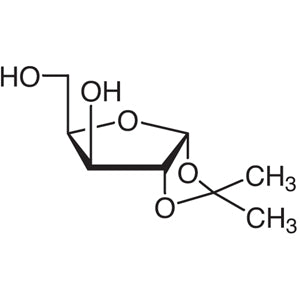
- TCI M3528 4099-85-8 Methyl 2,3-O-Isopropylidene-beta-D-ribofuranoside
- TCI I0721 20031-21-4 1,2-O-Isopropylidene-alpha-D-xylofuranose
- TCI I0489 3969-84-4 3,4-O-Isopropylidene-D-mannitol
- TCI I0400 18549-40-1 1,2-O-Isopropylidene-alpha-D-glucofuranose
- TCI D3758 20880-92-6 2,3:4,5-Di-O-isopropylidene-beta-D-fructopyranose
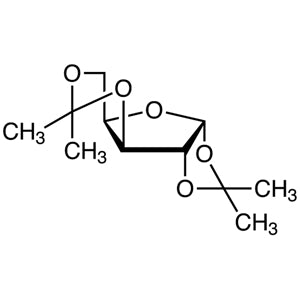
- TCI D2616 20881-04-3 1,2:3,5-Di-O-isopropylidene-alpha-D-xylofuranose
- Glycoside Synthesis: This compound is ideal for the synthesis of glycosidic compounds due to its stable structure and controlled reactivity, enabling precise chemical modifications.
- Pharmaceutical Research: It serves as a key reagent in the development of new drugs, particularly those targeting nucleic acid-based therapies and metabolic pathways.
- Diagnostic Development: Its use in creating biochemical markers and diagnostic tools supports accurate medical testing and analysis in clinical research.
- Organic Chemistry Experiments: The compound’s ability to participate in oxidation and reduction reactions makes it suitable for complex organic synthesis processes.
- Biochemical Studies: It is frequently used in research exploring the structural and functional properties of nucleic acids and their derivatives.
| Brand | TCI |
|---|---|
| CAS number | 13199-25-2 |
| Molecular formula | — |
| Purity | — |
| Category | Chemistry > Chemical Biology > Glycoscience |
| Pack sizes | Available in various quantities as per standard laboratory supply |
| Physical form | Solid or crystalline, depending on the specific formulation |
| Storage | Store in a cool, dry place away from direct light and moisture |
This compound should be stored in a cool, dry environment, away from direct sunlight and moisture to maintain its chemical integrity. It is recommended to use airtight containers to prevent exposure to air and potential degradation. In laboratory settings, proper ventilation should be ensured when handling the compound to minimize inhalation risks. Avoid contact with skin and eyes, and use appropriate personal protective equipment such as gloves and safety goggles. The compound is not flammable but should be handled with care to prevent contamination. Regular monitoring of storage conditions is advised to ensure long-term stability and usability.
—
Product Categories
Produk Terkait
-
Methyl2,3-O-Isopropylidene-beta-D-ribofuranoside TCI M3528
Regular price From Rp 769.650,00Regular price -
1,2-O-Isopropylidene-alpha-D-xylofuranose TCI I0721
Regular price From Rp 2.094.750,00Regular price -
3,4-O-Isopropylidene-D-mannitol TCI I0489
Regular price Rp 1.405.950,00Regular price -
1,2-O-Isopropylidene-alpha-D-glucofuranose TCI I0400
Regular price Rp 2.068.500,00Regular price -
2,3:4,5-Di-O-isopropylidene-beta-D-fructopyranose TCI D3758
Regular price From Rp 452.550,00Regular price -
1,2:3,5-Di-O-isopropylidene-alpha-D-xylofuranose TCI D2616
Regular price Rp 1.298.850,00Regular price -
1,2:3,4-Di-O-isopropylidene-alpha-D-galactopyranose TCI D2555
Regular price From Rp 1.618.050,00Regular price -
2,3:5,6-Di-O-isopropylidene-D-mannofuranose TCI D2447
Regular price Rp 1.431.150,00Regular price