

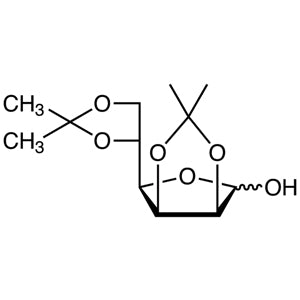
2,3:5,6-Di-O-isopropylidene-D-mannofuranose is a chemical compound widely used in chemical biology and glycoscience research. This compound serves as a key building block for the synthesis of complex carbohydrates and glycosides, playing a critical role in molecular interaction studies. Its structural stability and reactivity make it an essential tool for researchers aiming to explore carbohydrate-based mechanisms in biological systems. In laboratory settings, it is particularly valuable for its ability to undergo controlled chemical transformations, enabling the development of advanced molecular structures.
The compound’s chemical properties, including its molecular structure and functional groups, make it a preferred choice for high-precision experiments. Its predictable behavior in chemical reactions allows for reliable outcomes, which is crucial in research requiring accuracy. The compound’s ability to be easily modified into active or inactive forms further enhances its versatility in various experimental applications. These characteristics ensure that it remains a reliable and consistent material for scientific investigations.
In Indonesian laboratories, 2,3:5,6-Di-O-isopropylidene-D-mannofuranose is commonly used in biomedical, pharmacological, and organic chemistry research. It supports studies on carbohydrate metabolism, vaccine development, and biological compound modification. Its availability in the local market ensures that researchers can access high-quality materials for their experiments, facilitating advancements in scientific research across multiple disciplines.
- Biomedical research utilizes this compound for studying carbohydrate metabolism and its role in cellular processes.
- Pharmacological studies benefit from its use in the synthesis of drug candidates and bioactive molecules.
- Organic chemistry experiments leverage its structural versatility for creating complex glycoside derivatives.
- Vaccine development research employs it to investigate carbohydrate-based antigen structures.
- Molecular biology applications use it to explore glycosylation patterns and their impact on protein function.
| Brand | TCI |
|---|---|
| CAS number | 14131-84-1 |
| Molecular formula | — |
| Purity | — |
| Category | Chemistry > Chemical Biology > Glycoscience |
| Pack sizes | Available in various quantities as per standard laboratory requirements |
| Physical form | Solid |
| Storage | Store in a cool, dry place away from direct sunlight |
This compound should be stored in a cool, dry environment to maintain its chemical integrity. It is recommended to keep it in a tightly sealed container to prevent moisture absorption and contamination. Due to its chemical nature, it should be handled in a well-ventilated area, and appropriate personal protective equipment should be worn. Avoid exposure to heat or direct light, as these conditions may affect its stability. Proper storage ensures that the compound remains effective and suitable for use in laboratory experiments. Regular inspection of storage conditions is advised to maintain optimal quality for research applications.
—
Produk Terkait
-
3,4-O-Isopropylidene-D-mannitol TCI I0489
Regular price Rp 1.405.950,00Regular price -
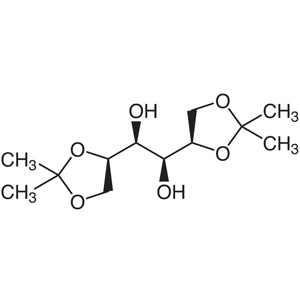
1,2:5,6-Di-O-isopropylidene-D-mannitol TCI D2024
Regular price From Rp 980.700,00Regular price -
Fluoride TCI T2568
Regular price Rp 5.724.600,00Regular price -
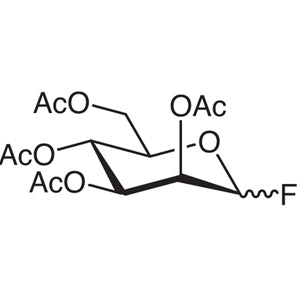
2,3,4,6-Tetra-O-acetyl-D-mannopyranosylFluoride TCI T2567
Regular price From Rp 5.460.000,00Regular price -
1,3,4,6-Tetra-O-acetyl-2-O-(trifluoromethanesulfonyl)-beta-D-mannopyranose TCI T2307
Regular price Rp 1.326.150,00Regular price -
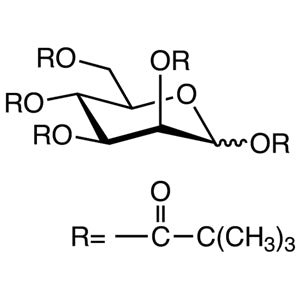
1,2,3,4,6-Penta-O-pivaloyl-D-mannopyranose TCI P1803
Regular price Rp 7.500.150,00Regular price -
1,2,3,4,6-Penta-O-acetyl-D-mannopyranose TCI P1514
Regular price Rp 1.803.900,00Regular price -
4-Nitrophenylalpha-D-Mannopyranoside[Substrateforalpha-Mannosidase] TCI N0619
Regular price Rp 4.902.450,00Regular price



![10357-27-4 4-Nitrophenyl alpha-D-Mannopyranoside [Substrate for alpha-Mannosidase] - AMI Scientific](http://amiscientific.com/cdn/shop/files/TCI2510N0619.jpg?v=1767130142&width=533)