1,2,3,4,6-Penta-O-acetyl-D-mannopyranose from TCI is a D-mannose derivative in which all five hydroxyl groups have been fully acetylated. It is widely used as a starting material in carbohydrate chemistry and glycoscience, particularly for preparing mannosyl glycosyl donors, synthetic mannosides, and a range of protected sugar derivatives. In the laboratory, it gives researchers a practical entry point for building mannose-based oligosaccharides, glycoconjugates, or biological probes, without having to acetylate the free sugar themselves.
Researchers choose this compound because its acetyl groups act as temporary protecting groups. Acetylation makes the sugar more soluble in common organic solvents, easier to purify by chromatography, and easier to monitor by TLC and NMR spectroscopy. The anomeric acetyl group at C-1 is more reactive than the acetyl groups at the other positions, so it can be selectively converted into a glycosyl halide, a thioglycoside, or another type of glycosyl donor. At the end of a synthesis, the acetyl groups can be removed under standard deacetylation conditions, such as the Zemplén method, to give the free mannose-containing target.
In Indonesian laboratories, this material is relevant to research groups in organic chemistry, natural product chemistry, and chemical biology at universities and research institutions. It suits projects that synthesize mannose-containing glycans, study carbohydrate–protein recognition, or develop sugar-based probes and building blocks. Because the compound is already fully protected, these groups can move straight to glycosylation chemistry. This saves preparation time and makes results easier to reproduce in teaching and research.
TCI brochures (PDF)
Related TCI products
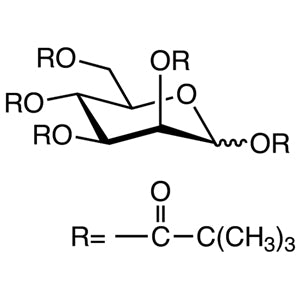
- TCI P1803 220017-47-0 1,2,3,4,6-Penta-O-pivaloyl-D-mannopyranose
- TCI T2568 2,3,4,6-Tetra-O-pivaloyl-D-mannopyranosyl Fluoride
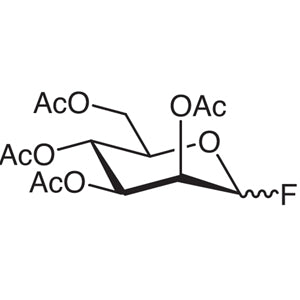
- TCI T2567 174511-17-2 2,3,4,6-Tetra-O-acetyl-D-mannopyranosyl Fluoride
- TCI T2307 92051-23-5 1,3,4,6-Tetra-O-acetyl-2-O-(trifluoromethanesulfonyl)-beta-D-mannopyranose
- TCI D5294 65556-30-1 1,6-Di-O-acetyl-2,3,4-tri-O-benzyl-alpha-D-mannopyranose
- TCI D4372 3868-03-9 1,6:2,3-Dianhydro-beta-D-mannopyranose
- Preparation of mannosyl glycosyl donors: the reactive anomeric acetate can be selectively converted into glycosyl halides or thioglycosides, which are then used to couple with glycosyl acceptors.
- Synthesis of synthetic mannosides: the fully protected mannose scaffold is a convenient starting point for adding aglycones, linkers, or functional tags at the anomeric position.
- Oligosaccharide and glycoconjugate assembly: acetyl protection keeps the hydroxyl groups masked while the chain is built, then they can be removed cleanly by Zemplén deacetylation.
- Development of mannose-based biological probes: chemical biology groups can turn this compound into labelled or functionalized sugars for studying carbohydrate recognition.
- Teaching and method development in carbohydrate chemistry: good solubility in organic solvents and easy monitoring by TLC and NMR make it practical for demonstrating protecting-group strategies.
| Brand | TCI (product code P1514) |
|---|---|
| CAS number | 25941-03-1 |
| Molecular formula | — |
| Purity | — |
| Category | Chemistry > Chemical Biology > Glycoscience |
| Pack sizes | see the available pack options on the product page |
| Physical form | refer to the manufacturer's certificate of analysis and product documentation |
| Storage | follow the storage conditions on the TCI label and safety data sheet |
Keep the product in its original, tightly closed container, away from moisture, heat, and direct light, and follow the storage conditions stated on the TCI label and safety data sheet. Acetylated sugars can slowly hydrolyse if they are exposed to humidity, so reseal the container promptly after each use. Store it away from strong acids, bases, and oxidizing agents. Handle it in a well-ventilated area or fume hood while wearing gloves, safety glasses, and a laboratory coat. Avoid creating dust and avoid contact with skin and eyes. Dispose of waste according to institutional and local chemical waste regulations.
—
Product Categories
Produk Terkait
-
1,2,3,4,6-Penta-O-pivaloyl-D-mannopyranose TCI P1803
Regular price Rp 7.552.650,00Regular priceRp 5.297.250,00Sale price Rp 7.552.650,00 -
Fluoride TCI T2568
Regular price Rp 5.777.100,00Regular priceRp 4.055.100,00Sale price Rp 5.777.100,00 -
2,3,4,6-Tetra-O-acetyl-D-mannopyranosylFluoride TCI T2567
Regular price From Rp 5.512.500,00Regular priceRp 3.870.300,00Sale price From Rp 5.512.500,00 -
1,3,4,6-Tetra-O-acetyl-2-O-(trifluoromethanesulfonyl)-beta-D-mannopyranose TCI T2307
Regular price Rp 1.378.650,00Regular priceRp 979.650,00Sale price Rp 1.378.650,00 -
1,6-Di-O-acetyl-2,3,4-tri-O-benzyl-alpha-D-mannopyranose TCI D5294
Regular price Rp 4.399.500,00Regular priceRp 3.092.250,00Sale price Rp 4.399.500,00 -
1,6:2,3-Dianhydro-beta-D-mannopyranose TCI D4372
Regular price Rp 4.823.700,00Regular priceRp 3.388.350,00Sale price Rp 4.823.700,00 -
4-Nitrophenylalpha-D-Mannopyranoside[Substrateforalpha-Mannosidase] TCI N0619
Regular price Rp 4.954.950,00Regular priceRp 3.480.750,00Sale price Rp 4.954.950,00 -
Methyl2,3,4,6-Tetra-O-pivaloyl-D-mannopyranoside TCI M2102
Regular price Rp 5.352.900,00Regular priceRp 3.759.000,00Sale price Rp 5.352.900,00