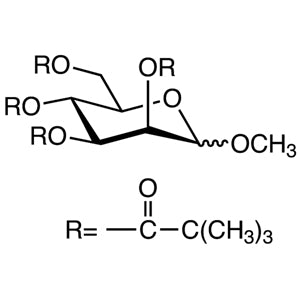
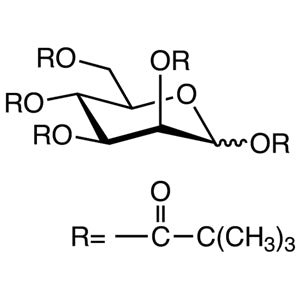
TCI M2102 Methyl 2,3,4,6-Tetra-O-pivaloyl-D-mannopyranoside is a chemical compound widely used in laboratory research related to glycoscience. As a derivative of mannoside, it plays a crucial role in the study of carbohydrate structures and their biological functions. This compound is particularly valuable in chemical biology for its ability to participate in glycosylation reactions and other biochemical processes. Its presence in research settings supports the development of new therapeutic strategies and the understanding of complex biological systems.
The compound’s unique structure, featuring pivaloyl groups attached to oxygen atoms, contributes to its stability and reactivity. These properties make it a preferred choice for applications requiring precise chemical modifications. Its high reactivity allows it to be used in substitution reactions and enzymatic processes, making it an essential tool for researchers working on glycosidic bond formation and breakdown. The compound's versatility supports a wide range of experimental approaches in both academic and industrial research environments.
In Indonesian laboratories, TCI M2102 is commonly used in biochemistry, pharmacology, and organic chemistry research. It is a key component in studies aimed at understanding the biological activities of carbohydrates. Many research institutions and universities rely on this compound for its reliability and effectiveness in experimental setups. Its availability ensures that it remains a critical resource for advancing scientific knowledge in the region.
TCI brochures (PDF)
Related TCI products
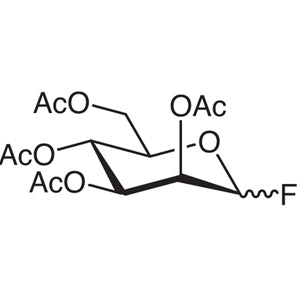
- TCI T2568 2,3,4,6-Tetra-O-pivaloyl-D-mannopyranosyl Fluoride
- TCI P1803 220017-47-0 1,2,3,4,6-Penta-O-pivaloyl-D-mannopyranose
- TCI N0619 10357-27-4 4-Nitrophenyl alpha-D-Mannopyranoside [Substrate for alpha-Mannosidase]
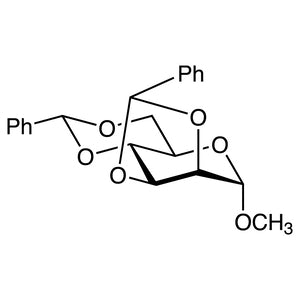
- TCI M2061 4148-71-4 Methyl 2,3:4,6-Di-O-benzylidene-alpha-D-mannopyranoside
- TCI M0368 617-04-9 Methyl alpha-D-Mannopyranoside
- TCI T2567 174511-17-2 2,3,4,6-Tetra-O-acetyl-D-mannopyranosyl Fluoride
- Glycoscience Research – This compound is ideal for studying carbohydrate structures and their interactions due to its complex molecular framework.
- Enzymatic Reactions – Its stability and reactivity make it suitable for use in enzymatic processes that require controlled chemical modifications.
- Biochemical Analysis – It supports the development of assays and experiments focused on glycosidic bond formation and degradation.
- Organic Synthesis – Its reactivity allows it to be used as a substrate or reagent in the synthesis of more complex glycoside derivatives.
- Drug Development – It is valuable in the study of carbohydrate-based therapeutics and the design of new pharmaceutical compounds.
| Brand | TCI |
|---|---|
| CAS number | — |
| Molecular formula | — |
| Purity | — |
| Category | Chemistry > Chemical Biology > Glycoscience |
| Pack sizes | Available in various quantities as per standard laboratory supply |
| Physical form | Solid powder |
| Storage | Store in a cool, dry place away from moisture and light |
Data from the TCI brochure
| Purity | >97.0%(HPLC) |
|---|---|
| mp | 102℃ |
Source: TCI brochure reagent_for_glyco_chemistry_&_biology_5th_ed ()
This compound should be stored in a cool, dry environment to maintain its stability and prevent degradation. It is recommended to keep it in a sealed container to avoid exposure to moisture and air. Due to its chemical nature, it should be handled with care, using appropriate personal protective equipment such as gloves and safety goggles. It is important to ensure that the storage area is well-ventilated to minimize any potential risks associated with handling. Proper labeling of containers is essential to ensure safe handling and prevent accidental use. Always follow standard laboratory safety protocols when working with this compound.
—
Product Categories
Produk Terkait
-
Fluoride TCI T2568
Regular price Rp 5.724.600,00Regular price -
1,2,3,4,6-Penta-O-pivaloyl-D-mannopyranose TCI P1803
Regular price Rp 7.500.150,00Regular price -
4-Nitrophenylalpha-D-Mannopyranoside[Substrateforalpha-Mannosidase] TCI N0619
Regular price Rp 4.902.450,00Regular price -
Methyl2,3:4,6-Di-O-benzylidene-alpha-D-mannopyranoside TCI M2061
Regular price From Rp 3.048.150,00Regular price -
Methylalpha-D-Mannopyranoside TCI M0368
Regular price From Rp 1.326.150,00Regular price -
2,3,4,6-Tetra-O-acetyl-D-mannopyranosylFluoride TCI T2567
Regular price From Rp 5.460.000,00Regular price -
1,3,4,6-Tetra-O-acetyl-2-O-(trifluoromethanesulfonyl)-beta-D-mannopyranose TCI T2307
Regular price Rp 1.326.150,00Regular price -
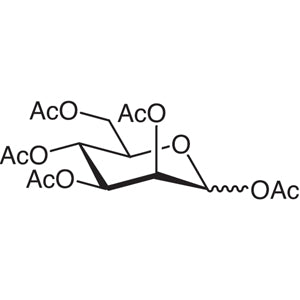
1,2,3,4,6-Penta-O-acetyl-D-mannopyranose TCI P1514
Regular price Rp 1.803.900,00Regular price

![10357-27-4 4-Nitrophenyl alpha-D-Mannopyranoside [Substrate for alpha-Mannosidase] - AMI Scientific](http://amiscientific.com/cdn/shop/files/TCI2510N0619.jpg?v=1767130142&width=533)