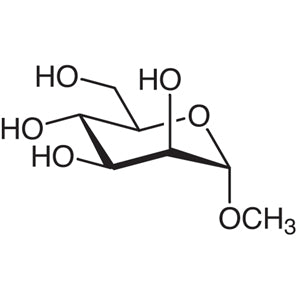
TCI M0368 Methyl alpha-D-Mannopyranoside is a simple glycoside consisting of a mannose sugar in its pyranose ring form, in which the anomeric centre has been capped with a methyl group in the alpha configuration. This capping locks the anomeric configuration, so the compound no longer undergoes mutarotation and behaves as a far more clearly defined substance than the corresponding free sugar. In glycoscience laboratories it serves as a very frequently used reference material and test compound, particularly in studies of carbohydrate recognition by proteins and in the construction of models describing sugar–receptor interactions.
The principal characteristic that makes this compound a preferred choice is its role as a specific ligand for mannose-binding lectins. The alpha-mannoside structure is recognised with good affinity by certain lectins, which is why the compound is routinely employed as a competing sugar to release glycoproteins previously bound to an affinity column. Its solid form, good solubility in water, and stability under ordinary storage conditions make it practical for preparing elution solutions at controlled concentrations. The free hydroxyl groups additionally provide numerous points of modification for carbohydrate chemists assembling oligosaccharides or related derivatives.
In Indonesian laboratories the compound is typically found in university glycobiology and biochemistry groups, protein purification facilities, and research units working on lectin characterisation. It is commonly kept as a standing consumable for affinity chromatography work, where a reliable competing sugar must be available whenever a bound glycoprotein has to be eluted. Its defined structure also makes it convenient as a reference compound when analytical methods for carbohydrates are being set up or verified.
TCI brochures (PDF)
Related TCI products
- TCI N0619 10357-27-4 4-Nitrophenyl alpha-D-Mannopyranoside [Substrate for alpha-Mannosidase]
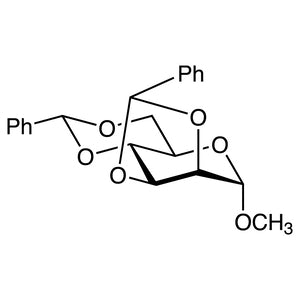
- TCI M2061 4148-71-4 Methyl 2,3:4,6-Di-O-benzylidene-alpha-D-mannopyranoside
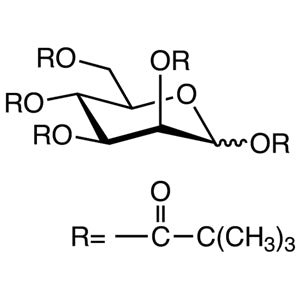
- TCI M2102 Methyl 2,3,4,6-Tetra-O-pivaloyl-D-mannopyranoside
- TCI T2307 92051-23-5 1,3,4,6-Tetra-O-acetyl-2-O-(trifluoromethanesulfonyl)-beta-D-mannopyranose
- TCI P1803 220017-47-0 1,2,3,4,6-Penta-O-pivaloyl-D-mannopyranose
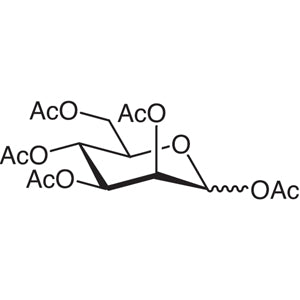
- TCI P1514 25941-03-1 1,2,3,4,6-Penta-O-acetyl-D-mannopyranose
- Affinity chromatography elution — used as a competing sugar to displace glycoproteins bound to mannose-specific lectin columns, giving controlled, gentle release without harsh denaturing conditions.
- Lectin binding and specificity studies — serves as a defined alpha-mannoside ligand for measuring and comparing the carbohydrate recognition behaviour of mannose-binding lectins under reproducible conditions.
- Carbohydrate–protein interaction modelling — provides a structurally locked monosaccharide unit suitable for building and validating models of how sugars are recognised by receptor proteins.
- Oligosaccharide synthesis and derivatisation — the free hydroxyl groups offer multiple modification points, allowing carbohydrate chemists to build larger structures from a protected anomeric starting material.
- Analytical reference material — the fixed anomeric configuration and absence of mutarotation make it a well-defined standard for setting up and checking carbohydrate analytical methods.
| Brand | TCI (Tokyo Chemical Industry) |
|---|---|
| CAS number | 617-04-9 |
| Molecular formula | — |
| Purity | — |
| Category | Chemistry > Chemical Biology > Glycoscience |
| Pack sizes | available in standard TCI laboratory pack sizes; please confirm the size required when ordering |
| Physical form | solid, soluble in water |
| Storage | stable under ordinary laboratory storage conditions |
Store the container tightly closed in a cool, dry place, away from moisture and direct sunlight, since hygroscopic uptake of water can affect accurate weighing of a solid carbohydrate. Keep the material in its original supplier container or in a clean, well-sealed glass or chemically compatible plastic vessel, clearly labelled with the compound name and CAS number. Handle in a clean working area using standard laboratory practice: wear a laboratory coat, safety glasses, and gloves, avoid generating dust when weighing, and use clean, dry spatulas to prevent contamination of the stock. Prepare aqueous solutions with purified water and store them according to your laboratory's own validated procedure. Always consult the manufacturer's safety data sheet before first use.
—
Product Categories
Produk Terkait
-
4-Nitrophenylalpha-D-Mannopyranoside[Substrateforalpha-Mannosidase] TCI N0619
Regular price Rp 4.902.450,00Regular price -
Methyl2,3:4,6-Di-O-benzylidene-alpha-D-mannopyranoside TCI M2061
Regular price From Rp 3.048.150,00Regular price -
Methyl2,3,4,6-Tetra-O-pivaloyl-D-mannopyranoside TCI M2102
Regular price Rp 5.300.400,00Regular price -
1,3,4,6-Tetra-O-acetyl-2-O-(trifluoromethanesulfonyl)-beta-D-mannopyranose TCI T2307
Regular price Rp 1.326.150,00Regular price -
1,2,3,4,6-Penta-O-pivaloyl-D-mannopyranose TCI P1803
Regular price Rp 7.500.150,00Regular price -
1,2,3,4,6-Penta-O-acetyl-D-mannopyranose TCI P1514
Regular price Rp 1.803.900,00Regular price -
1,6:2,3-Dianhydro-beta-D-mannopyranose TCI D4372
Regular price Rp 4.771.200,00Regular price -
Fluoride TCI T2568
Regular price Rp 5.724.600,00Regular price
![10357-27-4 4-Nitrophenyl alpha-D-Mannopyranoside [Substrate for alpha-Mannosidase] - AMI Scientific](http://amiscientific.com/cdn/shop/files/TCI2510N0619.jpg?v=1767130142&width=533)