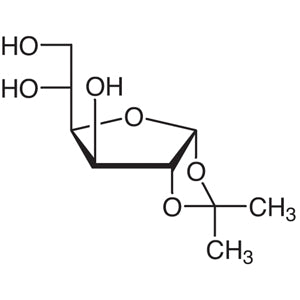
1,2-O-Isopropylidene-alpha-D-glucofuranose is a chemical compound widely used in chemical and biochemical experiments, particularly within the field of glycoscience. This compound represents a protected form of glucose, with the isopropylidene group shielding it from unwanted chemical reactions. Its stability and reactivity make it a valuable tool for researchers aiming to study carbohydrate structures and functions. It is commonly used as a building block in the synthesis of glycosidic compounds, supporting various scientific investigations.
The compound’s key properties include its chemical stability and its ability to act as a substrate or inhibitor in enzymatic reactions. Its complex molecular structure allows for specific interactions with enzymes and proteins, making it essential in biochemical mechanism studies. Additionally, its non-toxic nature ensures safe handling in laboratory environments, contributing to its popularity among researchers. These characteristics make it a preferred choice for both academic and industrial applications.
In Indonesian laboratories, 1,2-O-Isopropylidene-alpha-D-glucofuranose is a staple in biochemical, pharmacological, and organic chemistry research. It is frequently used in experiments related to carbohydrate metabolism, enzyme activity, and drug development. Its versatility and reliability make it an essential component of many research projects conducted by universities and research institutions across the country.
TCI brochures (PDF)
Related TCI products
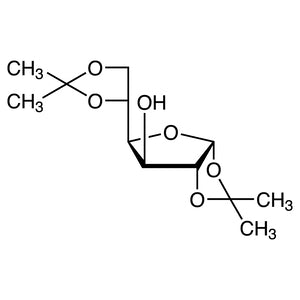
- TCI D1949 582-52-5 1,2:5,6-Di-O-isopropylidene-alpha-D-glucofuranose
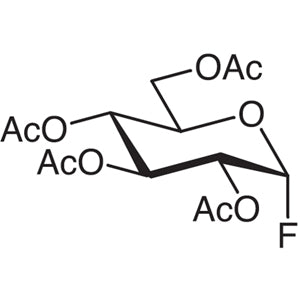
- TCI T1995 3934-29-0 2,3,4,6-Tetra-O-acetyl-alpha-D-glucopyranosyl Fluoride
- TCI T1922 89025-46-7 2,3,4,6-Tetra-O-benzyl-alpha-D-glucopyranosyl Fluoride
- TCI N0493 3767-28-0 4-Nitrophenyl alpha-D-Glucopyranoside [Substrate for alpha-D-Glucosidase]
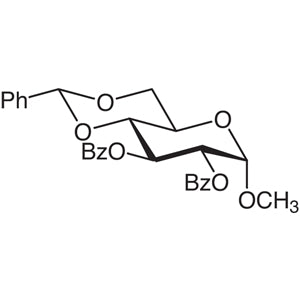
- TCI M2013 6748-91-0 Methyl 2,3-Di-O-benzoyl-4,6-O-benzylidene-alpha-D-glucopyranoside
- TCI M1125 3162-96-7 Methyl 4,6-O-Benzylidene-alpha-D-glucopyranoside
- Biochemical Research – This compound is ideal for studying enzyme-substrate interactions due to its ability to act as a substrate or inhibitor in enzymatic reactions.
- Glycoscience Studies – Its protected glucose structure makes it suitable for investigating carbohydrate structures and their biological functions.
- Organic Synthesis – It serves as a valuable building block in the synthesis of glycosidic compounds and related derivatives.
- Pharmacological Investigations – Researchers use it to explore the effects of carbohydrates on biological systems and drug interactions.
- Structural Analysis – Its stability and reactivity make it useful in determining the structural properties of complex carbohydrates.
| Brand | TCI |
|---|---|
| CAS number | 18549-40-1 |
| Molecular formula | — |
| Purity | — |
| Category | Chemistry > Chemical Biology > Glycoscience |
| Pack sizes | Available in various quantities as per supplier specifications |
| Physical form | Solid (crystalline or powder, depending on formulation) |
| Storage | Store in a cool, dry place away from moisture and direct sunlight |
This compound should be stored in a cool, dry environment to maintain its chemical stability. It is recommended to keep it in a tightly sealed container to prevent exposure to moisture and air. Due to its non-toxic nature, it is generally safe to handle, but standard laboratory precautions should still be followed, such as wearing gloves and safety goggles. Avoid direct contact with skin and inhalation of dust during handling. It should not be stored near incompatible substances or in areas with high humidity. Proper labeling and storage conditions ensure the compound remains effective for research applications.
—
Product Categories
Produk Terkait
-
1,2:5,6-Di-O-isopropylidene-alpha-D-glucofuranose TCI D1949
Regular price From Rp 769.650,00Regular price -
2,3,4,6-Tetra-O-acetyl-alpha-D-glucopyranosylFluoride TCI T1995
Regular price Rp 3.312.750,00Regular price -
2,3,4,6-Tetra-O-benzyl-alpha-D-glucopyranosylFluoride TCI T1922
Regular price Rp 4.584.300,00Regular price -
4-Nitrophenylalpha-D-Glucopyranoside[Substrateforalpha-D-Glucosidase] TCI N0493
Regular price From Rp 2.147.250,00Regular price -
Methyl2,3-Di-O-benzoyl-4,6-O-benzylidene-alpha-D-glucopyranoside TCI M2013
Regular price Rp 3.763.200,00Regular price -
Methyl4,6-O-Benzylidene-alpha-D-glucopyranoside TCI M1125
Regular price From Rp 1.140.300,00Regular price -
Methylalpha-D-Glucopyranoside TCI M0228
Regular price From Rp 452.550,00Regular price -
Penta-O-acetyl-alpha-D-glucopyranose TCI G0225
Regular price From Rp 1.035.300,00Regular price

![3767-28-0 4-Nitrophenyl alpha-D-Glucopyranoside [Substrate for alpha-D-Glucosidase] - AMI Scientific](http://amiscientific.com/cdn/shop/files/TCI2510N0493.jpg?v=1767129938&width=533)