

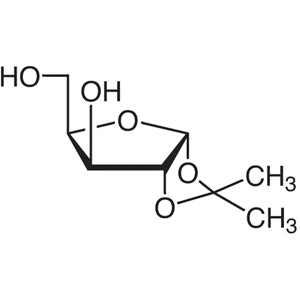
1,2-O-Isopropylidene-alpha-D-xylofuranose is a chemical compound widely used in laboratory settings for research in glycoscience and biochemical applications. This compound serves as a key reagent in the synthesis of complex carbohydrates and glycosides, making it essential for studies involving carbohydrate structures and their biological functions. Its role in glycosylation reactions and structural analogs makes it a valuable tool for scientists working in chemical biology and related fields. The compound is particularly useful in experiments that require controlled reactivity and structural stability.
The compound's unique chemical properties make it a preferred choice for laboratory use. Its isopropylidene group provides molecular stability, allowing for controlled chemical manipulation. This feature is crucial for researchers aiming to modify or study specific carbohydrate structures without unwanted side reactions. Additionally, its solubility in organic solvents simplifies its use in various synthetic and analytical procedures. These characteristics ensure that it remains a reliable and versatile reagent in both academic and industrial research environments.
In Indonesian laboratories, 1,2-O-Isopropylidene-alpha-D-xylofuranose is commonly used in biochemical, pharmacological, and food science research. Local researchers utilize this compound to study carbohydrate metabolism, develop new pharmaceutical compounds, and analyze food components. Its availability and chemical properties make it an essential material for advancing scientific research in these fields.
TCI brochures (PDF)
Related TCI products
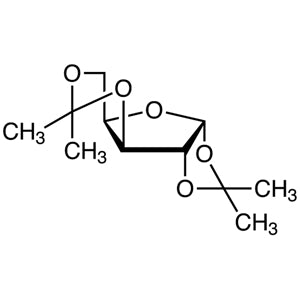
- TCI D2616 20881-04-3 1,2:3,5-Di-O-isopropylidene-alpha-D-xylofuranose
- TCI I0400 18549-40-1 1,2-O-Isopropylidene-alpha-D-glucofuranose
- TCI D2555 4064-06-6 1,2:3,4-Di-O-isopropylidene-alpha-D-galactopyranose
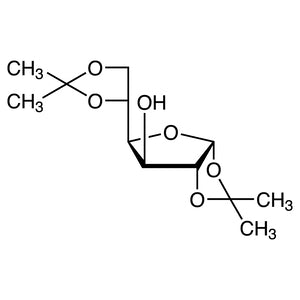
- TCI D2265 2595-05-3 1,2:5,6-Di-O-isopropylidene-alpha-D-allofuranose
- TCI D1949 582-52-5 1,2:5,6-Di-O-isopropylidene-alpha-D-glucofuranose
- TCI N0620 2001-96-9 4-Nitrophenyl beta-D-Xylopyranoside [Substrate for beta-Xylosidase]
- Glycosylation Reactions: This compound is ideal for glycosylation studies due to its stable structure and reactivity, enabling the synthesis of complex carbohydrate derivatives.
- Structural Analysis of Carbohydrates: Its well-defined molecular structure makes it suitable for use in analytical techniques that require precise molecular modeling and identification.
- Enzymatic Studies: The compound supports research on enzyme activity and substrate specificity, particularly in carbohydrate metabolism pathways.
- Pharmaceutical Development: It is used in the synthesis of drug candidates that involve carbohydrate-based molecules, contributing to drug discovery efforts.
- Food Science Research: The compound aids in the analysis of natural carbohydrates in food products, supporting nutritional and biochemical studies.
| Brand | TCI |
|---|---|
| CAS number | 20031-21-4 |
| Molecular formula | — |
| Purity | — |
| Category | Chemistry > Chemical Biology > Glycoscience |
| Pack sizes | Available in various quantities as per standard laboratory supply |
| Physical form | White crystalline solid |
| Storage | Store in a cool, dry place away from moisture and direct sunlight |
This compound should be stored in a cool, dry environment to maintain its chemical stability and prevent degradation. It is recommended to keep it in airtight containers to avoid exposure to moisture and contaminants. Due to its organic nature, it is advisable to store it away from incompatible substances such as strong oxidizing agents. Proper labeling of storage containers is essential for safety and traceability. Handling should be done with appropriate personal protective equipment to ensure laboratory safety. Regular inspection of storage conditions ensures the compound remains in optimal condition for use in research applications.
—
Product Categories
Produk Terkait
-
1,2:3,5-Di-O-isopropylidene-alpha-D-xylofuranose TCI D2616
Regular price Rp 1.298.850,00Regular price -
1,2-O-Isopropylidene-alpha-D-glucofuranose TCI I0400
Regular price Rp 2.068.500,00Regular price -
1,2:3,4-Di-O-isopropylidene-alpha-D-galactopyranose TCI D2555
Regular price From Rp 1.618.050,00Regular price -
1,2:5,6-Di-O-isopropylidene-alpha-D-allofuranose TCI D2265
Regular price From Rp 1.724.100,00Regular price -
1,2:5,6-Di-O-isopropylidene-alpha-D-glucofuranose TCI D1949
Regular price From Rp 769.650,00Regular price -
4-Nitrophenylbeta-D-Xylopyranoside[Substrateforbeta-Xylosidase] TCI N0620
Regular price Rp 2.041.200,00Regular price -
Methyl-beta-D-xylopyranoside TCI M1253
Regular price From Rp 2.227.050,00Regular price -
3,4-O-Isopropylidene-D-mannitol TCI I0489
Regular price Rp 1.405.950,00Regular price


![2001-96-9 4-Nitrophenyl beta-D-Xylopyranoside [Substrate for beta-Xylosidase] - AMI Scientific](http://amiscientific.com/cdn/shop/files/TCI2510N0620.jpg?v=1767130146&width=533)

