Methyl 1-Acetyl-3-(ethoxyphenylmethylene)-2,3-dihydro-2-oxo-1H-indole-6-carboxylate from TCI is a synthetic organic compound built on an oxindole (2-oxoindoline) framework, positioned for medicinal chemistry research and particularly for kinase inhibitor development programmes within cancer research. In the laboratory this material functions as an advanced building block: researchers no longer need to construct the oxindole core from simple starting materials, but can work directly with a scaffold that already carries an acetyl group on the nitrogen atom, a methyl ester at the six position, and an ethoxy(phenyl)methylene group at the three position ready for further reaction. Having an intermediate of this kind on hand reduces the number of synthetic steps and lowers the risk of failure along a long route.
The characteristic that leads researchers to select this compound lies in the conjugated ethoxymethylene group at the three position. The ethoxy group at that site is readily displaced by nucleophiles, especially primary and secondary amines, so condensation reactions can proceed in a directed manner to give aminomethylene-oxindole derivatives bearing a wide range of substituents. The conjugated system formed between the indolinone ring, the exocyclic double bond, and the pendant phenyl ring gives the molecule a defined electronic character, while the N-acetyl group and the methyl ester at position six provide additional handles that can be retained, hydrolysed, or further elaborated as the synthetic plan requires.
In Indonesian laboratories this material is normally encountered in university research groups, pharmaceutical chemistry departments, and institutional research centres running medicinal chemistry programmes. It is typically ordered in small research quantities for exploratory synthesis rather than for production work, used in analogue series where a single scaffold is diversified across many amine partners. Because it is supplied as a catalogue intermediate, groups working on kinase-targeted anticancer compounds can begin structure–activity work without first committing time to building the core themselves.
- Kinase inhibitor scaffold synthesis — the oxindole core with its reactive three-position methylene handle is the recognised entry point for building kinase-directed anticancer candidates in medicinal chemistry programmes.
- Aminomethylene-oxindole derivative preparation — the ethoxy group is readily displaced by primary and secondary amines, allowing directed condensation to a broad family of substituted derivatives from a single common intermediate.
- Structure–activity relationship studies — a single scaffold can be reacted with many different amine partners, giving researchers a systematic analogue series in which only the three-position substituent varies.
- Anticancer compound library construction — the compound shortens multi-step routes, so research groups can generate a diverse set of oxindole-based screening candidates without rebuilding the core each time.
- Synthetic route development and method work — the acetyl, methyl ester, and ethoxymethylene groups can each be retained or transformed selectively, making this a useful substrate for testing new reaction conditions.
| Brand | TCI |
|---|---|
| CAS number | 1175365-43-1 |
| Molecular formula | — |
| Purity | — |
| Category | Life Science > Cell Biology > Cancer Research |
| Pack sizes | available in research-scale quantities; please confirm the current pack options when ordering |
| Physical form | — |
| Storage | keep in the original closed container under the storage conditions stated on the manufacturer's label |
- Product code: M3923
Store the material in its original tightly closed container in a cool, dry, well-ventilated place, protected from direct sunlight, moisture, and sources of heat or ignition, and follow the storage conditions specified on the manufacturer's label and safety data sheet. Keep the container sealed when not in use to limit exposure to atmospheric moisture. Handle in a fume hood using appropriate personal protective equipment, including safety glasses, chemical-resistant gloves, and a laboratory coat. Avoid inhalation of dust and contact with skin and eyes. Weigh and transfer using clean, dry spatulas and glassware, and label all derived solutions clearly. Dispose of residues and contaminated materials as chemical waste in accordance with applicable local regulations and institutional procedures. Consult the safety data sheet before first use.
—
Produk Terkait
-
Imatinib TCI I0906
Regular price From Rp 1.326.150,00Regular price -
WHI-P180Hydrochloride TCI W0021
Regular price Rp 3.340.050,00Regular price -
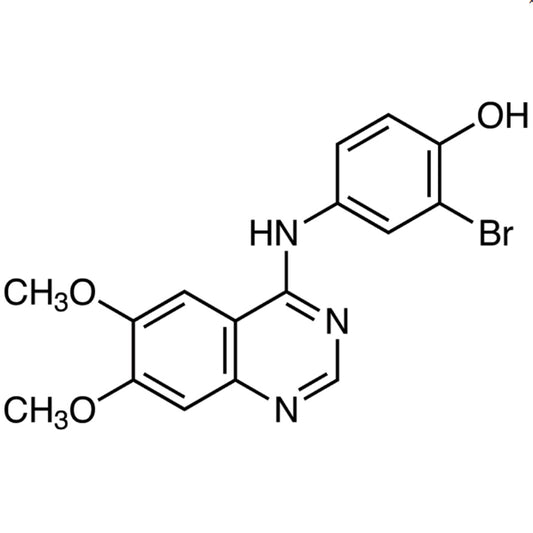
WHI-P154 TCI W0013
Regular price From Rp 2.491.650,00Regular price -
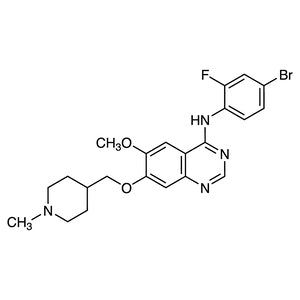
Vandetanib TCI V0199
Regular price From Rp 2.121.000,00Regular price -
SU1498 TCI U0103
Regular price From Rp 3.578.400,00Regular price -
SunitinibMalate TCI U0095
Regular price Rp 3.021.900,00Regular price -
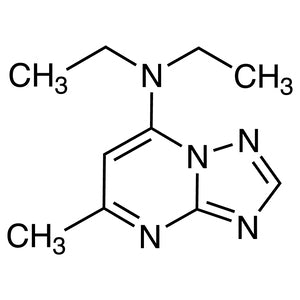
Trapidil TCI T4243
Regular price From Rp 3.630.900,00Regular price -
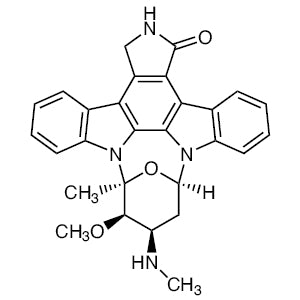
Staurosporine TCI T4000
Regular price Rp 3.738.000,00Regular price