cis-1,3-Pentadiene from TCI is the cis geometric isomer of a five-carbon conjugated diene, a compound commonly known as piperylene. This product is stabilized with TBC (4-tert-butylcatechol) to suppress spontaneous polymerization during storage. As a non-heterocyclic building block, it is used in research that needs a diene with a defined geometry, such as stereochemical studies of cycloaddition, stereospecific polymerization, and metal-catalyzed reactions. Because it is supplied as a separate cis isomer, researchers have full control over the geometric variable in their experiments.
What makes the cis isomer interesting is the steric hindrance between the methyl group and a hydrogen atom when the molecule tries to adopt the s-cis conformation. As a result, it is generally much less reactive in Diels-Alder reactions than the trans isomer. This difference is often used as a classic example in teaching and research on how conformation affects reaction rate. The same property can be used for kinetic separation or for testing catalysts that can overcome steric barriers. The TBC stabilizer helps keep the material in good condition while it is stored.
In Indonesian laboratories, cis-1,3-Pentadiene suits university research groups in organic and polymer chemistry, graduate research projects, and industrial R&D teams that study diene reactivity. It works well as a model compound for showing conformational effects in advanced organic chemistry courses. It also serves as a defined-geometry monomer or substrate in catalysis and polymer research. Laboratories comparing cis and trans isomers can use it alongside the trans compound to separate geometric effects from other experimental variables.
- Stereochemical studies of cycloaddition: the defined cis geometry lets researchers study how diene configuration affects the stereochemical outcome and selectivity of cycloaddition reactions.
- Diels-Alder reactivity comparison: steric hindrance in the s-cis conformation makes this isomer much less reactive than the trans isomer, which makes it a useful reference for conformational kinetics.
- Stereospecific polymerization research: as a geometrically pure diene, it lets polymer chemists study how monomer geometry affects polymer microstructure and catalyst stereocontrol.
- Metal-catalyzed reaction studies: its conjugated diene system and fixed geometry make it a suitable substrate for studying selectivity and mechanism in transition-metal-catalyzed transformations.
- Catalyst evaluation and kinetic separation: its low reactivity makes it a demanding test substrate for catalysts designed to overcome steric barriers, and a basis for kinetic separation strategies.
| Brand | TCI (product code P0650) |
|---|---|
| CAS number | 1574-41-0 |
| Molecular formula | — |
| Purity | — |
| Category | Chemistry > Building Blocks > Non-Heterocyclic Building Blocks |
| Pack sizes | see the current product listing for available pack sizes |
| Physical form | volatile liquid hydrocarbon; storage conditions are on the supplier label |
| Storage | — |
- Stabilizer: TBC (4-tert-butylcatechol)
Keep cis-1,3-Pentadiene in its original, tightly sealed container in a cool, dark, well-ventilated area, away from heat, sparks, open flames, and oxidizing agents. Follow the storage temperature on the TCI label and Safety Data Sheet. Although TBC suppresses polymerization, do not expose the material to air, light, or heat for long periods, and use opened containers promptly. Treat it as a volatile, flammable organic liquid. Handle it in a fume hood, use grounded equipment, and wear chemical-resistant gloves, safety glasses, and a lab coat. Check the Safety Data Sheet before use and dispose of waste according to local regulations.
—
Produk Terkait
-
1,3-Pentadiene(cis-andtrans-mixture)(stabilizedwithTBC) TCI P1841
Regular price Rp 10.229.100,00Regular price -
trans-1,3-Pentadiene(stabilizedwithTBC) TCI P0647
Regular price From Rp 1.829.100,00Regular price -
1,4-Pentadiene TCI P0038
Regular price From Rp 5.327.700,00Regular price -
2-Methyl-1,4-pentadiene TCI M0616
Regular price From Rp 1.856.400,00Regular price -
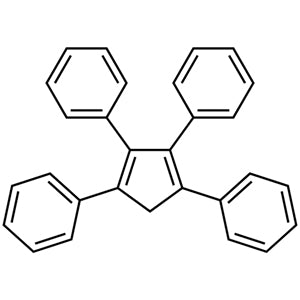
1,2,3,4-Tetraphenyl-1,3-cyclopentadiene TCI T1333
Regular price From Rp 2.757.300,00Regular price -
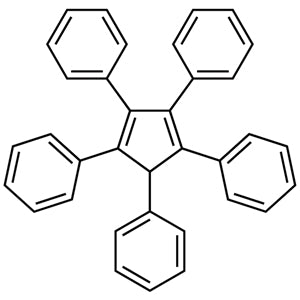
1,2,3,4,5-Pentaphenyl-1,3-cyclopentadiene TCI P1633
Regular price Rp 1.115.100,00Regular price -
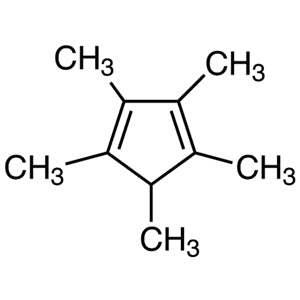
1,2,3,4,5-Pentamethylcyclopentadiene TCI P1292
Regular price From Rp 3.896.550,00Regular price -
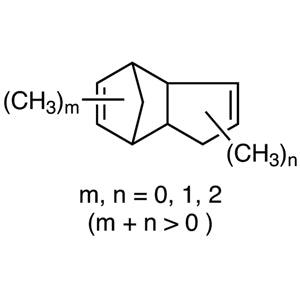
MethylcyclopentadieneDimer(socalled)(stabilizedwithBHT) TCI M2705
Regular price From Rp 689.850,00Regular price