1,4-Pentadiene is a simple unsaturated hydrocarbon with two terminal carbon-carbon double bonds separated by a single methylene group. This arrangement is called an isolated or "skipped" diene. In a conjugated diene the two double bonds interact, but here they do not, so each double bond reacts largely on its own. In organic and polymer chemistry laboratories, 1,4-Pentadiene serves as a non-heterocyclic building block, a monomer, and a model compound for studying alkene reactivity and the C-H bonds at the bis-allylic position.
Chemists choose 1,4-Pentadiene because it is small, symmetrical, and bifunctional. Its two terminal alkenes allow two transformations on the same molecule, such as double hydroboration, epoxidation, or metathesis, which can be used to build branched and cyclic frameworks. The central methylene group sits at a bis-allylic position, the same structural motif found in polyunsaturated fatty acids. This makes the compound a useful simple model for studies of lipid oxidation and hydrogen abstraction. Its simple structure also makes NMR spectra and computational chemistry results easier to interpret.
In Indonesia, 1,4-Pentadiene is useful to university research groups, chemistry teaching laboratories, and industrial R&D teams working on organic synthesis, polymer chemistry, and reaction mechanism studies. Researchers use it to test new catalytic methods on a well-defined substrate, to explore polymerization and cyclization routes, and to build small model systems for oxidation chemistry relevant to food, oil, and lipid research. As a TCI reagent, it gives Indonesian laboratories a reliable source of a specialty building block that is not always easy to find locally.
Related TCI products
- TCI P1841 504-60-9 1,3-Pentadiene (cis- and trans- mixture) (stabilized with TBC)
- TCI P0650 1574-41-0 cis-1,3-Pentadiene (stabilized with TBC)
- TCI P0647 2004-70-8 trans-1,3-Pentadiene (stabilized with TBC)
- TCI M0616 763-30-4 2-Methyl-1,4-pentadiene
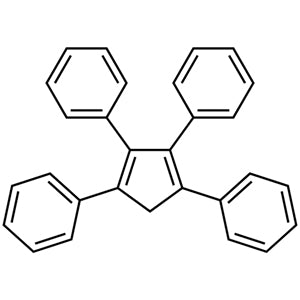
- TCI T1333 15570-45-3 1,2,3,4-Tetraphenyl-1,3-cyclopentadiene
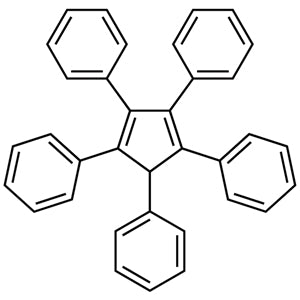
- TCI P1633 2519-10-0 1,2,3,4,5-Pentaphenyl-1,3-cyclopentadiene
- Double functionalization studies: the two independent terminal alkenes allow reactions such as double hydroboration or epoxidation on one molecule, which helps researchers build difunctional intermediates.
- Olefin metathesis research: the terminal double bonds make 1,4-Pentadiene a convenient substrate for testing metathesis catalysts and for building larger branched or cyclic carbon frameworks.
- Polymer chemistry: as a bifunctional monomer, it is used to study polymerization, copolymerization, and crosslinking behavior involving non-conjugated dienes in polymer research laboratories.
- Lipid oxidation modeling: its bis-allylic methylene group mimics the reactive site in polyunsaturated fatty acids, making it a simple model for hydrogen abstraction and autoxidation studies.
- Spectroscopy and computational chemistry: its small, symmetrical structure gives NMR spectra that are easy to interpret and makes it a practical reference molecule for computational chemistry calculations.
| Brand | TCI (product code P0038) |
|---|---|
| CAS number | 591-93-5 |
| Molecular formula | — |
| Purity | — |
| Category | Chemistry > Building Blocks > Non-Heterocyclic Building Blocks |
| Pack sizes | please refer to the available options on the product listing |
| Physical form | volatile liquid hydrocarbon |
| Storage | follow the conditions stated on the TCI label and Safety Data Sheet |
1,4-Pentadiene is a volatile, flammable hydrocarbon, so it should be kept in its original tightly sealed container in a cool, well-ventilated, flammables-rated storage area, away from heat, sparks, open flames, and oxidizing agents. Follow the storage temperature and atmosphere recommendations on the TCI label and Safety Data Sheet. Handle it only in a fume hood while wearing safety glasses, chemical-resistant gloves, and a lab coat. Keep containers closed when not in use to limit evaporation, ground equipment where needed, and dispose of waste according to local chemical waste regulations.
—
Produk Terkait
-
1,3-Pentadiene(cis-andtrans-mixture)(stabilizedwithTBC) TCI P1841
Regular price Rp 10.229.100,00Regular price -
cis-1,3-Pentadiene(stabilizedwithTBC) TCI P0650
Regular price From Rp 5.962.950,00Regular price -
trans-1,3-Pentadiene(stabilizedwithTBC) TCI P0647
Regular price From Rp 1.829.100,00Regular price -
2-Methyl-1,4-pentadiene TCI M0616
Regular price From Rp 1.856.400,00Regular price -
1,2,3,4-Tetraphenyl-1,3-cyclopentadiene TCI T1333
Regular price From Rp 2.757.300,00Regular price -
1,2,3,4,5-Pentaphenyl-1,3-cyclopentadiene TCI P1633
Regular price Rp 1.115.100,00Regular price -
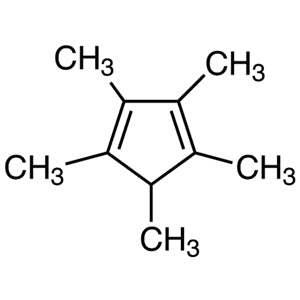
1,2,3,4,5-Pentamethylcyclopentadiene TCI P1292
Regular price From Rp 3.896.550,00Regular price -
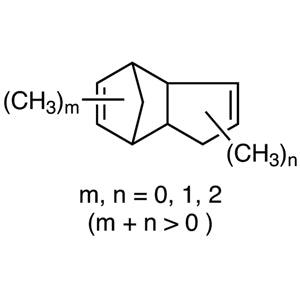
MethylcyclopentadieneDimer(socalled)(stabilizedwithBHT) TCI M2705
Regular price From Rp 689.850,00Regular price