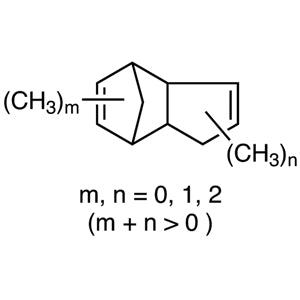
Methylcyclopentadiene Dimer (so called), also known as Methylcyclopentadiene Dimer, is a chemical compound widely used in laboratory settings for constructing complex molecular structures. This compound serves as a key building block in organic synthesis, enabling chemists to create a variety of functional molecules through various reaction mechanisms. Its role in chemical research is significant, particularly in the development of new materials and pharmaceutical compounds. As a dimer of methylcyclopentadiene, it offers both stability and reactivity, making it a versatile tool for synthetic chemists.
The compound’s chemical properties, including moderate reactivity and compatibility with diverse reaction conditions, make it a preferred choice for laboratory use. Its stabilization with BHT (Butylated Hydroxytoluene) enhances its resistance to oxidation and degradation, ensuring long-term stability and safety during storage and handling. This feature is especially valuable in environments where prolonged use and repeated experiments are common. The combination of reactivity and stability allows researchers to conduct experiments with greater confidence and reliability.
In Indonesian laboratories, Methylcyclopentadiene Dimer is commonly used in both fundamental and applied chemical research. It is a staple in academic institutions and research centers, where it supports a wide range of experimental protocols. Its availability and reliability make it an essential component in the chemical supply chain for laboratories across Indonesia, contributing to the advancement of scientific studies in the region.
- Organic synthesis is a primary application, as the compound serves as a versatile building block for creating complex organic molecules.
- Polymerization reactions benefit from its reactivity, enabling the formation of new polymer structures with specific properties.
- Ring-opening reactions utilize its structural characteristics to facilitate the formation of diverse chemical compounds.
- Substitution reactions take advantage of its moderate reactivity to introduce functional groups into target molecules.
- Research and development in pharmaceutical and material sciences rely on its stability and reactivity for creating novel compounds.
| Brand | TCI |
|---|---|
| CAS number | — |
| Molecular formula | — |
| Purity | — |
| Category | Chemistry > Building Blocks > Non-Heterocyclic Building Blocks |
| Pack sizes | As listed on product page |
| Physical form | Liquid |
| Storage | Store in a cool, dry place away from light and incompatible materials |
The compound should be stored in a cool, dry place, away from direct sunlight and sources of heat. It is recommended to use airtight containers made of glass or stainless steel to prevent contamination and maintain its stability. Due to its stabilization with BHT, it is less prone to oxidation, but care should still be taken to avoid exposure to strong oxidizing agents. In laboratory settings, it is important to handle the compound with appropriate personal protective equipment, including gloves and safety goggles, to ensure safe handling. Proper ventilation should be maintained when working with the compound to minimize inhalation risks. Regular inspection of storage containers is advised to ensure they remain intact and secure.
—
Produk Terkait
-
MethylcyclopentadieneDimer(socalled)(stabilizedwithTBC) TCI M0920
Regular price Rp 769.650,00Regular price -
1,3-Pentadiene(cis-andtrans-mixture)(stabilizedwithTBC) TCI P1841
Regular price Rp 10.229.100,00Regular price -
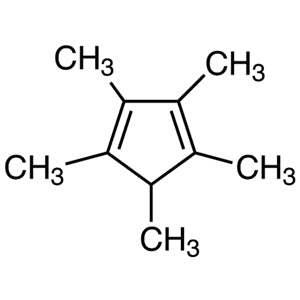
1,2,3,4,5-Pentamethylcyclopentadiene TCI P1292
Regular price From Rp 3.896.550,00Regular price -
cis-1,3-Pentadiene(stabilizedwithTBC) TCI P0650
Regular price From Rp 5.962.950,00Regular price -
trans-1,3-Pentadiene(stabilizedwithTBC) TCI P0647
Regular price From Rp 1.829.100,00Regular price -
1,4-Pentadiene TCI P0038
Regular price From Rp 5.327.700,00Regular price -
2-Methyl-1,4-pentadiene TCI M0616
Regular price From Rp 1.856.400,00Regular price -
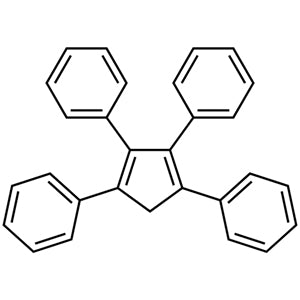
1,2,3,4-Tetraphenyl-1,3-cyclopentadiene TCI T1333
Regular price From Rp 2.757.300,00Regular price