


1,2,3,4,5-Pentamethylcyclopentadiene is a chemical compound widely used in organic reactions for the synthesis of complex molecules. This compound features a cyclic structure composed of five carbon atoms arranged in a ring, with five methyl groups strategically positioned. It plays a crucial role in laboratory settings as a foundational building block for various synthetic pathways. Its unique structure allows it to participate in substitution, polymerization, and catalytic reactions, making it an essential tool for chemists working on advanced organic synthesis.
The compound’s stability and controlled reactivity make it a preferred choice in laboratory applications. Its non-polar nature and volatility enable it to be easily vaporized, which is advantageous in reactions requiring vacuum or high-temperature conditions. These properties allow for precise control over reaction environments, ensuring reproducibility and efficiency in experimental processes. Additionally, its molecular structure provides versatility in synthetic strategies, supporting a wide range of chemical transformations.
In Indonesian laboratories, 1,2,3,4,5-Pentamethylcyclopentadiene is extensively used in organic chemistry research and the synthesis of complex compounds. Educational and research institutions rely on this compound for experiments that require precise chemical manipulation. Its availability and reliability make it a key component in both academic and industrial chemical research settings across Indonesia.
- Organic synthesis applications benefit from this compound’s cyclic structure, enabling the creation of complex heterocyclic and aromatic compounds through controlled substitution reactions.
- Polymerization processes utilize its reactivity to form stable polymers, offering versatility in material science research and development.
- Catalytic reactions leverage its molecular stability, allowing it to act as a reliable intermediate in various catalytic systems.
- High-temperature reactions take advantage of its volatility and non-polar nature, facilitating efficient vaporization under vacuum conditions.
- Environmental control experiments rely on its properties to maintain precise reaction environments, ensuring reproducibility and accuracy in chemical processes.
| Brand | TCI |
|---|---|
| CAS number | 4045-44-7 |
| Molecular formula | — |
| Purity | — |
| Category | Chemistry > Building Blocks > Non-Heterocyclic Building Blocks |
| Pack sizes | — |
| Physical form | — |
| Storage | Store in a cool, dry place away from direct sunlight |
This compound should be stored in a cool, dry environment, away from direct sunlight and sources of heat. It is recommended to use airtight containers to prevent exposure to moisture and air, which may affect its stability. Due to its volatility, it is important to handle it in a well-ventilated area to minimize inhalation risks. Laboratory personnel should wear appropriate personal protective equipment, including gloves and safety goggles, when handling the compound. Storage should be in a secure location to prevent accidental spills or exposure. Proper labeling of containers is essential to ensure safe handling and use in laboratory settings.
—
Produk Terkait
-
1,3-Pentadiene(cis-andtrans-mixture)(stabilizedwithTBC) TCI P1841
Regular price Rp 10.229.100,00Regular price -
cis-1,3-Pentadiene(stabilizedwithTBC) TCI P0650
Regular price From Rp 5.962.950,00Regular price -
trans-1,3-Pentadiene(stabilizedwithTBC) TCI P0647
Regular price From Rp 1.829.100,00Regular price -
1,4-Pentadiene TCI P0038
Regular price From Rp 5.327.700,00Regular price -
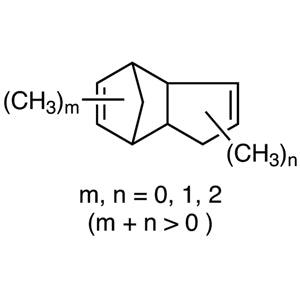
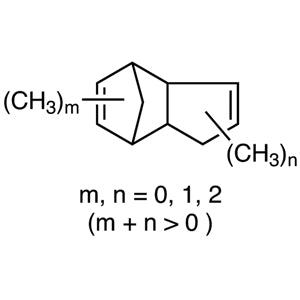
MethylcyclopentadieneDimer(socalled)(stabilizedwithBHT) TCI M2705
Regular price From Rp 689.850,00Regular price -
MethylcyclopentadieneDimer(socalled)(stabilizedwithTBC) TCI M0920
Regular price Rp 769.650,00Regular price -
2-Methyl-1,4-pentadiene TCI M0616
Regular price From Rp 1.856.400,00Regular price -
Dicyclopentadiene(stabilizedwithBHT)[precursortoCyclopentadiene] TCI D0443
Regular price From Rp 477.750,00Regular price



![Dicyclopentadiene (stabilized with BHT) [precursor to Cyclopentadiene] (CAS 77-73-6) - TCI D0443 - AMI Scientific](http://amiscientific.com/cdn/shop/files/TCI2510D0443.jpg?v=1767101304&width=533)