![Dicyclopentadiene (stabilized with BHT) [precursor to Cyclopentadiene] (CAS 77-73-6) - TCI D0443 - AMI Scientific](http://amiscientific.com/cdn/shop/files/TCI2510D0443.jpg?v=1767101304&width=1946)
![Dicyclopentadiene (stabilized with BHT) [precursor to Cyclopentadiene] (CAS 77-73-6) - TCI D0443 - AMI Scientific](http://amiscientific.com/cdn/shop/files/TCI2510D0443.jpg?v=1767101304&width=1445)
Dicyclopentadiene (stabilized with BHT) is a chemical compound widely used in laboratory settings as a building block for organic synthesis. It serves as a precursor to Cyclopentadiene, a key intermediate in the production of various complex organic compounds. Its unique molecular structure, consisting of two connected pentadiene rings, makes it highly reactive and versatile in chemical reactions. This reactivity is particularly valuable in adition and substitution reactions, making it a fundamental material in synthetic chemistry. Due to its role in creating more complex molecules, it is essential in both academic and industrial research environments.
The compound's reactivity is balanced by its stabilization with BHT, which helps prevent oxidative degradation and extends its shelf life. This stabilization ensures that the material remains chemically stable and safe for use over extended periods. The combination of reactivity and stability makes it a preferred choice for researchers seeking reliable and effective materials for their experiments. Its ability to maintain chemical integrity under controlled conditions also enhances its usability in laboratory environments where precision and consistency are crucial.
In Indonesian laboratories, Dicyclopentadiene is commonly used in research related to organic synthesis, polymer chemistry, and the development of aromatic compounds. Its applications span across both fundamental and applied research, supporting the creation of new materials and compounds. Due to its reactivity, it is also utilized in projects involving the synthesis of complex organic structures, contributing to advancements in chemical science and technology.
TCI brochures (PDF)
- Ligands 2025-12-01 · p. 19
Related TCI products
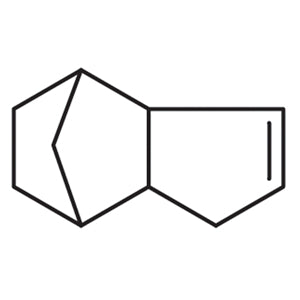
- TCI D2001 4488-57-7 5,6-Dihydrodicyclopentadiene
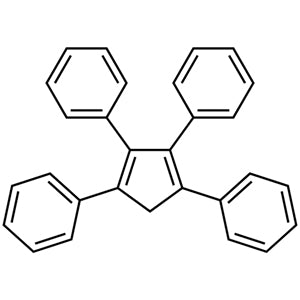
- TCI T1333 15570-45-3 1,2,3,4-Tetraphenyl-1,3-cyclopentadiene
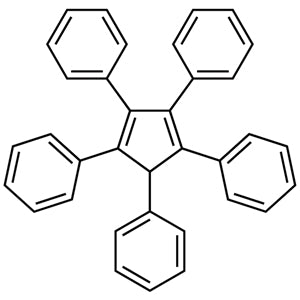
- TCI P1633 2519-10-0 1,2,3,4,5-Pentaphenyl-1,3-cyclopentadiene
- TCI H0384 37275-49-3 Hydroxydicyclopentadiene (so called)
- TCI P1841 504-60-9 1,3-Pentadiene (cis- and trans- mixture) (stabilized with TBC)
- TCI P0650 1574-41-0 cis-1,3-Pentadiene (stabilized with TBC)
- Organic synthesis projects benefit from Dicyclopentadiene as a versatile building block for creating complex molecules.
- Polymer research often incorporates this compound due to its reactivity in forming various polymeric structures.
- Aromatic compound development utilizes Dicyclopentadiene as a precursor in synthetic pathways for aromatic derivatives.
- Industrial chemical processes rely on this material for the production of intermediate compounds in large-scale manufacturing.
- Research in chemical engineering uses Dicyclopentadiene for studying reaction mechanisms and catalytic processes.
| Brand | TCI |
|---|---|
| CAS number | 77-73-6 |
| Molecular formula | — |
| Purity | — |
| Category | Chemistry > Building Blocks > Non-Heterocyclic Building Blocks |
| Pack sizes | Available in various quantities as per standard laboratory supply |
| Physical form | Liquid |
| Storage | Store in a cool, dark place away from heat and direct sunlight |
Dicyclopentadiene should be stored in a cool, dark environment to maintain its chemical stability and prevent degradation. It is recommended to keep the material in a tightly sealed container to minimize exposure to air and moisture. Due to its reactivity, it should be handled in a well-ventilated area, preferably under a fume hood, to ensure safety. The container should be made of a material resistant to chemical attack, such as glass or high-density polyethylene. Regular monitoring of storage conditions is essential to maintain the integrity of the compound. Proper labeling and storage away from incompatible substances are also important to prevent accidental reactions and ensure safe laboratory practices.
—
Product Categories
Produk Terkait
-
5,6-Dihydrodicyclopentadiene TCI D2001
Regular price Rp 3.870.300,00Regular price -
1,2,3,4-Tetraphenyl-1,3-cyclopentadiene TCI T1333
Regular price From Rp 2.757.300,00Regular price -
1,2,3,4,5-Pentaphenyl-1,3-cyclopentadiene TCI P1633
Regular price Rp 1.115.100,00Regular price -
Hydroxydicyclopentadiene(socalled) TCI H0384
Regular price From Rp 1.035.300,00Regular price -
1,3-Pentadiene(cis-andtrans-mixture)(stabilizedwithTBC) TCI P1841
Regular price Rp 10.229.100,00Regular price -
cis-1,3-Pentadiene(stabilizedwithTBC) TCI P0650
Regular price From Rp 5.962.950,00Regular price -
trans-1,3-Pentadiene(stabilizedwithTBC) TCI P0647
Regular price From Rp 1.829.100,00Regular price -
1,4-Pentadiene TCI P0038
Regular price From Rp 5.327.700,00Regular price