2-Methyl-1,4-pentadiene is a chemical compound widely used as a foundational building block in organic synthesis. Its unique molecular structure enables it to participate in a variety of chemical reactions, making it a valuable tool for researchers and students in Indonesian laboratories. This compound is particularly useful in the development of complex molecules due to its ability to undergo addition, substitution, and polymerization reactions. Its presence in laboratory settings supports the advancement of chemical research across multiple disciplines.
The compound's chemical properties, including its stability and reactivity, make it a preferred choice for synthetic applications. The presence of two double bonds, known as a diene system, enhances its versatility in chemical reactions. This structural feature allows it to be used in the synthesis of aromatic compounds, alkenes, and heterocyclic structures. Its flexibility in reacting with various reagents also makes it suitable for the creation of new materials and pharmaceutical compounds.
In Indonesian laboratories, 2-Methyl-1,4-pentadiene is commonly used in organic chemistry research, especially in pharmaceutical, material science, and environmental chemistry fields. Researchers and students rely on this compound to conduct experiments that require specific molecular structures. Its application is widespread in both academic and industrial research settings, contributing to the development of new chemical products and scientific knowledge.
- Organic synthesis applications benefit from its reactivity and structural versatility, enabling the creation of complex molecules.
- Pharmaceutical research utilizes this compound to develop new drug compounds with specific molecular frameworks.
- Material science experiments rely on its ability to participate in polymerization reactions, leading to the production of advanced materials.
- Environmental chemistry studies use it to analyze and synthesize compounds relevant to pollution control and remediation.
- Academic research in Indonesian universities employs it for teaching and experimental purposes in organic chemistry courses.
| Brand | TCI |
|---|---|
| CAS number | 763-30-4 |
| Molecular formula | — |
| Purity | — |
| Category | Chemistry > Building Blocks > Non-Heterocyclic Building Blocks |
| Pack sizes | Available in various quantities as per supplier specifications |
| Physical form | Liquid |
| Storage | Store in a cool, dry place away from direct sunlight |
This compound should be stored in a cool, dry place, away from direct sunlight and sources of heat. It is recommended to use airtight containers made of materials compatible with organic solvents to prevent contamination and evaporation. Proper ventilation is essential when handling this substance to minimize exposure. Laboratory personnel should wear appropriate personal protective equipment, such as gloves and safety goggles, when working with this compound. It should be kept in a secure location to prevent accidental spills or exposure. Regular monitoring of storage conditions ensures the integrity and safety of the compound during its use in research settings.
—
Produk Terkait
-
1,3-Pentadiene(cis-andtrans-mixture)(stabilizedwithTBC) TCI P1841
Regular price Rp 10.229.100,00Regular price -
cis-1,3-Pentadiene(stabilizedwithTBC) TCI P0650
Regular price From Rp 5.962.950,00Regular price -
trans-1,3-Pentadiene(stabilizedwithTBC) TCI P0647
Regular price From Rp 1.829.100,00Regular price -
1,4-Pentadiene TCI P0038
Regular price From Rp 5.327.700,00Regular price -
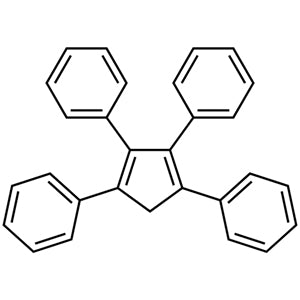
1,2,3,4-Tetraphenyl-1,3-cyclopentadiene TCI T1333
Regular price From Rp 2.757.300,00Regular price -
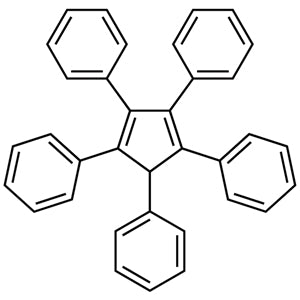
1,2,3,4,5-Pentaphenyl-1,3-cyclopentadiene TCI P1633
Regular price Rp 1.115.100,00Regular price -
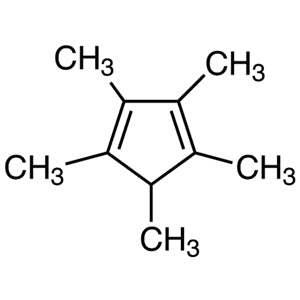
1,2,3,4,5-Pentamethylcyclopentadiene TCI P1292
Regular price From Rp 3.896.550,00Regular price -
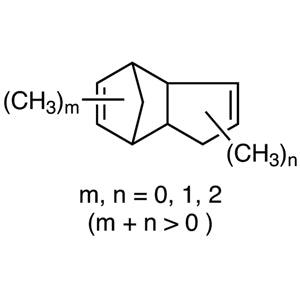
MethylcyclopentadieneDimer(socalled)(stabilizedwithBHT) TCI M2705
Regular price From Rp 689.850,00Regular price