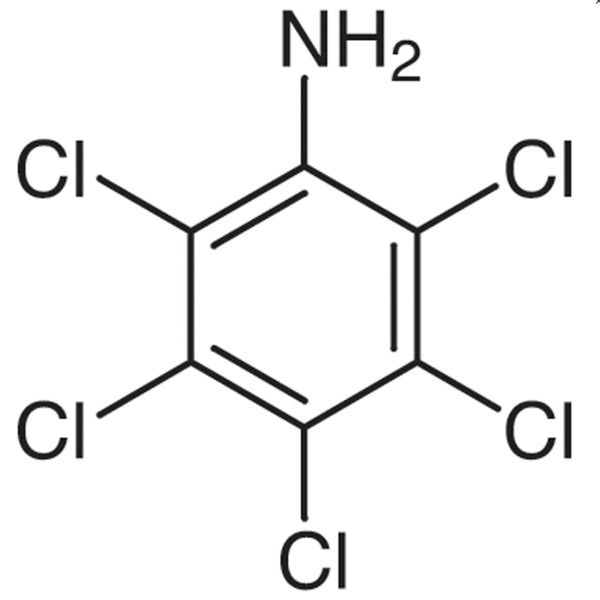
Pentachloroaniline (PCA), with CAS number 527-20-8, is a chemical compound widely utilized in various chemical reactions and the synthesis of complex molecules. It is a key building block in chemical laboratories, playing a critical role in the development of new compounds and materials. This compound is part of the non-heterocyclic building blocks category, making it essential for synthetic chemists seeking to create a wide range of chemical structures. Its unique structure, derived from aniline with five chlorine atoms attached, provides a versatile platform for further chemical transformations.
PCA is known for its high reactivity, particularly in substitution and electrophilic reactions, which makes it a preferred choice in synthetic chemistry. The presence of multiple chlorine atoms contributes to its stability under certain conditions, although it still requires careful handling. Its reactivity and ability to participate in various chemical reactions make it a valuable tool in experimental settings. The compound's versatility allows it to be used in multiple applications, from organic synthesis to pharmaceutical research.
In Indonesian laboratories, Pentachloroaniline is commonly used in chemical research, including the synthesis of organic compounds, drug development, and the study of aromatic compound reactivity. Its role in these areas highlights its importance in both academic and industrial research settings. Researchers in Indonesia rely on PCA for its reliability and effectiveness in complex chemical processes.
- Organic synthesis applications benefit from PCA's reactivity, enabling the creation of complex molecular structures through substitution reactions.
- Pharmaceutical research utilizes PCA as a starting material for the synthesis of heterocyclic compounds and drug molecules.
- Industrial chemical development incorporates PCA to produce various chemical intermediates and specialty materials.
- Aromatic compound reactivity studies rely on PCA to investigate substitution and electrophilic reactions in aromatic systems.
- Environmental chemistry research uses PCA to study the behavior and degradation of chlorinated aromatic compounds in different conditions.
| Brand | TCI |
|---|---|
| CAS number | 527-20-8 |
| Molecular formula | — |
| Purity | — |
| Category | Chemistry > Building Blocks > Non-Heterocyclic Building Blocks |
| Pack sizes | Available in standard laboratory quantities |
| Physical form | Solid powder |
| Storage | Store in a cool, dry place away from light and moisture |
Pentachloroaniline should be stored in a cool, dry environment, away from direct light and moisture to maintain its stability. It is recommended to use airtight containers made of glass or polyethylene to prevent contamination and degradation. Due to its reactivity, it should be handled with appropriate personal protective equipment, including gloves and safety goggles. In laboratory settings, proper ventilation is essential to minimize exposure to vapors. Always ensure that the compound is stored separately from incompatible materials to avoid any potential chemical interactions. Regular monitoring of storage conditions is advised to ensure the compound remains in optimal condition for use.
—
Produk Terkait
-
3-Bromo-4-chloroaniline TCI B4160
Regular price Rp 1.538.250,00Regular price -
4-Bromo-3-chloroaniline TCI B3709
Regular price From Rp 848.400,00Regular price -
2-Bromo-5-chloroaniline TCI B3182
Regular price From Rp 505.050,00Regular price -
2-Bromo-4-chloroaniline TCI B2268
Regular price From Rp 1.193.850,00Regular price -
4-Bromo-2-chloroaniline TCI B1993
Regular price From Rp 1.298.850,00Regular price -
N-Ethyl-4-chloroaniline TCI E0420
Regular price Rp 2.782.500,00Regular price -
4-Chloroaniline-3-sulfonicAcid TCI C0116
Regular price From Rp 955.500,00Regular price -
4-ChloroanilineHydrochloride TCI C0115
Regular price From Rp 980.700,00Regular price