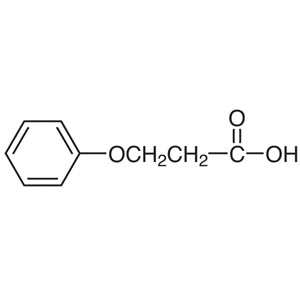
3-Phenoxypropionic Acid from TCI (product code P1400) is an aliphatic carboxylic acid with a phenoxy group, an aryl ether, at the end of its three-carbon chain. TCI lists it among its non-heterocyclic building blocks. Because it has two functional groups, a carboxylic acid and an aromatic ether, it is a practical precursor for many transformations. In organic synthesis laboratories it is best known as a classic starting material for building the chromanone (chroman-4-one) scaffold through intramolecular cyclization.
Chemists choose this building block for several reasons. First, the carboxylic acid group is easy to convert into an acid chloride, ester, amide or anhydride, which gives the chemist a wide range of further options. Second, the phenyl ring sits in an ideal position relative to the carbonyl group for intramolecular Friedel–Crafts acylation. With polyphosphoric acid, Eaton's reagent, or its acid chloride combined with a Lewis acid, the compound can close the ring to form a chromanone. Third, the aryl ether bond is fairly stable under many reaction conditions, so the phenoxy group stays intact while other parts of the molecule are modified.
In Indonesian laboratories, this material matters most to research groups in natural product chemistry and medicinal chemistry. Chroman and chromanone scaffolds are core structures in many compounds these groups study. University organic synthesis laboratories, research institutes and pharmaceutical development teams can use it to prepare chromanone intermediates, train students in classic cyclization chemistry, and build compound libraries from a reliable, well-characterized starting point supplied under the TCI brand.
- Chromanone synthesis: the phenyl ring is well positioned relative to the carbonyl group, so intramolecular Friedel–Crafts acylation gives chroman-4-one scaffolds efficiently.
- Preparing acid derivatives: the free carboxylic acid converts easily into acid chlorides, esters, amides or anhydrides, which makes it a flexible entry point for multistep synthetic routes.
- Medicinal chemistry scaffold work: chroman and chromanone cores appear in many bioactive structures, so this acid is a convenient precursor for analogue series and structure–activity studies.
- Natural product research: groups studying chroman-type natural products can use it to build reference cores and synthetic intermediates for comparison with isolated compounds.
- Teaching and method development: its well-known cyclization chemistry makes it a good model substrate for demonstrating acid-promoted ring closure and testing new Lewis acid or Brønsted acid conditions.
| Brand | TCI (product code P1400) |
|---|---|
| CAS number | 7170-38-9 |
| Molecular formula | — |
| Purity | — |
| Category | Chemistry > Building Blocks > Non-Heterocyclic Building Blocks |
| Pack sizes | available in the standard TCI pack sizes; please ask AMI Scientific for current options |
| Physical form | refer to the TCI specification sheet and certificate of analysis |
| Storage | keep the container tightly closed in a cool, dry, well-ventilated place, following the TCI label recommendations |
Store 3-Phenoxypropionic Acid in its original, tightly closed container in a cool, dry and well-ventilated area, away from direct sunlight, heat sources and strong oxidizing agents or bases. Use clean, dry glass or compatible chemical-resistant containers if you transfer portions. Label all containers clearly. When handling it, wear standard personal protective equipment, including safety glasses, gloves and a laboratory coat, and work in a fume hood whenever dust or vapours may form. Avoid contact with skin and eyes and avoid breathing dust. Always consult the TCI Safety Data Sheet before use, and dispose of waste according to institutional and local regulations.
—
Produk Terkait
-
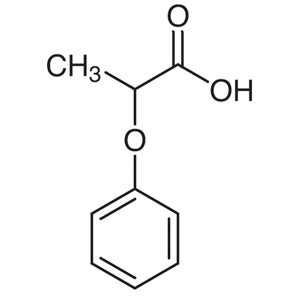
2-PhenoxypropionicAcid TCI P0318
Regular price From Rp 477.750,00Regular price -
2-Methyl-2-phenoxypropionicAcid TCI M2984
Regular price Rp 2.121.000,00Regular price -
2-PhenoxypropionylChloride TCI P0638
Regular price From Rp 1.298.850,00Regular price -
3-EthoxypropionicAcid TCI E0053
Regular price From Rp 1.246.350,00Regular price -
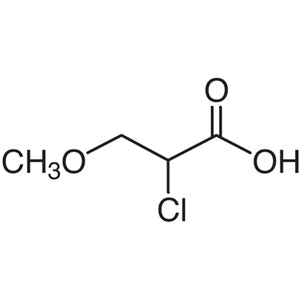
2-Chloro-3-methoxypropionicAcid TCI C1688
Regular price From Rp 2.174.550,00Regular price -
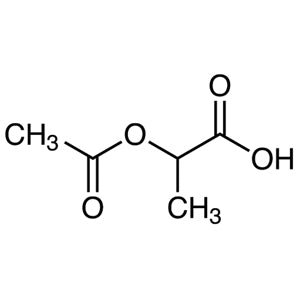
2-AcetoxypropionicAcid TCI A2931
Regular price From Rp 1.220.100,00Regular price -
3-AllyloxypropionicAcid TCI A0657
Regular price Rp 6.360.900,00Regular price -
Ethyl3-Methoxypropionate TCI M1001
Regular price From Rp 1.140.300,00Regular price