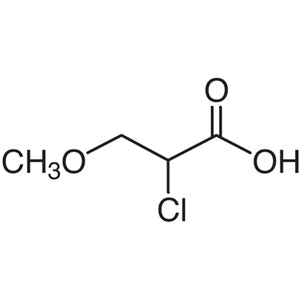
Ethyl 3-Methoxypropionate with CAS number 10606-42-5 is an aliphatic ester supplied by TCI and classified as a non-heterocyclic building block. Its molecule consists of a propionate chain carrying an ethyl ester group at one end and a methoxy ether group at the beta position, combining ester and ether character within a single compact structure. In the laboratory it plays a dual role: as a starting material for organic synthesis that provides a functionalised three-carbon chain, and as an ester solvent with good dissolving power toward a range of resins and organic materials.
The property that makes this compound a frequent choice is the balance it strikes between polarity and solvency. The ether group raises the polarity of the molecule without stripping away the organic character of the ester chain, so the compound is able to dissolve materials that ordinary hydrocarbon solvents struggle to handle. From a reactivity standpoint, the ester group can be hydrolysed, reduced, or converted into an amide, while the position alpha to the carbonyl remains open for alkylation and condensation reactions. Its form is a clear liquid, which makes it easy to transfer with a graduated pipette, charge into a closed reaction system, or blend into a mixture.
In Indonesian laboratories, this material is typically encountered in organic synthesis groups at universities and research institutes, as well as in formulation and coating development work where a moderately polar ester solvent is required. The clear liquid form suits routine volumetric handling on the bench, and the compound is normally used inside a fume hood with standard glassware, either as a reaction medium or as a functionalised intermediate carried forward through a multi-step sequence.
Related TCI products
- Organic synthesis starting material: the functionalised three-carbon chain gives chemists a ready-made propionate backbone, shortening routes that would otherwise require building the ester and ether functions separately.
- Ester transformation chemistry: the ester group can be hydrolysed to the acid, reduced, or converted into the corresponding amide, making it a convenient substrate for teaching and developing functional group interconversion methods.
- Alkylation and condensation reactions: the position alpha to the carbonyl remains chemically open, allowing carbanion chemistry to extend the carbon skeleton in a controlled and predictable manner.
- Resin and polymer dissolution: the compound acts as an ester solvent with good dissolving power toward various resins and organic materials that resist simpler hydrocarbon solvents in the laboratory.
- Formulation and coating trials: the combination of ether-derived polarity with retained organic ester character makes it suitable as a solvent medium when preparing and evaluating experimental coating or formulation samples.
| Brand | TCI |
|---|---|
| CAS number | 10606-42-5 |
| Molecular formula | — |
| Purity | — |
| Category | Chemistry > Building Blocks > Non-Heterocyclic Building Blocks |
| Pack sizes | available in the standard TCI catalogue packaging options |
| Physical form | clear liquid |
| Storage | keep tightly closed in its original container, away from heat and ignition sources |
- Chemical class: aliphatic ester, non-heterocyclic building block
Store the container tightly closed in a cool, well-ventilated area away from heat, sparks, and open flame, since the material is an organic ester liquid. Original manufacturer packaging or compatible glass and solvent-rated containers are appropriate; keep the closure sealed to limit evaporation and moisture ingress. Handle inside a fume hood, and wear safety goggles, chemical-resistant gloves, and a laboratory coat when transferring. Use a graduated pipette or a suitable dispensing device rather than pouring, keep the compound away from strong oxidising agents, and consult the manufacturer safety data sheet before first use.
—
Produk Terkait
-
Methyl3-Methoxypropionate TCI M0962
Regular price Rp 637.350,00Regular price -
Ethyl3-Ethoxypropionate TCI E0319
Regular price From Rp 584.850,00Regular price -
3-EthoxypropionicAcid TCI E0053
Regular price From Rp 1.246.350,00Regular price -
Methyl2,2-Dimethoxypropionate TCI D2382
Regular price Rp 6.465.900,00Regular price -
Ethyl3,3-Diethoxypropionate TCI D1962
Regular price From Rp 2.650.200,00Regular price -
Methyl3,3-Dimethoxypropionate TCI D1858
Regular price Rp 2.041.200,00Regular price -
2-Chloro-3-methoxypropionicAcid TCI C1688
Regular price From Rp 2.174.550,00Regular price -
4'-Methoxypropiophenone TCI M1719
Regular price Rp 1.510.950,00Regular price