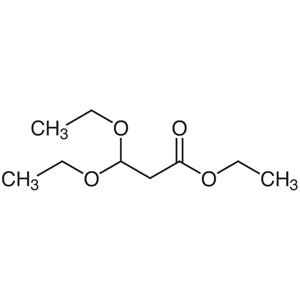
Ethyl 3,3-Diethoxypropionate is a chemical compound widely used as a building block in the synthesis of complex organic molecules. It serves as a fundamental component in various chemical reactions, particularly in the development of heterocyclic compounds and intricate molecular structures. This compound is essential in laboratory settings where researchers aim to construct and modify organic molecules with high precision. Its role as a versatile intermediate makes it a valuable tool for chemists working in both academic and industrial environments.
The compound’s chemical properties, including its reactivity and stability under controlled conditions, make it a preferred choice for synthetic chemists. It is capable of participating in multiple reaction types, such as substitution, elimination, and reduction, which allows for the creation of a wide range of derivatives. Its ability to undergo various chemical transformations contributes to its importance in organic synthesis. Researchers often rely on its predictable behavior to design efficient synthetic pathways.
In Indonesian laboratories, Ethyl 3,3-Diethoxypropionate is commonly used across disciplines such as organic chemistry, pharmaceutical research, and materials science. Its application is widespread due to its adaptability in different synthetic strategies. Indonesian scientists frequently use this compound as a key reagent in the development of new compounds and materials, supporting both fundamental research and applied chemical innovations.
- Organic synthesis: This compound is widely used in the synthesis of complex organic molecules due to its reactivity and structural versatility.
- Pharmaceutical research: It serves as an intermediate in the development of new drug compounds, contributing to the creation of bioactive molecules.
- Material science: It is employed in the synthesis of polymers and functional materials, offering structural flexibility for advanced applications.
- Heterocyclic compound formation: Its unique structure enables participation in reactions that lead to the formation of heterocyclic rings.
- Chemical modification studies: It is used to explore chemical transformations and reaction mechanisms in synthetic pathways.
| Brand | TCI |
|---|---|
| CAS number | 10601-80-6 |
| Molecular formula | — |
| Purity | — |
| Category | Chemistry > Building Blocks > Non-Heterocyclic Building Blocks |
| Pack sizes | Available in various quantities suitable for laboratory use |
| Physical form | Liquid |
| Storage | Store in a cool, dry place away from light and incompatible materials |
Ethyl 3,3-Diethoxypropionate should be stored in a cool, dry environment, away from direct sunlight and sources of heat. It is recommended to use airtight containers made of materials that are chemically inert, such as glass or polyethylene. The compound should be kept in a well-ventilated area to prevent the accumulation of vapors. It is important to avoid contact with incompatible substances like strong oxidizing agents or acids. Proper labeling of storage containers is essential for safety and traceability. Always follow standard laboratory safety protocols when handling this compound to ensure a safe working environment.
—
Produk Terkait
-
Ethyl3-Methoxypropionate TCI M1001
Regular price From Rp 1.140.300,00Regular price -
Methyl3-Methoxypropionate TCI M0962
Regular price Rp 637.350,00Regular price -
Ethyl3-Ethoxypropionate TCI E0319
Regular price From Rp 584.850,00Regular price -
Methyl2,2-Dimethoxypropionate TCI D2382
Regular price Rp 6.465.900,00Regular price -
Methyl3,3-Dimethoxypropionate TCI D1858
Regular price Rp 2.041.200,00Regular price -
3-EthoxypropionicAcid TCI E0053
Regular price From Rp 1.246.350,00Regular price -
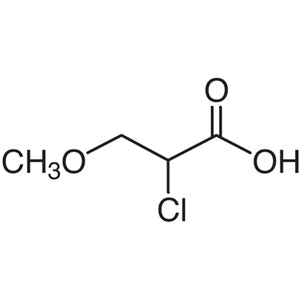
2-Chloro-3-methoxypropionicAcid TCI C1688
Regular price From Rp 2.174.550,00Regular price -
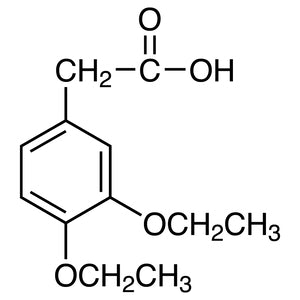
3,4-DiethoxyphenylaceticAcid TCI D3419
Regular price Rp 1.167.600,00Regular price